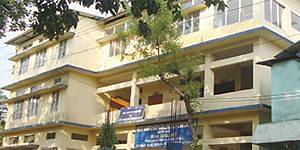
West Guwahati College of Education
About
OfficialWest Guwahati College of Education is a other institution in Guwahati, established in 1992. West Guwahati College of Education (WGCE) is a government-affiliated teacher training and education institution located in the suburban periphery of Guwahati, Assam. Established in 2007 as a response to the critical shortage of qualified teachers in Northeast India, WGCE has evolved into one of Assam's premier institutions for teacher education and pedagogy research. The college operates under the regulatory framework of the Department of Education, Government of Assam, and is affiliated with Gauhati University for its postgraduate programs. The institution sits on 12 acres of relatively spacious campus in Palasbari, approximately 30km west of central Guwahati, offering a balance between accessibility and academic focus. The college's founding was driven by the acute need for professionally trained educators across the Northeast, and it has consistently positioned itself as a training ground for reflective practitioners rather than merely credential-issuing institutions. WGCE offers integrated Bachelor of Education (B.Ed) programs, postgraduate Master of Education (M.Ed) degrees, and research opportunities at the doctoral level through affiliated universities. The B.Ed program is 2 years full-time, accepted across most Indian states for teacher eligibility certification, and includes extensive practicum in partnered government and private schools across Assam. The college maintains partnerships with over 45 schools in the Guwahati region for student teaching placements, providing real-world classroom exposure from the first semester itself. Academic programs span General Education, Science Education, Mathematics Education, Social Studies Education, and Inclusive Education with specific focus on special needs pedagogy—a strength area where WGCE has developed specialized faculty and resources. The college has been gradually building its research infrastructure, with faculty actively publishing in education journals and conducting action research in school improvement initiatives. The institution has established a dedicated Inclusive Education Resource Center (IERC) that serves both on-campus students and external educational agencies across Assam. Notable research areas include teacher training methodologies, inclusive classroom practices, digital literacy in rural schools, and mother-tongue-based multilingual education—topics of particular relevance to Northeast Indian educational contexts. Faculty members have presented research papers at national conferences and contributed to state-level curriculum development initiatives. The institution maintains modest but functional research labs and a digital resource center with educational technology tools, though resource constraints mean facilities are not comparable to central universities. Campus life at WGCE centers around student-led educational initiatives, micro-teaching clubs, and teacher development societies. The college organizes monthly seminars featuring practicing educators and education policy experts. Annual events include an Education Summit (March), a Research Colloquium (November), and Sports Day (February), though these are relatively low-key compared to larger institutions. The campus has basic sports facilities including a badminton court and outdoor basketball area, but lacks a swimming pool or modern gymnasium. Student clubs focus on pedagogy-related activities: the Action Research Cell, the Inclusive Education Forum, and the Digital Literacy Mission Club. Cultural activities are limited but present, with annual youth festivals and inter-class competitions. The hostel facilities accommodate approximately 400 students (both male and female) in separate wings, with rooms ranging from 2-4 sharing arrangements. Mess food is institutional canteen quality—adequate but repetitive, with vegetarian options always available but limited non-vegetarian variety. Internet connectivity on campus operates at approximately 15-20 Mbps via fiber connection with WiFi coverage in academic blocks but spotty in hostel areas. The college library holds approximately 12,000 books with a growing digital collection through INFLIBNET subscriptions, providing access to JSTOR and education-specific databases. Placement outcomes for WGCE are intrinsically different from engineering or management colleges—graduates primarily pursue teaching positions, further research, or educational administration roles rather than corporate recruitment. Approximately 65-70% of graduates secure teaching positions within 6-9 months of graduation, primarily through government teacher recruitment examinations (ASSAM TET, CTET) or private school recruitment. The college's placement cell actively tracks alumni outcomes and conducts workshops on teacher recruitment processes. Several WGCE alumni have progressed to leadership roles in state education departments, become school principals, or pursued higher education at premier institutions like Delhi University's education program or NCERT-affiliated centers. The college's unique positioning serves aspirants genuinely interested in education as a profession rather than those viewing teaching as a fallback option. It particularly attracts students from Assam, Meghalaya, Nagaland, and other Northeast states who seek teacher training closer to home before relocating for careers. The institution is honest about its limitations: it lacks the research funding or international visibility of Delhi University's education programs, faces periodic staff vacancies that affect course quality, and operates with infrastructure constraints typical of state colleges in the Northeast. However, it offers genuine education-focused training, personalized attention, strong practicum components, and a supportive community of educators committed to improving schooling in resource-constrained regions. Students should apply here if they are genuinely passionate about teaching and educational development in Indian contexts, understand that placement is not immediate corporate recruitment but gradual building of education sector careers, and value practical teaching skills over theoretical research depth. The college is particularly suitable for those seeking to teach in schools, pursue education administration, or continue doctoral work in education, and for aspirants from Northeast India who want strong local networks in the education sector.