Water, Sanitation and Hygiene Institute
About
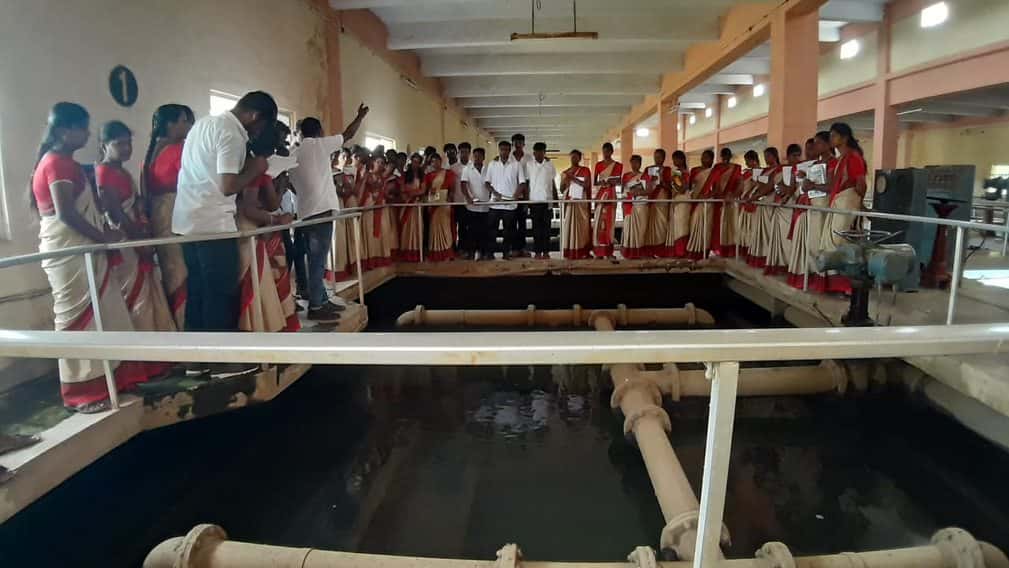
OfficialWater, Sanitation and Hygiene Institute is a other institution in Dindigul, established in 2011. The Water, Sanitation and Hygiene Institute (WSHI) in Dindigul, Tamil Nadu, is a specialized autonomous institution established in 2009 with a focused mission on addressing critical water resource management, sanitation infrastructure, and public health challenges in India. Unlike mainstream engineering colleges offering broad disciplines, WSHI operates as a niche institution dedicated exclusively to water and sanitation engineering, making it one of India's most specialized centres in this domain. The institute was founded following India's recognition of the acute need for skilled professionals in water treatment, wastewater management, and hygiene promotion—sectors that directly impact 1.4 billion people across the country. Dindigul's location in Tamil Nadu, a state with significant water stress and advanced sanitation initiatives, provides practical learning laboratories and industry connections. The institute is affiliated with Anna University and recognized by the All India Council for Technical Education (AICTE). WSHI offers undergraduate and postgraduate programs in Civil Engineering (Water and Sanitation specialization), Environmental Engineering, Water Resources Engineering, and Public Health Engineering. The curriculum is deliberately designed with heavy emphasis on field work, real-world project implementation, and internships with water boards, municipalities, and NGOs. Students undertake water quality testing, sewage treatment plant design, rainwater harvesting system implementation, and community sanitation campaigns as core academic components. The institute's research focus spans water pollution control, advanced oxidation processes for industrial effluent treatment, groundwater contamination remediation, decentralized sanitation technologies, and behavioral change communication for hygiene adoption. Faculty members hold PhDs from IITs and international institutions, with active research collaboration with CSIR laboratories, ministry of water resources, and international development organizations like UNICEF and WHO. Notable research outputs include patents in low-cost water purification technologies and published papers in peer-reviewed journals on rural sanitation models. However, the institute's narrow specialization means it lacks the diverse student culture and broad career flexibility of larger engineering colleges. Placement opportunities are concentrated in water utilities (state water departments, municipal corporations), consulting firms (Jacobs, Black & Veatch, WaterAid), NGO sector (Arghyam, GramShree), and government agencies (Central Water Commission, State Pollution Control Boards). Career progression typically involves roles as Graduate Trainee Engineers in state water boards with median entry salary of 3.8-4.2 lakh annually—lower than IIT graduates but with significant job security and CSR sector prestige. The institute's enduring weakness is limited brand recognition among mainstream employers; top tech companies and investment banks do not recruit from WSHI. Hostel facilities accommodate approximately 60% of the student body with basic but functional accommodation. Campus life revolves around technical clubs focused on water quality testing, sanitation design, and environmental sustainability rather than heavy cultural programming. The institute hosts an annual national conference on water and sanitation technologies, attracting industry professionals. Dindigul city itself is moderately developed with adequate transport, medical facilities, and living costs substantially lower than metro cities. The institution is particularly suited for students with genuine passion for water security, public health, and development sector work; those seeking mainstream IT/consulting careers should consider broader engineering colleges. Alumni network includes water engineers now leading projects across India's municipal corporations, consultants at international water firms, and civil servants in environmental ministries. The institute's greatest strength is producing highly specialized professionals for a critical national sector; its challenge is convincing talented students that this focused path offers better long-term growth than generalist engineering education.