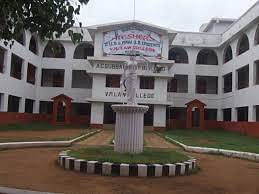
V.R. Law College
About
OfficialV.R. Law College is a other institution in Nellore, established in 1974. V.R. Law College, established in 1985, is a privately affiliated law institution located in Nellore, Andhra Pradesh. Named after its founder Visweswararao, the college has carved a modest but respectable niche in legal education across coastal Andhra Pradesh. Situated in the heart of Nellore city on Prakasam Road, the college serves approximately 850 students across undergraduate (5-year BA LL.B., 3-year LL.B.) and postgraduate (LL.M., M.Phil.) programs. The institution is affiliated with Sri Satya Sai University, Srisailam, and operates under the Bar Council of India regulations for legal education. Academic Programs: V.R. Law College offers a comprehensive suite of law programs designed to produce legally literate professionals for diverse practice areas. The 5-year integrated BA LL.B. program (intake: 60) serves as the primary undergraduate pathway, attracting students after 12th standard. The 3-year LL.B. program (intake: 40) caters to graduates seeking legal qualification. Master's programs in Constitutional Law, Corporate Law, and Criminal Law (intake: 20 each) address postgraduate specialization needs. Doctoral research opportunities in specialized areas like Environmental Law and Constitutional Studies are emerging but remain underdeveloped compared to tier-1 institutions. The curriculum balances traditional black-letter law with contemporary legal issues, clinical legal education, and practical skills development through moot courts, legal aid camps, and internships. Teaching Methodology: Faculty employ a mix of traditional case method, socratic questioning, and contemporary blended learning. Most teaching remains classroom-based with increasing integration of digital case repositories and online legal databases. Clinical legal education is emphasized through the college's Legal Aid Center, where students provide pro bono services to economically weaker sections of Nellore city. Research and Specializations: The college has identified five key research areas: Constitutional Rights and Social Justice, Corporate Governance and Securities Law, Criminal Justice Reform, Environmental and Natural Resource Law, and Intellectual Property Rights. However, research output remains publication-limited with faculty publishing primarily in regional journals rather than national/international publications. The college collaborates with NGOs focused on legal aid delivery and social justice advocacy, providing students real-world exposure to law's application. Campus Infrastructure: The 4.2-acre campus features two academic buildings housing classrooms equipped with multimedia presentation capability, a law library with approximately 25,000 volumes covering Indian and International legal texts, moot court facilities with three courtrooms for mock trials, and a legal research center with access to legal databases like SCC Online and Manupatra. Internet connectivity covers the campus with moderate speed (8 Mbps shared), though bandwidth constraints exist during peak usage. The campus lacks modern auditorium facilities, relegating large-scale events to city venues. Placement and Career Outcomes: The college achieved 68% placement in 2023-24 across multiple sectors. Median salary for law graduates stands at ₹3.8 lakhs annually for service sector positions, with highest placements reaching ₹8.2 lakhs for specialized corporate law roles. Primary recruiters include tier-2 law firms (Desai & Diwan, Crawford Bayley), corporate legal departments (Reliance Industries, Hindustan Unilever), government legal services, and judicial departments. A significant portion (22%) pursue further studies or judicial service examinations. The college's proximity to High Court of Andhra Pradesh provides internship opportunities and potential recruitment from judiciary. Student Demographics and Culture: The student body comprises 65% from Andhra Pradesh and Telangana, 25% from neighboring states, and 10% from pan-India backgrounds. Gender distribution is approximately 55% women and 45% men, reflecting increasing feminization of legal education. Student culture leans toward academics with moderate emphasis on co-curricular activities. The Law Student Association organizes annual intercollegiate competitions, legal awareness camps in rural Nellore, and environmental law initiatives. Student sentiment indicates satisfaction with faculty accessibility but frustration with library resource limitations and placement outcomes compared to Tier-1 city law colleges. Notable Achievements: The college moot court team has won multiple state-level and regional competitions. Alumni include practicing advocates in High Court, government legal officers, corporate counsels, and legal academics. The institution maintains active alumni networks through annual reunions and mentorship programs. Placement Reality Check: While 68% placement represents moderate success, it masks significant challenges. 32% of graduates remain unplaced 6 months post-graduation, requiring alternative career paths. Placement salaries are substantially lower than Delhi/Bangalore law colleges (₹6-10 lakhs starting) and even below other Andhra Pradesh law colleges in tier-2 cities. Many graduates supplement through solo practice, legal consulting startups, or judicial service examination preparation. The college's brand recognition remains limited beyond Andhra Pradesh, disadvantaging students seeking national law firm positions or multinational corporate roles. Who Should Apply: V.R. Law College suits students seeking quality legal education in a smaller city environment with lower tuition costs, who are willing to build careers primarily in Andhra Pradesh's legal ecosystem or through competitive examinations (CLAT, UPSC). It appeals to students who value faculty mentorship, practical exposure through legal aid work, and community engagement over brand prestige. The college is NOT ideal for students targeting top-tier national law firms, multinational corporate legal departments, or Tier-1 practice in metros. Strengths: Affordable education, faculty accessibility, practical legal aid exposure, proximity to judicial institutions, growing focus on constitutional and social justice law. Weaknesses: Limited pan-India placement network, underdeveloped research infrastructure, lower salary packages, modest library resources, internet connectivity limitations, limited diversity in student profile, restricted alumni network reach, absence of modern examination halls and auditorium facilities.