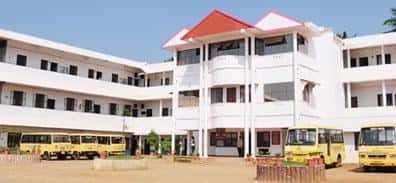
Vishwaksena College of Education
About
OfficialVishwaksena College of Education is a other institution in Thiruvallur, established in 2004. Vishwaksena College of Education, established in 2008, is a teacher-training institution located in Thiruvallur district, approximately 35 kilometers north of Chennai. Founded with the mission to produce quality educators committed to social responsibility, the college has grown into a recognized center for pedagogical excellence in Tamil Nadu. The institution operates under the aegis of the Vishwaksena Educational Trust, which sponsors multiple educational ventures across South India. The college is affiliated to the University of Madras and offers undergraduate (B.Ed) and postgraduate (M.Ed) degree programs in education. The primary focus is on preparing educators equipped with contemporary teaching methodologies, subject expertise, and a deep understanding of child psychology and inclusive education practices. The college admits approximately 120 students annually into its B.Ed program, with a robust selection process emphasizing not just academic merit but also aptitude for teaching. Academic Programs: The B.Ed program spans 2 years and follows a semester-based structure (4 semesters) with both theory and practice-teaching components. Students specialize in one or two teachable subjects from options including English, Tamil, Mathematics, Science (Physics, Chemistry, Biology), Social Studies, and Physical Education. The M.Ed program (2 years) offers specializations in Educational Management, Special Education, and Curriculum and Instruction, targeting working teachers and aspiring education administrators. Additionally, the college conducts Certificate Programs in inclusive education and online teaching methodologies. Research and Curriculum: The faculty has engaged in action research projects focusing on classroom practices, inclusive education models, and digital literacy in rural schools. The curriculum is regularly updated to align with recommendations from the National Council for Teacher Education (NCTE) and incorporates NEP 2020 guidelines. Recent curriculum revisions have introduced modules on online pedagogy, social-emotional learning, and environmental education. Campus Infrastructure: The 12.5-acre suburban campus features 8 well-appointed classrooms with smart boards, a resource center housing 6,000+ educational texts and digital resources, a model school on campus for practice teaching, science laboratories, a demonstration kitchen, and audio-visual studios. The library houses specialized collections on pedagogy, educational philosophy, and curriculum design. The college has invested in WiFi campus infrastructure, though connectivity in peripheral areas of campus remains inconsistent during peak hours. Placement and Career Progression: Graduates primarily secure positions as teachers in government and private schools across Tamil Nadu and neighboring states. The college maintains placement records showing 85-90% of B.Ed graduates securing teaching positions within 6-12 months of graduation. Average annual salary ranges from ₹220,000 to ₹280,000 for government school appointments and ₹200,000 to ₹240,000 for private school positions. The M.Ed program alumni transition into roles as educational administrators, curriculum developers, and resource persons in teacher training institutions. Student Life and Campus Culture: The college emphasizes experiential learning through school internships starting from the first semester. Students are required to complete 200+ hours of practice teaching in affiliated schools, providing practical exposure to classroom dynamics. The campus hosts regular seminars on educational innovations, child psychology workshops, and cultural events. Student clubs focus on teaching innovation, environmental education, and community development. The college organizes an annual 'Education Fest' featuring paper presentations, teaching demonstrations, and interactive sessions with education experts. Social Responsibility: The college operates a community education center in nearby villages, where student-teachers conduct literacy programs and skill-development workshops. This embedded service-learning component is seen as a key differentiator and aligns with the institution's founding philosophy. Notable Strengths: Strong links with schools for practice-teaching placements, personalized attention due to smaller batch sizes, exposure to both traditional and progressive educational philosophies, and a faculty with blend of academic credentials and classroom teaching experience. The college has trained over 1,200 educators since inception. Limitations: The college operates in a semi-urban setting, limiting exposure to metropolitan educational contexts. Research output remains modest compared to universities. The M.Ed program, while growing, is less established than the B.Ed program. Salary outcomes for B.Ed graduates are modest compared to other professional programs, which prospective students should consider. Library digital resources lag behind major metropolitan education colleges. Who Should Apply: Individuals passionate about teaching and committed to social impact in education. Those seeking personalized mentorship and direct engagement with practicing educators. Students interested in inclusive and progressive education philosophies. School teacher aspirants from Tamil Nadu and neighboring states. Working teachers seeking M.Ed qualification for career advancement. The college is NOT suitable for those prioritizing maximum salary outcomes or those seeking technical/IT career pathways.