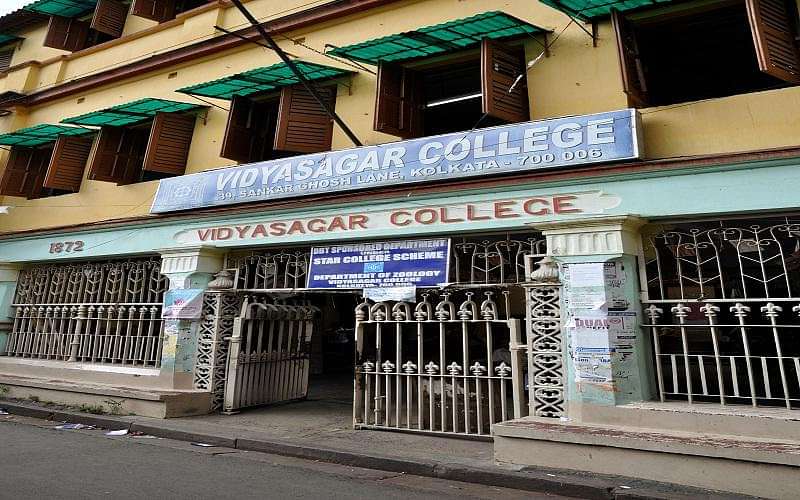
Vidyasagar College, Kolkata
About
OfficialVidyasagar College, Kolkata is a other institution in Kolkata. Vidyasagar College for Women, established in 1873, is one of India's oldest women's colleges located in the heart of Kolkata. Named after the social reformer Ishwar Chandra Vidyasagar, the institution has been a pioneer in women's education in Bengal for over 150 years. The college was founded during a transformative period in Indian education and remains dedicated to empowering women through quality academics and holistic development. The college offers undergraduate and postgraduate programs across multiple disciplines including English, Bengali, Hindi, Sanskrit, History, Political Science, Economics, Commerce, Mathematics, Physics, Chemistry, Botany, Zoology, and Geography. The institution is known for its strong emphasis on classical liberal arts education combined with contemporary skill development. The college has a reputation for producing intellectuals, academics, and professionals who have contributed significantly to Indian society. Academically, Vidyasagar College maintains a stringent curriculum that balances traditional knowledge with modern applications. The college has consistently received recognition for academic excellence, with NAAC accreditation demonstrating institutional quality. Faculty members are actively involved in research and have published numerous papers in peer-reviewed journals. The college encourages students to engage in research projects, particularly in sciences and humanities. The placement record of Vidyasagar College has shown steady improvement over the past few years. While it may not match the aggressive placement statistics of engineering colleges, the college places significant numbers of graduates in teaching, research, civil services, media, publishing, IT, and corporate sectors. Many graduates pursue civil service examinations (UPSC, WBPSC) and have achieved notable success. The college has dedicated placement cells that conduct training and coaching for competitive examinations and corporate recruitments. Notable alumni include Swapna Banerjee (IAS officer), Rina Ray (Noted journalist), Arati Saha (First Indian woman to swim across the English Channel), and numerous academics, researchers, and professionals in various fields. Many alumni have pursued doctoral studies at premier institutions and continue to contribute to academia and research. The campus, though relatively compact for an urban institution, is well-maintained with heritage architecture blended with modern facilities. The library is substantial with extensive holdings in humanities and sciences. The college has computer labs, science laboratories, and reading rooms equipped for serious academic work. The atmosphere is studious and disciplined, with strong emphasis on personal development alongside academics. Campus life at Vidyasagar is vibrant with numerous clubs, societies, and cultural activities. The college hosts an annual festival and encourages participation in inter-college competitions. Literary societies, debate clubs, science clubs, and cultural organizations provide platforms for extracurricular engagement. However, the college maintains a relatively conservative culture focused primarily on academics, which suits students seeking a serious educational environment over party culture. The institution draws students primarily from West Bengal, with some all-India admissions through CUET. The student body is socioeconomically diverse, with the college committed to providing education across income strata. The college has a significant number of merit-based and need-based scholarships. Who should apply: Students seeking serious, disciplined academic environment with strong emphasis on humanities and sciences education. Women interested in liberal arts with strong foundations in classics, literature, and social sciences. Students preparing for civil services or academic careers. Those seeking women-centric education with mentorship-driven approach. Students comfortable in an urban but academically-focused setting without emphasis on corporate culture. Those valuing institutional heritage and academic rigor over modern amenities. Women from economically weaker sections seeking quality subsidized education.