Vidya Institute of Creative Teaching
About
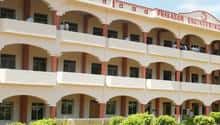
OfficialVidya Institute of Creative Teaching is a other institution in Prakasam. Vidya Institute of Creative Teaching (VICT) was established in 2006 as a private engineering and management college in Prakasam district, Andhra Pradesh. Located in the semi-rural town of Markapur, VICT emerged from a vision to provide quality technical education beyond metropolitan centres, though this location choice has been both strength and limitation. The institute was founded by the Vidya Educational Society, a non-profit organization with roots in educational philanthropy. Over nearly two decades, VICT has grown from a small engineering college into a multi-disciplinary institution offering programs across engineering, management, and professional studies. The campus is situated approximately 120 km from Hyderabad and 85 km from Vijayawada, making it relatively isolated from major urban centres—a significant consideration for prospective students. The founding philosophy emphasized practical, industry-relevant education through what the institute terms 'creative teaching'—a blend of traditional classroom learning with hands-on project work. This approach has manifested in curriculum design that incorporates industry internships from the second year itself, which distinguishes VICT from many tier-2 private colleges. However, the rural location has posed consistent challenges in attracting top faculty, conducting research collaborations, and facilitating industry partnerships compared to colleges in metropolitan areas. The institute operates with a clear institutional structure: the Academic Block houses teaching departments, the Research Centre focuses on applied research in collaboration with local industries, and the Innovation Lab promotes entrepreneurship among students. VICT is affiliated with Andhra Pradesh State University (APSU) for its engineering and diploma programs, and has statutory recognition from the All India Council for Technical Education (AICTE). The college maintains NBA accreditation for select engineering branches, achieved in 2019 and renewed in 2022. However, NAAC accreditation remains absent, which has limited its ability to attract national-level research grants and partnerships. The student body comprises approximately 2,850 undergraduates and 300 postgraduate students, with a male-female ratio of roughly 65:35, skewed towards engineering where male enrollment is higher. Demographically, the majority of students come from Andhra Pradesh (72%), Telangana (15%), and other southern states (13%), with very few from northern India—a pattern reflecting both the college's location and limited brand recognition nationally. The academic environment is characterized by a close student-faculty ratio of approximately 1:15, which theoretically enables personalized attention, though faculty expertise varies significantly across departments. Some faculty members possess industry experience and PhD qualifications, but many lack research output and international exposure. The college has invested in labs and equipment, though maintenance and obsolescence remain recurring issues. Teaching quality varies noticeably between senior faculty (generally strong) and contract faculty (often weak). The research culture at VICT is nascent; while the institution has established a research centre and encourages faculty publications, actual research output remains modest—averaging 8-12 publications annually across all disciplines, most in regional or non-indexed journals. There are no doctoral programs, limiting research trajectory. Industry partnerships exist primarily with local manufacturing units and small-medium enterprises, not with large corporations. This constrains student exposure to cutting-edge technology and innovation. Placements have been a mixed story: for engineering graduates, placement rates hover around 78-82% annually, with 60-65% of placed students securing jobs in software companies, primarily in Hyderabad or Bangalore. The remaining go to manufacturing companies, banking, or pursue further education. Average salary for placed engineering graduates in 2023-24 was approximately 4.2 lakhs per annum, with median around 3.8 lakhs—significantly lower than IITs, NITs, or top private colleges in metros. Management (MBA) placements perform better in percentage terms (88-92%), but absolute salary packages are comparable to engineering due to smaller cohort sizes. Core engineering sector jobs are rare; most placements are in IT services companies that provide generic training. The campus life is quieter than urban colleges due to the rural setting. Most students are hostellers (approximately 70%), creating a community-based campus culture. Clubs, societies, and festivals exist but operate on modest budgets. Sports facilities include a cricket ground, volleyball/badminton courts, and a gymnasium, though sports excellence at competitive levels is uncommon. Cultural events include an annual college fest (typically in February) and departmental technical competitions, but these lack the scale and sponsorship of metropolitan colleges. The hostel experience is central to VICT life: separate boys' and girls' hostels provide accommodation at affordable rates (₹15,000-20,000 per month including mess). Hostel quality is basic but functional; rooms are shared (typically 2-3 per room), and meal provision is vegetarian-heavy with limited dietary diversity. Internet connectivity is available but unreliable, a frustration for students. Safety on campus is reported as good; there have been no significant ragging incidents in recent years, and a proactive student welfare committee addresses concerns. For women students, the dedicated girls' hostel has dedicated caretakers and CCTVs, though campus social spaces can feel male-dominated given the gender ratio. The town of Prakasam/Markapur itself is underdeveloped for student needs: limited shopping, entertainment, and dining options. Most students confine themselves to campus during weekends. Internet connectivity issues extend to the town as well. The nearest major city (Vijayawada) is 85 km away, accessible by bus (2.5-3 hours). Hyderabad is 120 km away. This geographic isolation is critical context for prospective students: life is campus-centric, social opportunities are constrained, and student mental health occasionally suffers from monotony. Alumni network is growing but not yet strong. The institute has produced various engineers working in IT companies, a few startup founders, and management graduates in finance and operations roles. However, alumni placements in prestigious companies, research institutions, or founding major ventures remain limited compared to top-tier colleges. The college actively pursues industry tie-ups and claims partnerships with companies like TCS, Cognizant, and local manufacturing units, but these remain transactional (campus visits, recruitment) rather than collaborative (joint research, curriculum design). In summary, VICT is a pragmatic choice for students seeking affordable engineering or management education with reasonable placement outcomes, but with the critical caveat of geographic isolation and limited research/innovation opportunities. It suits disciplined, self-motivated students less concerned with vibrant urban campus life and more focused on securing a decent job post-graduation. The value proposition is straightforward: lower fees than major metros, decent placements in IT services, and a structured, orderly campus environment. However, ambitious students aiming for top-tier placements, research careers, or elite startup ecosystems should prioritize better-ranked institutions in major cities.