United University
About
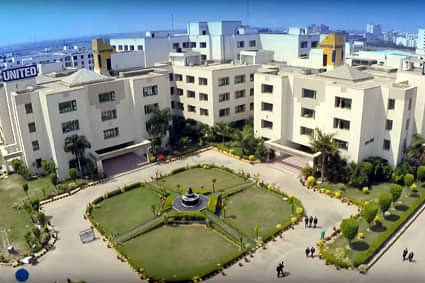
OfficialUnited University is a other institution in Prayagraj, established in 1998. United University, established in 2010 as a private institution in Prayagraj (formerly Allahabad), Uttar Pradesh, represents a relatively young but increasingly ambitious higher-education venture in the Ganges heartland. Located on the outskirts of the city near the historic confluence of the Yamuna and Ganga rivers, the university was granted deemed-to-be-university status in 2016, marking a significant milestone in its institutional credibility. The university operates across multiple engineering, management, medical, and liberal-arts disciplines, with a stated mandate to blend traditional academic rigor with contemporary industry-relevant skill development. Historically, Prayagraj (home to Allahabad University, one of India's oldest central universities) carries significant academic legacy. United University positioned itself as a modern alternative offering more flexible, industry-aligned curricula and stronger international collaborations compared to traditional state universities. The institution has gradually expanded its footprint, establishing departmental research centers and industry-academia partnerships, though it remains significantly smaller and less established than premier private institutions in metros like Bangalore or Pune. Academic programs span Engineering (specializations in CSE, Mechanical, Civil, Electronics), Management (MBA with multiple specializations), Medicine (MBBS and BDS), Pharmacy, Law, Applied Sciences, and Liberal Arts. Engineering programs follow AICTE guidelines; management programs align with AACSB principles; medical programs adhere to MCI/NMC standards. The university claims emphasis on experiential learning, internship-embedded curricula, and entrepreneurship incubation, though actual implementation quality varies significantly across departments. Research strengths are modest but growing. Faculty research output, measured by publications and citations, ranks the university in the developing category rather than established research leadership. Key research clusters include renewable energy, biotechnology, nanotechnology, and social-science applications in rural contexts—reflecting both institutional interests and Uttar Pradesh's developmental challenges. Industry partnerships include collaborations with mid-sized tech companies, manufacturing firms, and some Fortune 500 consulting divisions, though these remain primarily transactional rather than deeply integrated. Placement performance shows mixed outcomes. Overall placement rates for engineering graduates hover around 75-82%, with highest absorption in IT services, mid-tier consulting, and financial services. Core engineering and manufacturing roles remain challenging; median packages for engineering graduates range from ₹3.5-5.5 lakhs annually, significantly below IIT/NIT benchmarks but broadly aligned with regional private engineering colleges. MBA graduates achieve higher placement percentages (88-92%) with median packages of ₹8-12 lakhs, attracting recruiting from IT, financial services, and FMCG. Medical graduates (MBBS) face state-regulated internships and licensing challenges; many pursue post-graduation or migration to larger metros. Campus infrastructure reflects a developing institution. The Arajiline campus spans ~85 acres with dedicated engineering blocks, management annexe, medical college, library, and sports facilities. WiFi coverage is reasonably comprehensive but experiences periodic congestion during peak hours. Hostel infrastructure accommodates ~60% of students; quality varies from acceptable to below-average, with frequent complaints about water supply, maintenance, and space constraints. The mess provides vegetarian and non-vegetarian options; quality is rated as average by most residents. Student life exhibits typical suburban-college characteristics: reasonable cultural engagement through annual fests (Unicon, TechnoFiesta), departmental clubs covering technical, sports, and cultural domains, but relatively limited spontaneous external engagement compared to metro-based institutions. The city's historical and spiritual significance attracts some students; however, Prayagraj's limited cosmopolitan ecosystem means entertainment and networking opportunities lag behind tier-1 cities. Safety for women students is generally reported as safe within campus; off-campus areas require standard urban precautions. Admissions follow merit-based selection for undergraduate engineering (via JEE-Main cutoffs), management (through CAT/GMAT equivalent assessments), and medical streams (NEET scores). Acceptance rates are higher than premier institutions, reflecting the university's positioning in the expanding but competitive private HE landscape. International student enrollment remains minimal (~2-3% of total). The institution is most suited for students seeking: (1) engineering education outside the IIT/NIT/BITS ecosystem with moderate-to-good placement outcomes; (2) management education with flexibility and industry connections at a lower cost than established business schools; (3) medical education in a developing institution with lower competitive intensity than AIIMS but regulated standards; (4) students comfortable with suburban-city living and regional career trajectories; (5) candidates from Hindi-medium backgrounds transitioning to English-medium higher education. Key limitations include: modest alumni network outside UP/MP regions, inconsistent research output, limited international collaborations beyond MoUs, infrastructure quality issues in hostels, relatively weak off-campus job market compared to metros, and faculty retention challenges (particularly among research scholars). The university competes primarily against regional private institutions rather than national benchmarks. Overall, United University represents a middle-tier private higher-education option—suitable for capable students unable to secure IIT/NIT/AIIMS seats or seeking affordable, industry-connected education in a historically significant city. However, expectations must align with a developing institution's operational realities rather than established private-university standards.