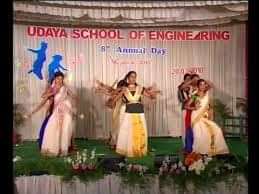
Udaya School of Engineering
About
OfficialUdaya School of Engineering is a other institution in Kanyakumari, established in 2002. Udaya School of Engineering, established in 2008, is a private engineering college located in Kanyakumari district, Tamil Nadu's southernmost region. Founded with the vision of providing quality technical education to students from surrounding rural and semi-urban areas, the institution has grown into a recognized engineering college affiliated with Anna University, Chennai. The college operates under the aegis of the Udaya Educational Society, a non-profit organization committed to accessibility in higher education. Academic Programs & Structure: The college offers 8 undergraduate engineering programs with a total intake of approximately 480 students annually. Core disciplines include Civil Engineering, Mechanical Engineering, Electrical & Electronics Engineering, Electronics & Communication Engineering, Computer Science & Engineering, Information Technology, Chemical Engineering, and Production Engineering. All programs follow the Anna University curriculum with a 4-year duration. The institution also offers 5 postgraduate programs including M.E. in Computer Aided Design, Structural Engineering, Power Systems Engineering, and M.Tech in Computer Science Engineering and VLSI Design, with an annual intake of approximately 120 students. Additionally, a 3-year diploma program in Engineering is offered through the government's polytechnic framework. Academic Strengths & Curriculum: The curriculum emphasizes a balance between theoretical knowledge and practical application. Each engineering program includes 2-3 mandatory internship periods, with the college having formalized relationships with 40+ companies for summer internship placements. The college has recently introduced specialization tracks in emerging areas like IoT, Data Science, Machine Learning, and Renewable Energy within core programs. Practical exposure is facilitated through well-equipped laboratories in every discipline, though some facilities are modest compared to tier-1 institutions. The faculty consists of 145 members, with approximately 35% holding doctoral degrees, though this is lower than national standards for engineering colleges. Research & Innovation: The college has established 3 recognized research centers: the Center for Advanced Manufacturing Systems, Center for Sustainable Energy Solutions, and Center for Data Analytics & AI Applications. Faculty publications in peer-reviewed journals average 25-30 annually, which is moderate for a private engineering college of this scale. Industry partnerships include collaborations with Tata Consultancy Services (TCS), Infosys, Hindustan Petroleum Corporation Limited (HPCL), and several Tamil Nadu-based manufacturing units. Student innovation is fostered through the Innovation & Entrepreneurship Cell, which has incubated 8 student startups in the last 3 years, though most are early-stage with limited revenue generation. Placement Performance: The college achieved a placement rate of 87% in 2023-24, which is respectable but below elite engineering college standards. The median salary for placed students stands at 4.2 lakhs INR annually for entry-level positions. The highest salary recorded was 14.5 lakhs (for a Computer Science graduate joining a Bangalore-based fintech startup). The average salary across all placed students is 5.1 lakhs. Top recruiters include TCS, Infosys, Wipro, Cognizant, HCL Technologies, and Capgemini for IT services; HPCL, Indian Oil Corporation (IOC), and NTPC for core engineering; and regional manufacturing firms like Lakhanpal National, Sundram Fasteners, and local textile units. A significant portion of placements (approximately 40%) are in IT service-based roles rather than true core engineering positions, which concerns students interested in manufacturing and infrastructure sectors. Campus Infrastructure & Facilities: The campus spans 25 acres in a semi-rural setting with adequate basic infrastructure. The main academic block houses 28 classrooms equipped with projectors and internet connectivity. The library contains approximately 35,000 books and provides access to online databases through Anna University's consortium. Laboratory facilities include dedicated blocks for Civil Engineering (Strength of Materials, Fluid Mechanics), Mechanical Engineering (Manufacturing, Thermodynamics), Electrical labs, Electronics & Communication labs, and Computer Science labs with approximately 400 computers in total. However, compared to colleges in metro areas, the equipment and facilities are dated, particularly in the Computer Science & IT labs where systems are 5-7 years old. The sports complex includes a basketball court, volleyball court, and cricket ground, though no swimming pool. The campus has Wi-Fi coverage but is inconsistent in many areas. Power supply is generally reliable with backup diesel generators. Hostel & Campus Living: The college operates two hostel complexes for boys with a capacity of 320 students and one girls' hostel with 180 capacity. Hostel rooms are double-occupancy with basic amenities: cot, desk, chair, and a common bathroom (shared between 2-3 rooms). Monthly hostel charges are 4,500 INR including basic utilities. The mess operates under both a common menu system and individualized payment options; monthly mess charges range from 2,500-3,500 INR depending on food choices. Food quality is average, with significant repetition in weekly menus. The mess occasionally faces complaints about quality during peak admission periods when student numbers exceed planned capacity. Separate dining areas exist for vegetarian and non-vegetarian options. Hostel internet connectivity is provided at 4 Mbps (shared among residents), which is inadequate for online learning and entertainment. Campus Life & Student Activities: The college hosts an annual technical fest called "Techfest" (held in February) and a cultural festival "Udaya Utsav" (held in October), both lasting 2-3 days with participation from neighboring colleges. Approximately 25 clubs and societies exist across technical (Robotics Club, Coding Club, IEEE Student Branch), cultural (Dance Club, Music Club, Drama Club), and sports categories. However, activity levels vary significantly; some clubs are quite active while others remain dormant. The college encourages participation but has limited funding for student activities, so many projects remain small-scale. Ragging has been reported as "occasionally" by several batches, though the college maintains a formal anti-ragging cell with a reasonable response record. Safety for women on campus is good, with CCTV coverage in common areas and a dedicated women's safety officer. However, the surrounding rural area presents challenges for off-campus movement, and several female students have reported limited autonomy in leaving campus after evening hours. Admissions & Student Profile: Admissions are through the TANCET (Tamil Nadu Common Entrance Test) and management quota (approximately 40% of seats). The college accepts approximately 480 undergraduate students annually, with an acceptance rate of approximately 28% based on 2024 data. The student body is predominantly from Tamil Nadu, with about 60% from Kanyakumari and adjacent districts, 25% from other Tamil Nadu regions, and 15% from other states. A significant portion of students are first-generation learners whose parents have no college education, which creates a unique community but also means limited access to professional networks and guidance. Cost of Education & Value Proposition: Annual tuition for engineering programs is 90,000-100,000 INR, which is moderate for private colleges in Tamil Nadu. A 4-year degree costs approximately 3.6-4 lakhs excluding hostel and other expenses. Given the placement outcomes and average salary of 5.1 lakhs, the ROI is approximately 6-7 years, which is reasonable but longer than students from premium institutions. The college offers merit scholarships up to 25% tuition waiver for students scoring above 90% in qualifying exams, benefiting approximately 40-50 students annually. Need-based financial aid is limited. Unique Aspects & Institutional Character: What distinguishes Udaya School of Engineering is its explicit commitment to serving students from economically disadvantaged backgrounds and rural areas. The institution has successfully created a pathway to engineering education for students who might otherwise be unable to access quality training. The college emphasizes holistic development through mandatory skill development programs, personality development workshops, and community service initiatives. The "Udaya Social Initiative" encourages students to conduct engineering projects addressing rural problems (water quality testing, renewable energy systems for villages, etc.), which provides genuine practical experience and social consciousness. Challenges & Honest Weaknesses: The location in a rural area, while intentional, creates real challenges. Transportation to major metro areas for internships and placements requires planning and cost. The city of Nagercoil, the nearest urban center 40 km away, has limited IT industry presence, forcing many students to seek opportunities in Bangalore, Chennai, or Pune. The college's research output, while growing, remains modest compared to tier-1 institutions or even some other tier-2 colleges. Faculty research funding is limited, and publication quantity is more important than quality in many cases. The institutional brand recognition outside Tamil Nadu is minimal, which can disadvantage students in pan-India placement drives. Some students report that despite good academics, they face "tier-2 college" bias from top-tier consulting firms and foreign companies. The teaching-learning infrastructure, while functional, is not state-of-the-art; computer labs run older systems, and some theoretical teaching relies heavily on blackboards rather than digital teaching aids. Library resources, while adequate, don't include subscriptions to cutting-edge journals or premium online databases. Who Should Apply: Udaya School of Engineering is ideal for students who prioritize affordability, practical engineering education, and don't mind a rural campus environment. It suits ambitious students from nearby districts seeking a structured pathway to IT services or core engineering roles without the pressure of competitive national institutions. The college is particularly well-suited for first-generation learners who value personalized attention and mentoring, which the institution provides better than mega-colleges. Students interested in core engineering (civil, mechanical, electrical) find good opportunities through regional companies. It's less ideal for students seeking cutting-edge research environments, startup ecosystems, or rapid career acceleration into high-paying roles. Students aspiring for top-tier consulting firms (McKinsey, BCG) or premium product companies (Google, Microsoft, Amazon core teams) might find placement opportunities limited, though placement support exists. Career Outcomes & Alumni Network: Alumni working at Infosys, TCS, HPCL, IOC, and various startups form an active network in Chennai and Bangalore. The alumni database is being digitized, and the college has organized 3 alumni meets in the last 2 years. However, compared to older established colleges, the alumni network's professional reach is still developing. Some batches have organized strong mentoring programs for juniors. The college is building corporate partnerships to improve this aspect.