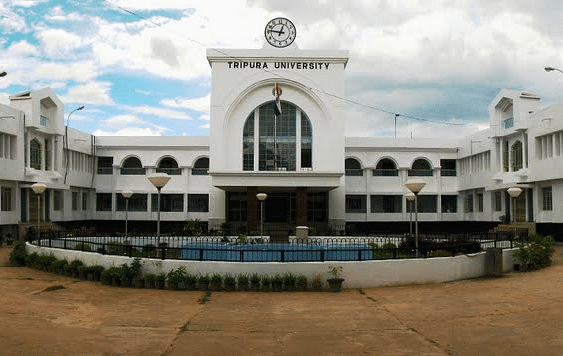
Tripura University
About
OfficialTripura University is a public institution in Agartala, established in 1987. Tripura University (TU) is the premier state university of Tripura, established in 1987 through the Tripura University Act. Located in Agartala, the capital city of Tripura, it has grown into a significant regional institution offering diverse undergraduate, postgraduate, and doctoral programs across engineering, sciences, humanities, commerce, and management disciplines. The university serves as the academic and research hub of the Northeast region, with a mandate to blend traditional knowledge with contemporary academic excellence. Founding History & Evolution: Tripura University was established with the vision of providing quality higher education to students across the northeastern states, particularly Tripura. Over the past three decades, it has evolved from a teaching university into a research-oriented institution. The university has consistently upgraded its infrastructure, faculty recruitment, and academic programs to meet national standards. It operates under the UGC regulatory framework and adheres to academic quality benchmarks set by the National Assessment and Accreditation Council (NAAC). Academic Programs & Structure: TU offers 40+ UG and PG programs through its 15 colleges and schools spread across Agartala and nearby areas. Key schools include School of Engineering & Technology, School of Commerce & Business Studies, School of Liberal Arts, School of Law, and School of Science. Engineering programs include Civil, Mechanical, Electrical, Electronics & Communication, and Computer Science & Engineering. Science streams cover Physics, Chemistry, Mathematics, Botany, and Zoology. The university also runs professional programs in B.Tech, B.Com (Hons), BA (Hons), BBA, MBA, LLB, and BSc nursing. Postgraduate programs (M.Tech, M.Sc, M.Com, MA, MBA) attract students seeking specialization. Doctoral degrees (PhD) are available in multiple disciplines with growing research focus. Research Strengths & Infrastructure: The university has established itself in emerging research areas including biotechnology, renewable energy, civil engineering for seismic-prone regions, and social sciences research relevant to the Northeast. Faculty members have published in peer-reviewed journals and secured research grants from UGC and state government bodies. Several faculty hold PhDs from IITs and central universities. Research centers focus on water resource management, agricultural innovation, and tribal studies. However, the research output remains modest compared to top-tier central universities, with limited industry-academia collaboration. The university library holds 150,000+ books and provides digital access to journals, though database subscriptions remain limited due to budget constraints. Placement & Career Outcomes: Placement performance varies significantly across disciplines. Engineering graduates achieve 65-75% placement rates with median salaries of ₹3.5-4.2 lakhs annually. Core engineering roles are secured in public sector undertakings (PSUs) like NTPC, ONGC, and state utilities. IT companies hire select computer science graduates for development roles. Commerce and management graduates secure placements in banking, finance, and retail sectors at ₹2.5-3.8 lakhs. Arts and science graduates typically pursue academic or government sectors. The placement cell has strengthened campus recruitment in recent years, with 60+ companies visiting campus annually. However, the quality of placements varies widely—startups and tier-3 companies form a significant portion of recruiters, limiting premium placement opportunities compared to IITs/NITs. Campus Life & Student Experience: The campus environment is generally peaceful with strong participation in cultural and sports activities. Annual fests like Sangeet (cultural), TechFest, and Sports Week attract students from nearby colleges. Inter-college competitions provide exposure. Hostel facilities are adequate with separate accommodations for boys and girls. Hostel rooms are basic but functional with shared or single occupancy options. Mess food is institutional standard—students often supplement with nearby eateries. WiFi connectivity exists but bandwidth issues are common during peak hours. The student community is diverse, with students from Tripura and neighboring states (Assam, Meghalaya, Manipur, Mizoram). Campus safety is generally good; ragging incidents are minimal and strict anti-ragging policies are enforced. Women students report feeling relatively safe, though late-night activities are discouraged. Notable Achievements & Unique Aspects: TU has produced several accomplished professionals including civil servants, engineers in PSUs, academicians, and entrepreneurs. The university's strength lies in its affordability, diverse student community, and strong academic culture. Being the state university, it plays a crucial role in regional development and workforce creation. The northeast location offers unique exposure to biodiversity, tribal cultures, and development challenges—valuable for students in social sciences and environmental studies. However, the university faces infrastructure limitations, faculty shortage in specialized areas, and limited industry connections compared to metropolitan universities. Who Should Apply: TU is ideal for students from the Northeast seeking affordable, quality engineering and science education without competing in fiercely competitive all-India entrance exams like JEE-Main. Students passionate about regional development, social sciences, and humanities find a supportive environment. Those comfortable with adequate but not premium facilities and seeking genuine academic growth rather than brand prestige are suited here. First-generation learners and economically disadvantaged students benefit from the supportive academic ecosystem and reasonable fee structure. However, students targeting top-tier companies, specialized research opportunities, or premium campus life should consider central universities or IITs/NITs. The university is not ideal for those seeking cosmopolitan exposure or quick corporate ladder climbs, as career networks are primarily regional.