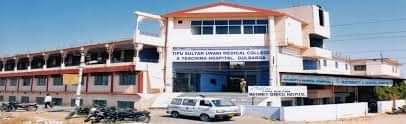
Tipu Sultan Unani Medical College & Hospital
About
OfficialTipu Sultan Unani Medical College & Hospital is a other institution in Gulbarga, established in 1998. Tipu Sultan Unani Medical College & Hospital, established in 2008, is one of the few dedicated institutions for Unani medicine education in South India. Located in Kalaburagi (formerly Gulbarga), a historically significant city in northern Karnataka, the college represents a serious academic commitment to preserving and advancing traditional Unani medicine system alongside contemporary medical science. The institution was founded with the vision of bridging the gap between classical Unani medical knowledge and modern healthcare delivery, making it a unique addition to India's medical education landscape. The college is recognized by the Central Council for Indian Medicine (CCIM) and operates under the Ministry of Ayush, Government of India, bringing Unani medicine into the mainstream medical education framework. Founded during a period of growing interest in integrating traditional medicine systems with evidence-based practice, Tipu Sultan UMIC has positioned itself as a center for not just medical education but also research in Unani pharmacology and therapeutics. The institution is named after Tipu Sultan, the 18th-century ruler known for his progressive policies and patronage of learning. The college's establishment reflects the renaissance of Unani medicine in India, particularly in regions like Karnataka where there is significant cultural and medical heritage. With 420 total students across undergraduate and postgraduate programs, the college maintains a deliberately small, intimate learning environment that contrasts sharply with larger conventional medical colleges. This allows for higher faculty-to-student ratios and more personalized clinical training. The campus spans 12 acres on the outskirts of Kalaburagi, providing adequate space for academic blocks, a well-equipped hospital wing, hostel facilities, and recreational areas. The location in a Tier-3 city offers students a quieter, more focused academic environment compared to metropolitan medical colleges, though with limited exposure to cutting-edge private healthcare infrastructure. Academically, the college offers a 5.5-year Bachelor of Unani Medicine & Surgery (BUMS) integrated program, Master's degrees in various Unani specialties (Moalajat, Ilmul Advia, Qawl wa Amal, Jarahiyat), and PhD programs. The curriculum is designed to blend classical Unani texts (like the works of Ibn Sina and Al-Razi) with modern diagnostic techniques, pharmacology, and clinical protocols. Students study traditional Unani concepts like humoral theory, temperament-based medicine, and herbal therapeutics alongside anatomy, physiology, biochemistry, pathology, and modern clinical medicine. This dual approach prepares graduates for practice in both traditional and integrated healthcare settings. The college's research strengths lie in Unani pharmacology, validation of traditional formulations through modern scientific methods, clinical efficacy studies of Unani drugs, and phytochemistry of medicinal plants used in Unani medicine. The attached hospital, with 150 beds, serves both as a teaching facility and as a community healthcare center, offering outpatient Unani medicine consultations and indoor hospitalization. The hospital pharmacy is particularly strong, producing various Unani formulations and operating a functional herbal garden. Faculty research has been published in journals focusing on complementary medicine, ayurvedic and Unani pharmacology, and traditional medicine systems. Industry partnerships exist with Unani pharmaceutical manufacturers and research organizations focused on evidence-based traditional medicine validation. The college has established collaboration with the Central Research Institute of Unani Medicine (CRIUM), Delhi, for research initiatives and curriculum development. Campus life at Tipu Sultan UMIC is relatively subdued compared to conventional medical colleges, reflecting the specialized nature of the institution and smaller student population. There are active clubs for research, social service, and traditional medicine awareness. An annual Unani Medicine Festival is held celebrating the contributions of historical Unani physicians and promoting awareness of Unani medicine among the public. Sports facilities exist on campus, though the focus is less on competitive sports and more on wellness activities. Hostel facilities are available for both men and women, with separate blocks. The overall environment is academically serious with a good mix of traditional learning and contemporary medicine practice. Placement and career prospects for Unani medicine graduates are evolving. Traditionally, Unani medicine practitioners establish private clinics and consultation centers. Government employment opportunities exist through AYUSH-designated positions in public health systems, particularly in states with established Unani medicine departments like Uttar Pradesh, Delhi, Karnataka, and Rajasthan. Many graduates pursue postgraduate studies to specialize and enhance career prospects. Some graduates transition into pharmaceutical companies dealing with Unani formulations, regulatory bodies like CCIM and state boards, or academic research roles. The placement percentage for BUMS graduates from Tipu Sultan UMIC is approximately 60-65%, though this includes self-employment and independent practice, which are more common in traditional medicine than in allopathic medicine. Notable alumni include practitioners who have established well-known Unani clinics in metropolitan areas, researchers who have contributed to Unani pharmacology journals, and academicians who teach at other institutions. The college has also produced graduates who have pursued doctorate degrees and are involved in research at institutions like CRIUM, Delhi, and various universities. Alumni work in various capacities including private practice, government healthcare delivery through AYUSH programs, pharmaceutical companies, regulatory bodies, and academic research. What makes Tipu Sultan Unani Medical College unique is its singular focus on Unani medicine education in a structured, accredited format. Unlike conventional medical colleges offering allopathic medicine, this institution represents a serious academic commitment to traditional medicine integration. The hospital attached to the college provides authentic training ground for Unani medicine practice. The location in Kalaburagi, a city with historical Unani medicine traditions, adds cultural authenticity. The college is ideal for students who are genuinely interested in traditional medicine systems, who believe in holistic and personalized healthcare approaches, and who are willing to practice in India's evolving AYUSH sector. It is NOT suitable for students seeking conventional allopathic medical careers or those interested in maximum earning potential immediately post-graduation. Students should apply if they are ideologically committed to Unani medicine, interested in research validating traditional pharmacology, want to serve underserved communities through traditional medicine, or are planning to establish independent practice. The competitive atmosphere is less intense than conventional medical colleges, making it suitable for students who prefer depth of knowledge in a specialized field over breadth across multiple systems.