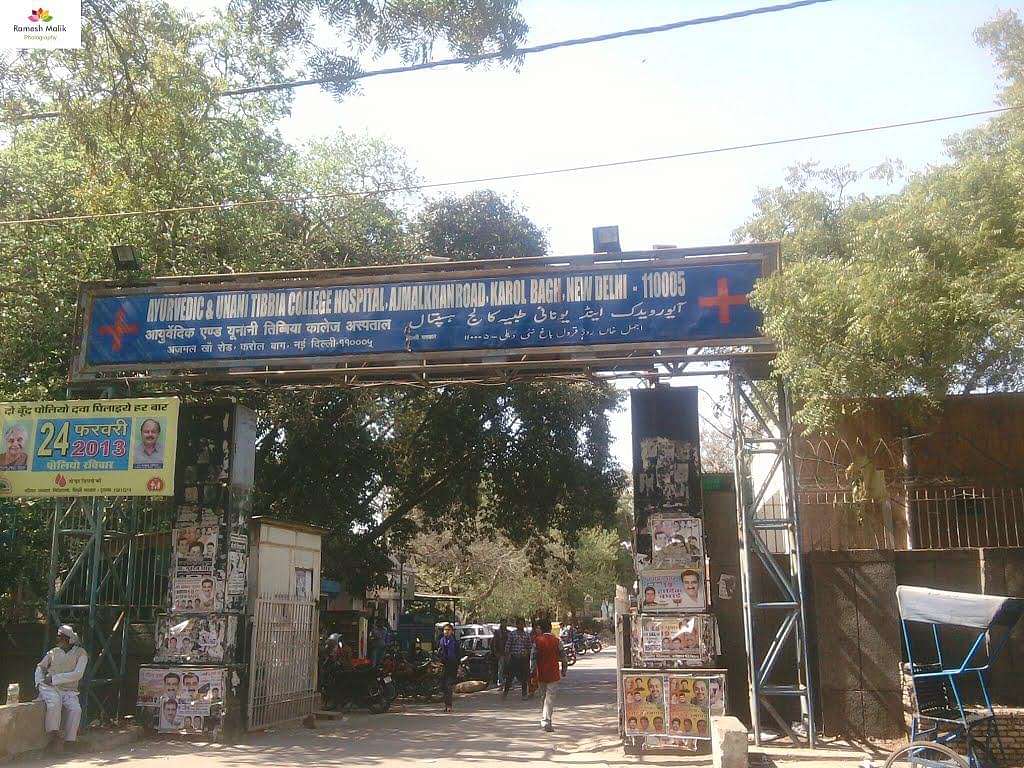
Ayurvedic & Unani Tibbia College
About
OfficialAyurvedic & Unani Tibbia College is a other institution in New Delhi, established in 1889. Ayurvedic & Unani Tibbia College (AUTC) stands as one of India's most prestigious institutions dedicated to traditional medicine systems, established in 1921 in the heart of New Delhi. Located opposite Karol Bagh Metro Station, the college operates within a strategically important urban location that provides direct connectivity to major Delhi institutions while maintaining access to quieter academic spaces. AUTC is a constituent college of Delhi University, making it one of the few institutions in India to formally integrate Ayurveda and Unani medicine under a single accredited umbrella with full degree recognition. The institution offers comprehensive undergraduate and postgraduate programs across Ayurveda and Unani systems of medicine, drawing from 5,000+ years of documented clinical experience while integrating modern scientific validation methodologies. The college maintains two distinct schools—the School of Ayurvedic Sciences and the School of Unani Medicine—each with specialized faculty, attached hospitals, and research wings. The attached AUTC Hospital operates as a teaching-cum-clinical facility with over 150 beds, providing students direct patient care exposure from the second year itself, unlike many purely classroom-oriented medical colleges. Academically, AUTC distinguishes itself through its rigorous curriculum blending classical text-based learning (primarily studying original Sanskrit and Persian texts) with evidence-based research protocols. Students spend their first year on foundational sciences (anatomy, physiology, biochemistry) taught using modern pedagogy, followed by specialized training in traditional diagnostic methods, pharmaceutical preparation, and clinical therapeutics. The 5-year integrated Bachelor of Ayurvedic Medicine & Surgery (BAMS) program follows a 4+1 structure: 4 years classroom and clinical education plus 1 year mandatory rotatory internship in the hospital. Similarly, the BUMS (Bachelor of Unani Medicine & Surgery) program emphasizes pharmaceutical chemistry, drug formulation, and humoral medicine theory. Research at AUTC has gained significant traction in validating traditional formulations using contemporary scientific standards. The college operates dedicated research laboratories for phytochemistry, pharmacology, and clinical trials, with ongoing projects examining anti-inflammatory efficacy of classical Ayurvedic herbs, standardization of Unani compound medicines, and comparative clinical outcomes in chronic disease management. Faculty members regularly publish in indexed journals, though publication culture remains nascent compared to allopathic institutions—approximately 35-40 research papers per year from the institution. The college maintains collaborations with CSIR institutes, Delhi University's science departments, and international Ayurveda research centers in Kerala and Karnataka. Placement ecosystem at AUTC differs markedly from engineering or management colleges. The primary career paths include: government employment (AIIMS-styled positions through Union Public Service Commission exams), private hospital networks (Apollo, Fortis, Max, Vimhans employ Ayurvedic physicians), pharmaceutical sectors (particularly companies specializing in herbal and Ayurvedic formulations like Himalaya, Dabur, Patanjali, Baidyanath), and clinical practice establishment. Around 60-65% of graduates establish independent practice within 2-3 years of completion, particularly in tier-2 and tier-3 cities where demand for Ayurvedic and Unani practitioners significantly outpaces supply. Some graduates pursue specialized postgraduate qualifications in clinical specialties like Panchakarma, Gynecology & Obstetrics (Stri Roga), or Pediatrics (Kaumarbhritya) for enhanced earning potential. Campus life at AUTC centers on academic rigor with cultural integration. Located in Karol Bagh—a densely populated South Delhi neighborhood—the 8.5-acre campus comprises the main academic block, two hostel wings, the attached teaching hospital, botanical gardens for medicinal plant identification, and a recently upgraded library containing 12,000+ texts including rare Sanskrit manuscripts and classical Unani literature. The college celebrates major festivals (Ayurveda Day on November 7, Unani Medicine Day) with competitions, seminars, and community health camps. Inter-collegiate sports participation remains limited due to the specialized medical curriculum, though cricket and badminton teams represent the college. Several student clubs focus on research methodology, clinical case studies, and traditional knowledge documentation. Who should apply: AUTC is ideal for students with deep interest in India's traditional medical systems, not merely seeking an alternative medical qualification. Success requires genuine philosophical alignment with holistic medicine paradigms, comfort with Sanskrit/Persian text interpretation, and tolerance for curriculum content that older medical practitioners still debate (differentiating between empirically validated versus traditionally asserted practices). Students should possess realistic expectations: Ayurvedic/Unani practice in India offers respectable middle-income potential (₹15-35 lakh annually for established practitioners) rather than the premium compensation of MBBS graduates, though job security and patient demand remain robust. The college suits students who struggled in 12th-standard science (due to JEE/NEET competition intensity) but possess genuine medical aptitude, strong subject conceptualization capacity, and comfort with longer clinical training (6+ years total including internship). Notable concerns: AUTC's curriculum continues debates on evidential standards—certain traditional procedures lack robust RCT validation, creating friction with modern medical students during inter-disciplinary interactions. The attached hospital, while providing excellent clinical exposure, operates with limited infrastructure compared to government medical college teaching hospitals (fewer diagnostic modalities, slower patient throughput). Faculty expertise remains concentrated in classical practitioners rather than modern-trained researchers, potentially limiting exposure to latest methodological standards. Internship placements depend partly on government quotas, creating unequal distribution across candidates. Government job pathways (UPSC, state service commissions) feature extremely limited positions (5-10 pan-India annually for Ayurveda), making career competition intense despite smaller candidate pools. The institution has produced doctors practicing across India, Nepal, and the Middle East, with growing recognition in Southeast Asian countries where traditional medicine integration into healthcare remains stronger. AUTC remains the go-to institution in North India for traditional medicine education, though regional competitors like Gujarat Ayurveda University and Aloha Ayurveda College (Karnataka) offer comparable programs with slightly better research infrastructure.