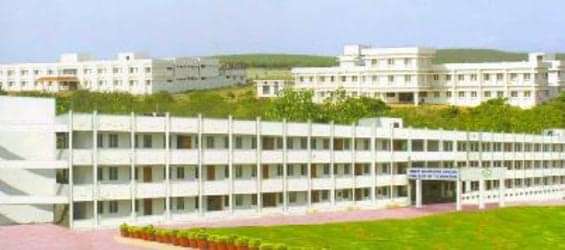
Theni Kammavar Sangam College of Technology
About
OfficialTheni Kammavar Sangam College of Technology is a other institution in Theni, established in 2007. Theni Kammavar Sangam College of Technology (TKSCT) was established in 2007 with the vision of providing quality technical education to rural and semi-rural Tamil Nadu. Founded by the Theni Kammavar Sangam Trust, the institution is named after a socio-cultural organization dedicated to community welfare. The college is located in Periakkulam village, approximately 15 km from Theni town, in the Madurai-Dindigul belt of Tamil Nadu, a region historically rich in agricultural heritage but educationally underserved at the engineering level. The college offers undergraduate (UG) engineering programs across 8 branches: Civil Engineering, Mechanical Engineering, Electrical and Electronics Engineering, Electronics and Communication Engineering, Computer Science and Engineering, Mechanical-related specializations, and related disciplines. It also offers Master's programs in specialized fields like Structural Engineering, Power Systems, and Advanced Manufacturing. The intake capacity stands at approximately 360 students per academic year across all UG programs, with roughly 45 students per branch. Academic Programs: The college operates under Anna University's Autonomous status framework (since 2019) and follows the latest syllabus with emphasis on practical laboratory work and industry-oriented curriculum. Each branch maintains well-equipped laboratories with modern instrumentation. The core curriculum emphasizes foundational knowledge with practical applications, though some students report that elective courses could be more cutting-edge. Project-based learning is integrated from the 2nd year onwards, with final-year capstone projects often aligned with local industrial needs and agricultural technology innovation. The college has recently introduced short-term certificates in emerging domains like IoT, AI fundamentals, and cloud computing to augment traditional engineering training. Research and Innovation: While TKSCT is not a research-intensive institution like IITs or NITs, it has established a Research and Development cell that facilitates student-faculty collaborative projects. The college has filed approximately 5-7 patents over the last five years, primarily in agricultural mechanization, renewable energy applications relevant to rural Tamil Nadu, and water management systems. Faculty members have published papers in national conferences and a few in international journals, though publication metrics remain below elite engineering colleges. The college encourages student entrepreneurship through its innovation incubation cell, which has supported 8-12 student startups in agritech and rural technology solutions since 2018. Placements: The placement record has shown steady improvement. In 2023-24, the overall placement percentage was approximately 72-75%, with median salary ranging from ₹3.5 lakhs to ₹5.2 lakhs depending on branch. CSE and ECE branches consistently perform better, achieving placement rates above 85% with median packages of ₹5.8-6.2 lakhs. Core engineering branches (Civil, Mechanical) see placement rates of 60-70% with median packages of ₹3.2-4.0 lakhs. Top recruiters include Infosys, TCS, Wipro, Tech Mahindra, HCL, Accenture, and L&T. However, unlike tier-1 colleges, off-campus recruitment during winter (unforeseen hiring rounds) is limited, and students heavily depend on the college-conducted placement drives. Manufacturing companies like Sona Comstar, Bosch, and Motherson Sumi recruit for core engineering roles. The highest salary recorded has been ₹12 lakhs (typically for exceptional CSE students placed in fintech or product companies), but such outliers are rare. A significant portion of graduates pursue higher education (around 15-20%) through GATE, CAT, or direct postgraduate admissions. Campus Life and Infrastructure: The college campus is set in a rural setting with 25 acres of greenery. While this provides a serene learning environment, it also means limited off-campus food/entertainment options and a certain sense of isolation. The campus has modern academic buildings constructed in the last 8-10 years, with air-conditioned classrooms in most blocks. The library holds approximately 28,000 books and provides access to digital journals through consortium memberships (INFLIBNET). Computer labs are well-maintained with newer systems replaced every 3-4 years. Hostel facilities exist for both boys and girls, with 3 boys' hostels and 2 girls' hostels accommodating roughly 1,400 students. Hostel rooms are basic but functional (2-3 sharing), with attached bathrooms. Mess food is predominantly vegetarian due to cultural preferences of the region, though non-vegetarian options are available 2-3 days per week. Electricity and water supply are reliable, with backup power available via generators. WiFi connectivity is available across campus with speeds of 10-20 Mbps, though connectivity can be inconsistent during peak hours. The campus has a well-equipped gymnasium, indoor sports facilities (badminton, table tennis, chess), and outdoor grounds for cricket, volleyball, and athletics. The health center on campus handles minor ailments and first aid; serious cases are referred to Theni Government Hospital (15 km away) or private hospitals in Madurai (65 km). Student Culture: The student body is primarily from Tamil Nadu, with representation from students whose families are in agriculture, small businesses, and service sectors. The majority are first-generation engineers. The college conducts annual technical fests (TechnoPhilia) and cultural programs, but these are modest in scale compared to tier-1 institutions. Technical clubs like the Robotics Club, IEEE Student Branch, and CSI Chapter are active and organize workshops and competitions. Ragging has reportedly been effectively minimized through strict institutional policies, though occasional incidents of subtle ragging have been reported in earlier years. The college administration is relatively strict on discipline, which some students appreciate and others find restrictive. The atmosphere is generally safe for women students, with dedicated girls' hostel security, but the rural location requires some caution during late hours. What Makes It Unique: TKSCT's primary strength is its affordability and accessibility to rural/semi-rural Tamil Nadu students. Tuition fees are approximately ₹1.5 lakhs per year, significantly lower than private engineering colleges in Tamil Nadu. The college has genuine commitment to agricultural technology and rural innovation, offering specializations relevant to southern Tamil Nadu's agricultural economy. The faculty-to-student ratio is better than many tier-2 colleges (approximately 1:15), enabling more personalized mentoring. The college's location in the Madurai-Dindigul industrial corridor provides access to manufacturing hubs, and companies frequently recruit from TKSCT for core engineering roles. Who Should Apply: TKSCT is ideal for students from Tamil Nadu who: 1. Seek affordable engineering education with good campus infrastructure 2. Are willing to adapt to a rural campus setting 3. Are interested in core engineering or agriculture-related technology 4. Cannot access IITs/NITs due to JEE Advanced cutoffs but have cleared JEE Main 5. Value practical, hands-on learning over theoretical research 6. Are open to careers in manufacturing, infrastructure, or agritech sectors Students should NOT apply if: 1. They expect tier-1 college-level placements (top tech/finance companies primarily hire from IITs/NITs/top private colleges) 2. They cannot manage rural location isolation and limited entertainment options 3. They are seeking cutting-edge research opportunities 4. Their interest is purely in software development and startups (limited mentorship in this domain) Overall, TKSCT represents a pragmatic choice for merit-based, cost-conscious engineering students in Tamil Nadu seeking quality education with reasonable placement prospects, though it lacks the prestige and placement premium of tier-1 institutions.