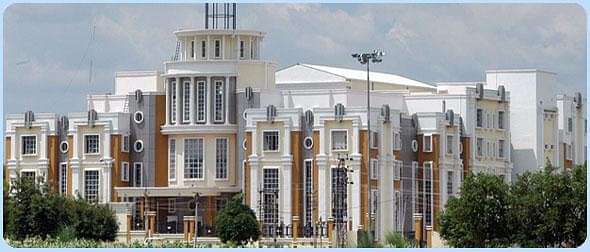
The IIS University
About
OfficialThe IIS University is a other institution in Jaipur, established in 1995. The IIS University (Integrated Indian School) was established in 1998 as a private institution in Jaipur, Rajasthan, with a mission to provide high-quality, industry-relevant education across multiple disciplines. Located in the suburban Mansarovar area on Jaipur Bypass Road, the university has grown into a multi-disciplinary institution offering undergraduate, postgraduate, and doctoral programs across engineering, management, law, architecture, design, sciences, and arts. The university received its recognition under Section 2(f) and Section 12(B) of the UGC Act in 2007, establishing its credibility as a legitimate higher education provider in India. Academic Structure and Programs: IIS University offers approximately 40+ programs across 8 major schools: School of Engineering, School of Management, School of Law, School of Architecture and Design, School of Sciences, School of Arts and Humanities, School of Applied Sciences, and School of Liberal Education. The engineering programs include B.Tech in Civil, Mechanical, Electronics & Communication, Computer Science & Engineering, and Electrical Engineering with an annual intake of approximately 400-500 students. The business school offers BBA, MBA in various specializations (Finance, HR, Marketing, Operations, Entrepreneurship), and doctoral programs. The law school provides BA LLB (5-year integrated), LLM, and specialized courses in corporate law and IP law. Architecture and Design programs include B.Arch, B.Design (Fashion, Interior, Graphic), and M.Arch with strong emphasis on practical project-based learning. Research and Innovation: The university has established several research centers focusing on renewable energy, smart city solutions, sustainable architecture, and business research. Faculty research output has been modest but growing, with publications in national and international journals primarily in engineering and management domains. Industry partnerships include collaborations with companies like TCS, Infosys, HCL, Jio, and various design firms. The university encourages interdisciplinary research but has not yet achieved significant national recognition in research funding or grants from bodies like CSIR or ICMR. Placement Record: Over the past three years (2022-24), the university has achieved a placement rate of approximately 75-82% in engineering programs and 70-85% in management programs. Average package in 2023-24 was around 5.5-6.2 LPA for engineering graduates and 6.5-7.2 LPA for management graduates. Top recruiters include TCS, Infosys, Wipro, Amazon, Flipkart, ICICI Bank, HDFC Bank, Deloitte, and various startups. Highest package recorded was approximately 18 LPA in 2023-24, with typical placement being in mid-tier IT companies and core engineering firms. Some unplaced students typically pursue higher studies or entrepreneurship. The placement cell is reasonably active but sometimes faces criticism for limited diversity in recruiter base, with heavy reliance on IT sector. Campus Infrastructure and Facilities: The 25-acre suburban campus features modern laboratory facilities with computing centers, electronics labs, civil engineering workshop, design studios with latest software, well-stocked library with approximately 80,000+ volumes and digital resources, sports complex with basketball court, badminton court, volleyball court, and outdoor track, swimming pool, health center with resident doctor, cafeteria serving multi-cuisine food, high-speed WiFi across campus (approximately 50+ Mbps), and dedicated hostel blocks. The campus is well-maintained with green spaces, though some older buildings show signs of age. Infrastructure is generally adequate for undergraduate studies but postgraduate research facilities are somewhat limited compared to premier institutions. Campus Culture and Student Life: The university has approximately 35-40 active student clubs and societies spanning technical (coding clubs, robotics, innovation), cultural (drama, music, dance), sports, and entrepreneurship domains. Annual events include TechFest (technical festival), Umang (cultural festival), and various sports competitions. Student diversity is good with representation from across India, though majority are from Rajasthan and North India. The student community is generally collaborative and supportive. Ragging has been reported sporadically in early 2010s but appears to have been largely controlled through strict policies. Women safety is taken seriously with dedicated women's hostel, CCTV surveillance, and counseling services, though some concerns about late-night transport exist. Admissions and Eligibility: Admissions to B.Tech programs are through JEE Main marks, with separate SNQP (scholarship-cum-need based programs) for merit-based candidates. MBA admissions are through CAT/MAT/GMAT/XAT scores. BA LLB admissions are through CLAT and merit-based entrance. B.Arch admissions are through JEE Main architecture or NATA. Direct admissions are also available for lateral entry in engineering (Diploma holders) and management (Bachelor's graduates). The university follows a transparent merit-based selection process with regular updates on its admissions website. Who Should Apply: IIS University is suitable for students seeking a private university experience in North India with decent placement outcomes, particularly those interested in engineering, management, law, or design. It's recommended for students who may not qualify for top IITs/NITs but want structured education with reasonable placement support. The university is particularly good for architecture and design aspirants as these programs have strong faculty and good industry linkages. It's less suitable for students with exceptional research interests or those targeting top-tier companies exclusively, as the research ecosystem is still developing. First-generation learners appreciate the supportive campus environment and counseling services. International students are welcome and the university has seen modest enrollment from Southeast Asian countries. Unique Selling Points: 1) Multi-disciplinary campus allowing interdisciplinary learning opportunities, 2) Strong focus on design education with industry partnerships, 3) Growing alumni network in startup ecosystem, 4) Affordable fees compared to similar tier-2 private universities, 5) Supportive faculty-student ratios in most programs, 6) Regular industry interactions and guest lectures. Critical Honest Assessment: The university is NOT at the tier of IIT/NIT/BITS but offers genuine value as a tier-2 private institution. Placement outcomes are good but not exceptional - not every graduate gets a job, and salary growth post-placement is moderate. Campus location on bypass road is somewhat isolated, requiring transport for city engagement. The research output and faculty profiles are not comparable to older private universities. Name recognition outside North India is limited. Fees are reasonable but not cheapest among private universities. Building infrastructure shows signs of aging despite regular maintenance.