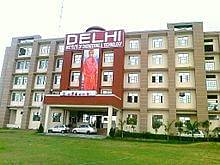
The Delhi Institute of Computer Technology
About
OfficialThe Delhi Institute of Computer Technology is a other institution in Delhi, established in 2001. The Delhi Institute of Computer Technology (DICT) was established in 2007 as a private engineering institution focusing on computer science and information technology education. Located in Greater Noida, on the Delhi-NCR border, DICT has grown into a mid-sized engineering college with a reputation for strong industry connections and practical skill development. The institute operates under the affiliation of Gautam Buddha University and is approved by AICTE, making it a recognized degree-awarding institution in the Delhi-NCR region. DICT's primary strength lies in its computer science and IT-focused curriculum. The institution offers undergraduate and postgraduate programs primarily in engineering disciplines, with specializations in computer science, information technology, and allied fields. The academic philosophy emphasizes practical learning, industry-aligned syllabus, and entrepreneurship alongside theoretical foundations. The institute has progressively updated its curriculum to include emerging technologies like artificial intelligence, machine learning, cloud computing, cybersecurity, and full-stack development. Research and innovation at DICT remain modest compared to premier institutions but are growing. The institute has established research labs focused on cloud computing, IoT applications, and software development methodologies. Faculty members are encouraged to pursue research with industry partners, and there are collaborative projects with IT companies. However, research output in terms of publications and patents is limited compared to IITs or established NITs. The research culture is developing but not yet mature. Campus infrastructure is functional and well-maintained. The campus spans approximately 15 acres with dedicated blocks for academic departments, a computer center with modern equipment, library facilities with both physical and digital resources, and sports amenities. The college has invested in Wi-Fi connectivity across campus and modern laboratory facilities. Hostel accommodation is available for both boys and girls with basic to moderate amenities. The mess provides North Indian vegetarian and non-vegetarian options, with quality ranging from average to good depending on the day and season. Placement performance is a key metric for DICT. The college consistently achieves 80-88% placement rates for B.Tech graduates, with average package ranging from 5-6.5 LPA and median packages around 5 LPA. Top recruiters include IT services companies like TCS, Infosys, Wipro, HCL, and Cognizant, along with some startups and consulting firms. However, placement figures show that a significant portion of students are placed in service-based IT roles with moderate compensation rather than high-paying product companies or elite consulting firms. The placement quality reflects the tier-2 status of the institution. Student life at DICT is characterized by a mix of academic focus and cultural activities. The institute has various student clubs including technical societies (coding clubs, AI/ML society), cultural clubs, and sports teams. Annual festivals like Tech Fest and Cultural Fest are organized, though they are smaller in scale compared to premier institutions. The college has a relatively active placement cell that coordinates recruitment drives and conducts mock interviews. Discipline is strictly maintained, and ragging is minimal due to strict enforcement of anti-ragging policies. The campus culture is professional and industry-oriented rather than research-intensive or academically exceptional. Students report a focused atmosphere with emphasis on skill development, internships, and job placement. The competitive environment is moderate, without the intense rivalry seen in IITs or top NITs. Peer learning is common, and there's a culture of group projects and team-based assignments reflecting industry practices. Notable aspects of DICT include its location advantage in the Delhi-NCR region, which hosts numerous IT companies and offers networking opportunities. The institute has collaborations with several IT firms for guest lectures, internships, and recruitment. Faculty members are generally industry-experienced, which brings practical knowledge to classroom teaching. The student-to-faculty ratio is reasonable at approximately 18:1. Limitations and honest concerns include: First, DICT is a tier-2 private engineering college, not a premium tier-1 institution, which means lower brand value in the job market compared to IITs, NITs, or top private universities. Second, research opportunities are limited, making it unsuitable for students aiming for higher studies or research careers. Third, the alumni network, while growing, is not as extensive as older established institutions. Fourth, the campus is in Greater Noida (tech park area), which has limited urban amenities compared to central Delhi locations. Fifth, tuition fees are moderately high for a tier-2 college, ranging from 3-4 lakhs per year, which may not provide commensurate value for students from higher socioeconomic backgrounds. Sixth, faculty retention can be an issue as experienced teachers move to better-paying or more prestigious institutions. Who should apply: DICT is ideal for students who scored 60-75 percentile in JEE Main, are genuinely interested in computer science and IT careers, want a structured placement-focused education, and value practical skills over theoretical depth. The institute suits students from middle-class backgrounds seeking a career in IT services or startups, who need hostel accommodation, and who are comfortable with Greater Noida as their college location. It's NOT suitable for students targeting IITs, top NITs, or research-focused careers. It's also not the best choice for those seeking a vibrant cosmopolitan college experience in central Delhi. DICT represents a pragmatic choice for IT skill development and entry-level placement in service-based IT roles, not a platform for exceptional achievement or elite career trajectories.