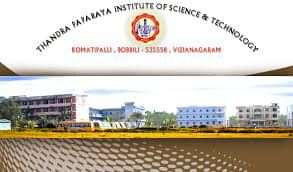
Thandra Paparaya Institute of Science & Technology
About
OfficialThandra Paparaya Institute of Science & Technology is a other institution in Vizianagaram, established in 2001. Thandra Paparaya Institute of Science & Technology (TPIST), established in 2008, is a private engineering college located in Vizianagaram district, Andhra Pradesh. Named after the legendary prince Thandra Paparaya, the institution was founded with the mission to provide quality technical education blended with entrepreneurial mindset and research orientation. The college operates under TPIST Trust, founded by prominent industrialists and education philanthropists from the region. The institute is approved by AICTE and affiliated to Andhra University, offering undergraduate and postgraduate programs in engineering, technology, and applied sciences. TPIST has emerged as a mid-tier engineering college in Andhra Pradesh with modest but growing placement records and increasing research contributions. ACADEMIC PROGRAMS: The college offers 8 undergraduate engineering disciplines (CSE, ECE, EEE, Mechanical, Civil, Chemical, AI&ML, Data Science) with an annual intake of approximately 480 students across all programs. At the postgraduate level, TPIST offers M.Tech programs in 4 specializations (Computer Science, Power Systems, Structural Engineering, Process Engineering) with an annual intake of 80 students. The college also offers B.Tech integrated with M.Tech (5-year programs) in select disciplines and conducts research-focused doctoral programs. RECENT ACADEMIC STRENGTHS: The college has invested significantly in curriculum modernization, introducing emerging domains like AI/ML, Data Science, IoT, and Cybersecurity. CSE and ECE branches have particularly strong industry connections. The college mandates student internships, industry projects, and research thesis components in the final year, ensuring practical exposure. Faculty members actively engage in collaborative research with IITs, NITs, and industry partners. PLACEMENT PERFORMANCE: Over the 2023-24 academic year, TPIST achieved a 78% placement rate for engineering graduates, with 72% for postgraduate students. The median salary for engineering graduates stood at ₹4.2 lakhs per annum, with CSE graduates averaging ₹5.8 lakhs. Top recruiters include HCL Technologies, Wipro, Infosys, TCS, and emerging startups from Hyderabad and Bangalore tech hubs. Manufacturing and core engineering placements have grown with companies like Bharat Heavy Electricals and L&T participating in campus drives. CAMPUS INFRASTRUCTURE: The 45-acre campus includes modern teaching blocks with smart classrooms, laboratories equipped with industry-standard tools, a central library with 45,000+ books and digital resources, a sports complex with cricket ground and indoor facilities, separate hostel blocks for boys and girls, a health center with resident doctor and ambulance, and a dedicated placement cell. WiFi coverage extends across most campus areas, though connectivity remains inconsistent in peripheral hostel blocks. The cafeteria operates multiple cuisines (vegetarian, non-vegetarian, regional) with meal options starting at ₹80-120 per meal. CAMPUS LIFE & CULTURE: TPIST hosts an annual technical fest (InnovateTech) and cultural fest (Spectrum) drawing participation from neighboring institutions. Over 40 student clubs cover technical domains, sports, cultural activities, entrepreneurship (a startup incubation cell launched in 2021), and social causes. The campus culture emphasizes academic rigor balanced with practical learning and social responsibility. Student-faculty interaction is relatively strong in smaller batches. However, being a rural campus, entertainment and social outlets within walking distance are limited—students typically travel to Vizianagaram city (12 km) or Visakhapatnam (85 km) for movies, shopping, and dining experiences. STUDENT DIVERSITY: The student body comprises approximately 55% students from Andhra Pradesh, 30% from Telangana, and 15% from other states. This regional diversity is relatively uniform, limiting pan-India exposure compared to tier-1 institutions. However, this also creates a cohesive, locally-rooted community. Gender composition is approximately 25% female students, which is slightly below national engineering average but improving annually. WHO SHOULD APPLY: TPIST is ideal for students seeking quality engineering education at reasonable fees (approximately ₹3-4 lakhs per annum total cost) without the intense competition and hierarchical campus culture of top-tier institutions. The college suits students who are self-motivated, interested in industry-relevant technical skills, and comfortable with a rural campus setting. Students aspiring for placements in IT/software services, manufacturing, and power sectors will find relevant opportunities. However, this college is NOT ideal for students prioritizing research-centric academics, prestigious international exposure, or a vibrant urban campus life. Students aiming for elite consulting firms (McKinsey, BCG) or top-tier finance roles should consider tier-1 institutions. CONCERNS TO NOTE: The institution's rural location (12 km from city center) limits access to restaurants, markets, entertainment, and healthcare specialties. Placements plateau around 4-5 lakhs for most non-CSE branches. Faculty attrition, particularly in emerging domains, has been a historical challenge. Research output and publications remain modest compared to NITs/IITs. Inter-college collaboration and student exchange programs are limited. Internet connectivity during peak hours can be unreliable. The surrounding area lacks significant IT industry presence—majority of placements require relocation to Hyderabad, Bangalore, or coastal Visakhapatnam. RECENT IMPROVEMENTS & TRAJECTORY: Under new leadership (since 2022), the college has upgraded labs, introduced industry-partnership programs (MOU with 12+ companies), established a dedicated startup incubation cell, and enhanced faculty recruitment in emerging domains. The college is pursuing NBA accreditation for engineering programs and has applied for NAAC accreditation. These developments suggest the institution is on an improving trajectory, though it remains positioned as a solid mid-tier regional engineering college rather than an aspirational destination for pan-India talent.