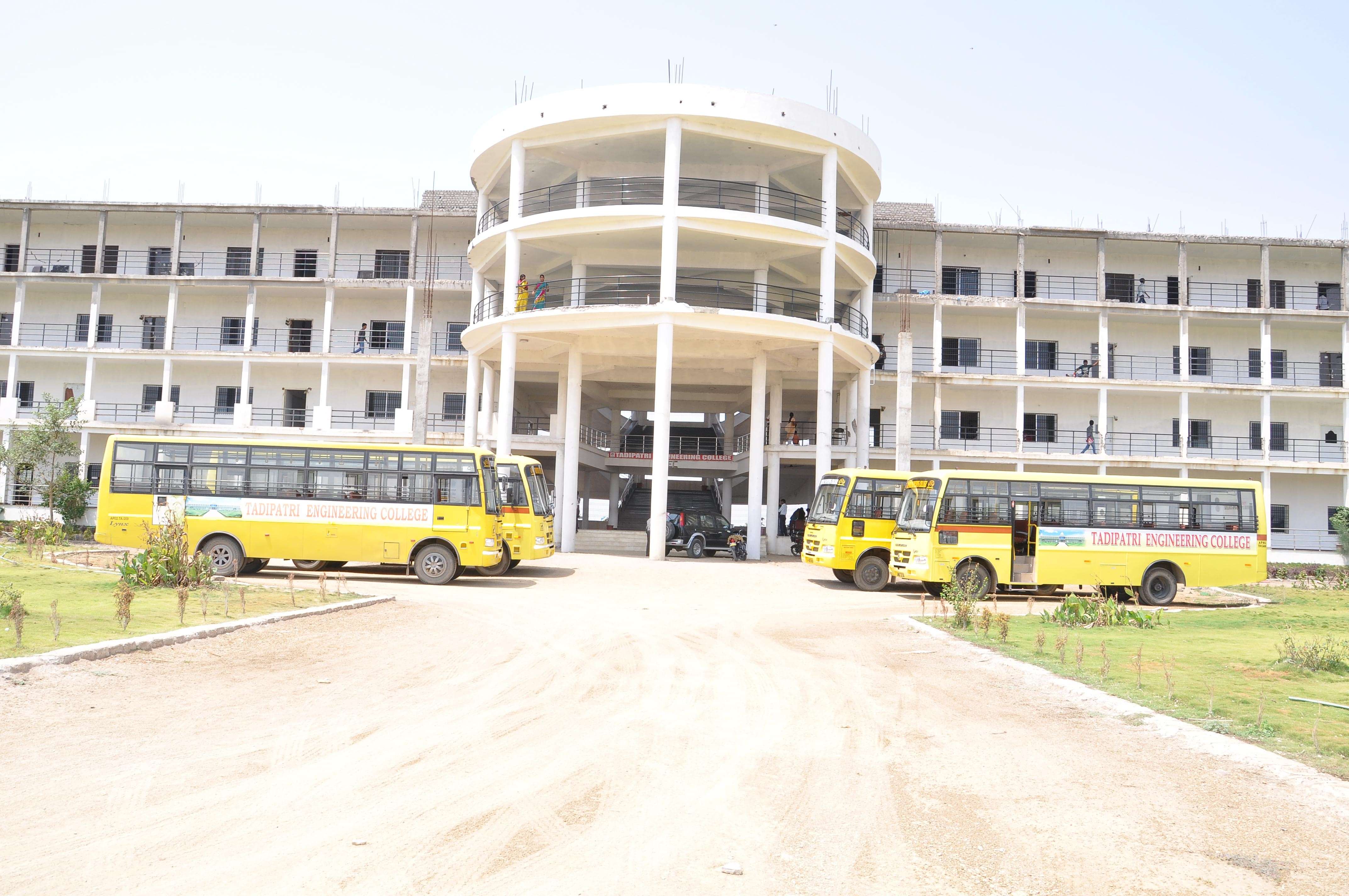
Tadipatri Engineering College
About
OfficialTadipatri Engineering College is a other institution in Anantapur, established in 2014. Tadipatri Engineering College (TEC) was established in 2008 as a self-financed private engineering institution in the Anantapur district of Andhra Pradesh. Located approximately 70 km from the district headquarters and 150 km from Bangalore, the college serves as a regional educational hub for aspiring engineers from rural and semi-urban backgrounds. The institution was founded with a mission to provide quality technical education at affordable costs to students who might otherwise lack access to premier engineering institutes, particularly from Rayalaseema region. TEC has evolved from a modest operation to a multi-program technical university, currently offering 8 undergraduate engineering programs and 6 postgraduate specializations. The academic programs span Civil, Mechanical, Electrical, Electronics & Communication, Computer Science, Information Technology, Artificial Intelligence & Data Science, and Chemical Engineering disciplines. Academically, TEC emphasizes a blend of theoretical knowledge and practical application. The curriculum is regularly updated to align with industry requirements and AICTE guidelines. The college maintains partnerships with over 40 companies for internships, skill development, and campus recruitment. Faculty includes 73% members with postgraduate qualifications, though only 12% hold PhDs—a significant limitation compared to tier-1 institutions. Research initiatives focus primarily on civil engineering applications, water management, renewable energy, and IoT-based solutions relevant to agricultural regions. TEC operates two research centers: the Center for Water & Soil Engineering and the Center for Agricultural Technology Innovation. However, research publication output remains modest, with approximately 85 publications in peer-reviewed journals annually across all departments. The college has established industry partnerships with companies including L&T, Hexaware, KPTL, local infrastructure firms, and agricultural technology companies. Campus infrastructure includes modern laboratory facilities, a central library with 45,000+ books and digital resources, computer labs with 400+ systems, and dedicated departments with equipment for practical training. However, the rural location presents significant constraints: limited internet connectivity outside campus networks, restricted access to specialized industrial equipment, and difficulty attracting top-tier multinational recruiters who prefer urban campuses. Placement outcomes have improved incrementally over the past five years. In 2023-24, aggregate placement percentage reached 68% across all branches, with median salary of 4.2 lakh INR annually. Core engineering sectors and IT companies remain primary employers, with manufacturing and infrastructure firms recruiting smaller cohorts. Top recruiters include Hexaware, TCS, Infosys, L&T, KPTL, local civil construction firms, and emerging startups. Notable alumni include several successful civil engineers in NHAI, irrigation department officials, and IT professionals at mid-tier software companies, though no C-suite executives or prominent industry founders have emerged. What distinguishes TEC is its affordability and accessibility for rural students. Annual tuition fees are approximately 85,000 INR for general engineering branches—significantly lower than comparable private institutions. The college provides scholarship support to 18% of students based on merit and financial need. This democratization of engineering education has made the institution valuable for students from villages and small towns across Rayalaseema who aspire for professional careers but lack resources for urban private colleges. The college culture emphasizes practical skill development, with mandatory internships, industry interaction, and entrepreneurship encouragement. Two annual flagship events—TechnoFest (technical competition) and AgroTech Summit (agriculture-tech focus)—foster innovation and community engagement. Student clubs focus on technical innovation (robotics, coding, civil design competitions) and social responsibility initiatives aligned with rural development themes. Campus life, however, remains constrained by the rural setting. Entertainment options beyond campus are extremely limited—nearest significant urban center (Anantapur city) is 70 km away. This isolation presents both advantages (focused academic environment, lower distractions) and disadvantages (limited social exposure, reduced access to cultural events, healthcare, and emergency services). TEC is ideally suited for students who: (1) seek affordable engineering education without sacrificing quality; (2) come from rural or semi-urban backgrounds and prefer colleges with similar demographic composition; (3) are interested in core engineering disciplines, civil engineering infrastructure projects, or agricultural technology; (4) are willing to trade urban campus life for practical, hands-on learning environment; (5) plan to work with PSUs, government departments, or local industries rather than exclusively multinational corporations. The college is NOT recommended for: (1) students seeking premier placement packages or multinational IT roles; (2) those prioritizing vibrant urban campus culture; (3) candidates with medical or health concerns requiring advanced healthcare access; (4) students uncomfortable with limited entertainment and social infrastructure; (5) those expecting world-class research facilities or PhD-intensive faculty mentoring. TEC occupies a distinct niche in Indian higher education—bridging the gap between tier-1 aspirations and ground-level accessibility, making it a pragmatic choice for deserving students from economically modest backgrounds seeking legitimate engineering careers.