Theivanai Ammal College for Women (Autonomous)
About
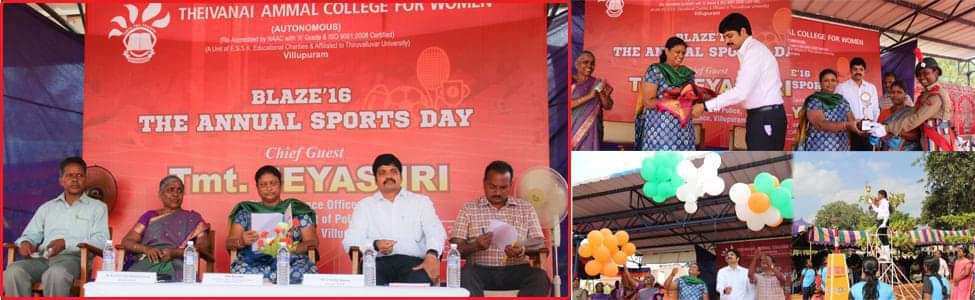
OfficialTheivanai Ammal College for Women (Autonomous) is a other institution in Viluppuram, established in 1989. Theivanai Ammal College for Women (Autonomous) is a pioneering institution for women's higher education established in 1988 in Viluppuram district, Tamil Nadu. Named after the legendary Tamil scholar and social reformer Theivanai Ammal, the college has evolved from a small undergraduate college to a comprehensive autonomous institution offering diverse academic programs. The college received autonomous status in 2016, reflecting its academic credibility and institutional governance standards. With over three decades of existence, the institution has become a landmark for women's education in rural Tamil Nadu, breaking geographical barriers and providing quality higher education to students from across the state and beyond. The college operates on a 28-acre sprawling campus in the semi-rural setting of Viluppuram district, approximately 140 km southwest of Chennai. This location provides a balanced environment—peaceful for studies yet connected to urban opportunities through regular bus services and railway connectivity. The setting has proven advantageous for hostel-based learning, with 70% of students residing on campus, creating a vibrant residential community. Academic programs span six faculties: Arts & Humanities, Sciences, Social Sciences, Commerce, Engineering, and Professional Studies. The college offers 28 undergraduate programs and 15 postgraduate programs, serving approximately 2,400 students. Core programs include B.A. (English, Tamil, History, Economics), B.Sc. (Physics, Chemistry, Botany, Zoology, Mathematics, Computer Science), B.Com, BBA, B.Tech (Civil, Mechanical, Electronics & Communication, Computer Science & Engineering), and BSc Nursing. The curriculum emphasizes skill development, with mandatory internships, industry-academic partnerships, and value-added courses in emerging areas like data science, digital marketing, and renewable energy. The institution received NAAC accreditation with an A grade in 2017, affirming academic excellence across multiple dimensions. NBA accreditation for engineering programs validates the quality of technical education. The college boasts 185 faculty members, with approximately 62% holding Ph.D. qualifications from recognized universities. Faculty engagement in research is evident through publications in national and international journals, with active research centers in biotechnology, women's studies, and environmental sciences. Research strengths center on herbal medicine, wastewater treatment, gender studies, and traditional knowledge systems. The college has established partnerships with institutions like IIT Madras (for research collaboration), Anna University (academic affiliation), and various NGOs for community engagement. Students participate in research projects, with encouragement for publications in peer-reviewed journals. The institution hosted the "State Level Symposium on Women Empowerment" in 2023, demonstrating commitment to scholarly discourse. Placement data for 2023-24 shows 78% placement rate across all disciplines, with engineering achieving 88% placement. The median salary stands at ₹3.2 lakhs per annum for engineering graduates, while B.A and B.Sc graduates earn median salaries of ₹1.8-2.1 lakhs. Top recruiters include Infosys, TCS, Wipro, HCL, Amazon, ICICI Bank, Axis Bank, and various startups. The college maintains an active placement cell with dedicated coordinators and conducts mock interviews, resume workshops, and skill development sessions. Campus life revolves around the college's women-centric environment, promoting leadership, confidence, and sisterhood. Over 35 student clubs and societies operate, including the Science Club, Entrepreneurship Cell, Rotaract Club, and cultural organizations. Annual events include Deepavali celebrations, annual day, techfest, cultural fest (Samskriti), and sports day. Sports infrastructure includes a gymnasium, basketball court, badminton courts, and volleyball facilities. The college actively encourages women's participation in sports, with students competing in district and state-level tournaments. The hostel facility accommodates 1,680 students across six hostels, segregated by academic year and discipline for better community building. Each hostel has a warden, assistant warden, and support staff ensuring safety and discipline. Rooms are equipped with basic furniture, fans, and internet connectivity. Hostel fees range from ₹45,000-60,000 annually depending on room type (single, double, triple occupancy). The college mess operates under strict hygiene standards with menus designed by nutritionists, offering both vegetarian and non-vegetarian options. Mess charges are approximately ₹15,000-18,000 per semester. The college maintains strict no-ragging policy with designated grievance cells and counseling services. Safety for women is paramount, with CCTV coverage in common areas, emergency alert systems in hostels, and a campus security team operating 24/7. There are no reported ragging incidents in the past five years, reflecting institutional commitment to a safe environment. Infrastructure includes a well-stocked library with 85,000 books, 150+ national and international journals, and digital databases (DELNET, INFLIBNET access). Computer labs are equipped with modern systems and software; each department maintains dedicated labs. Science departments have properly equipped laboratories with modern instruments. The college has established an Innovation Lab for student projects and entrepreneurship ventures. High-speed WiFi (15 Mbps) covers most of the campus, with dedicated bandwidth for academic purposes. Admissions follow merit-based selection through merit lists prepared from qualifying entrance examinations. For undergraduate programs, admissions are through state entrance examinations (TNEA for engineering, TN Common Entrance Examination for professional courses) and merit lists for arts/science streams. For postgraduate programs, qualifying marks in respective national/state entrance exams are required. The college maintains a transparent admissions process with regular updates on its official website and grievance redressal mechanism. The college is situated in Viluppuram district, a tier-3 city in Tamil Nadu, approximately 140 km from Chennai. The area experiences hot tropical climate with temperatures ranging from 28-38°C in summer. Nearest railway station (Viluppuram) is 35 km away; Chennai Central Railway Station is 150 km away. The area is well-connected by frequent buses to Chennai, Bangalore, and other major cities. Road connectivity to nearby towns like Ranipet and Tiruvannamalai makes the location accessible. Who should apply: Women aspiring for quality higher education in a safe, supportive environment with strong emphasis on academics, research, and personal development. Suitable for students seeking residential campus experience, those interested in women-centric education fostering leadership and confidence, and candidates from rural backgrounds wanting metropolitan-quality education in their state. Ideal for engineering aspirants seeking placement support, arts/science students wanting research opportunities, and those valuing affordability without compromising on academic quality. The college appeals to self-disciplined learners who thrive in structured environments and value community living. Best suited for students from Tamil Nadu and neighboring states due to regional language teaching options and state-level entrance examination alignment. Not recommended for those seeking cosmopolitan urban environment, as the rural setting requires adaptation; those seeking specialized research in niche areas; or students requiring frequent access to metro-level entertainment and shopping centers. The institution represents a significant investment in women's higher education in rural India, combining accessibility with quality, tradition with modernity, and local roots with national aspirations. Its autonomous status, accreditations, and consistent placement records validate its credibility as an institution of higher learning.