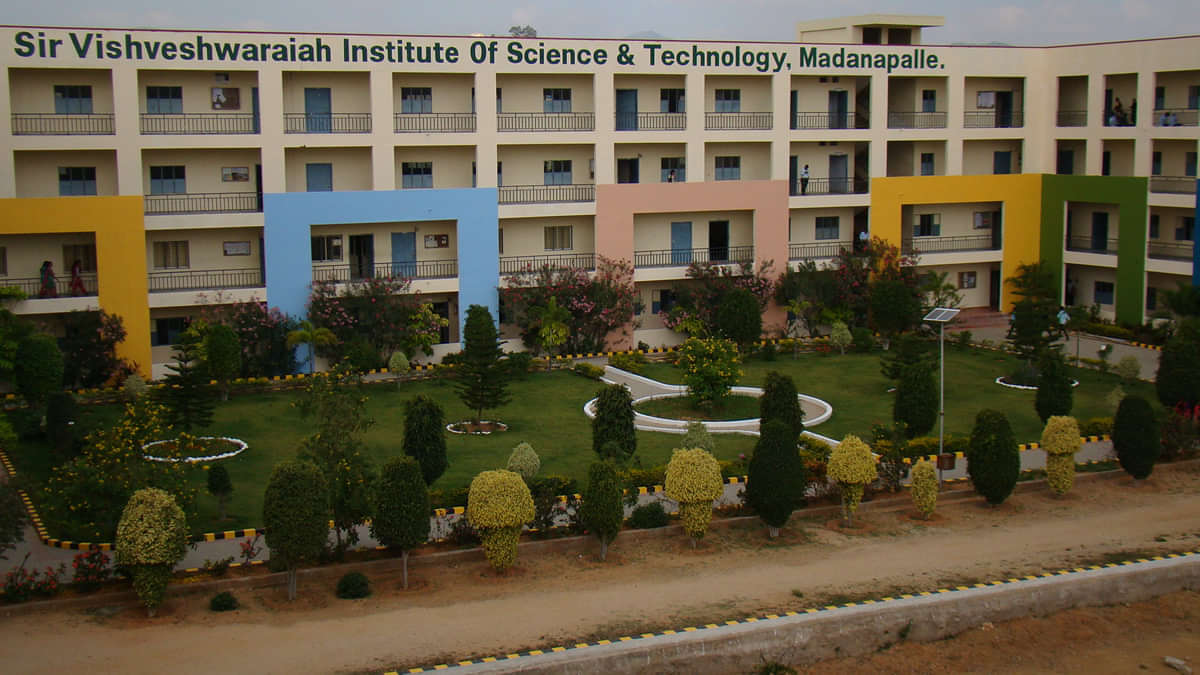
Sir Vishveshwaraiah Institute of Science and Technology
About
OfficialSir Vishveshwaraiah Institute of Science and Technology is a other institution in Chittoor, established in 2006. Sir Vishveshwaraiah Institute of Science and Technology (SVIST) is a private engineering college located in Chittoor, Andhra Pradesh, established in 2007. Named after the renowned engineer and visionary Sir Mokshagundam Visvesvaraya, the institution was founded with a mission to impart quality technical education and foster innovation in engineering disciplines. The college is situated approximately 140 km from Bengaluru and 75 km from Chennai, on the Madanapalle Road, positioned in the developing tech corridor of southern India. SVIST offers undergraduate and postgraduate programs across multiple engineering disciplines including Computer Science and Engineering, Electronics and Communication Engineering, Mechanical Engineering, Civil Engineering, Electrical and Electronics Engineering, and Chemical Engineering. The college has progressively expanded its academic portfolio to include specialized programs in emerging technologies such as Artificial Intelligence, Data Science, and IoT, recognizing industry demands. The institution is approved by the All India Council for Technical Education (AICTE) and affiliated with Jawaharlal Nehru Technological University (JNTU), Anantapur. SVIST maintains a moderate reputation in the local engineering education landscape, known for steady placement outcomes rather than exceptional performance. The college emphasizes a balanced approach between theoretical learning and practical application, with dedicated laboratory facilities, industrial collaborations, and a structured internship program. Research activities at SVIST are emerging, with faculty members engaged in applied research areas including renewable energy, embedded systems, web technologies, and industrial automation. However, research output and publications remain below national benchmarks for tier-2 engineering colleges. The campus infrastructure includes modern classrooms equipped with smart boards, computer laboratories with licensed software, well-stocked library with digital resources, sports facilities including basketball and volleyball courts, and dedicated hostel accommodations for both male and female students. The college operates a disciplined academic environment with regular academic audit and continuous improvement initiatives, though innovations in pedagogical approaches are gradual compared to premier institutions. Placement activities are a significant focus, with dedicated placement cell coordinating recruitment drives and skill enhancement programs. Notable recruiters include IT companies, automotive manufacturers, and emerging startups, primarily from southern India. The median salary package hovers around 4.5-5.5 LPA for engineering graduates, with variations across branches. The college maintains an acceptance rate of approximately 45-55%, accepting students primarily through JEE Main scores and merit-based counseling. Student-to-faculty ratio is approximately 13:1, enabling moderate interaction and mentoring. The campus culture emphasizes technical skill development, competitive exam preparation (GATE, CAT), and professional development through soft skills training. Several student clubs focus on technical competitions, coding contests, and robotics. Annual fests including tech symposiums and cultural programs provide platforms for extracurricular engagement. Chittoor being a tier-3 city ensures a relatively calm academic environment with reduced urban distractions, though limited entertainment and nightlife options. The college is recommended for students seeking solid engineering education at affordable costs, those interested in specific technical domains with good industry connections in southern India, and students who prefer disciplined academic environments with steady placement outcomes. Students should be aware that SVIST is not ranked among top-100 engineering colleges nationally, research opportunities are limited compared to IITs and premium NITs, and the geographic location offers limited internship proximity to major tech hubs beyond occasional campus recruitment. The institution suits motivated self-learners who can leverage available resources effectively and students willing to relocate to tier-3 cities for cost-effective engineering education with reasonable placement prospects.