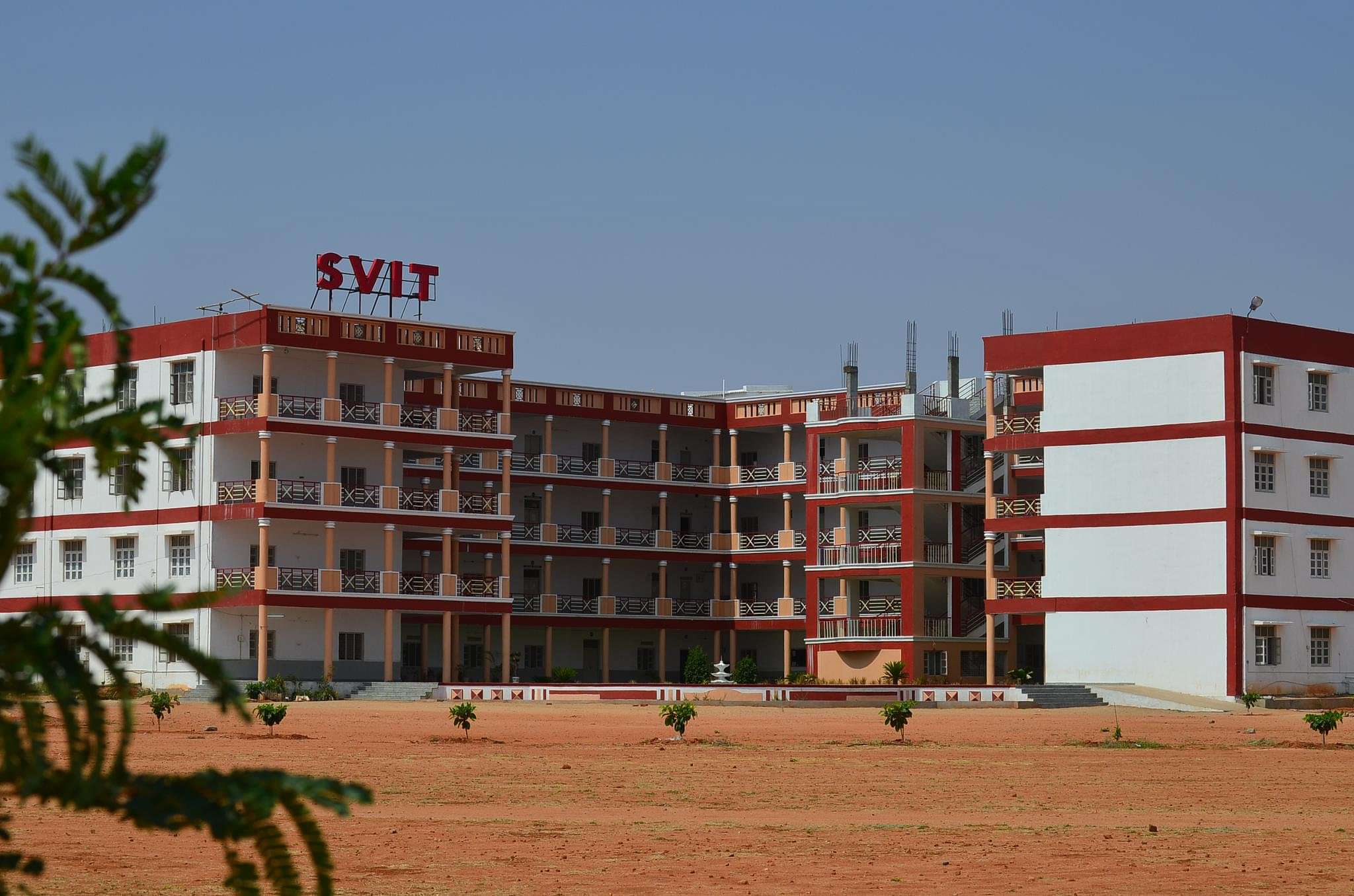
Sri Venkateswara Institute of Technology
About
OfficialSri Venkateswara Institute of Technology is a other institution in Anantapur, established in 1999. Sri Venkateswara Institute of Technology (SVIT), established in 1998, is a private engineering institution located in Anantapur, Andhra Pradesh. Founded with the vision of creating technically competent and socially responsible engineers, SVIT has evolved into one of the prominent engineering colleges in the region. The institute is situated approximately 15 km from the temple town of Tirupati, benefiting from proximity to both educational and cultural centers while maintaining a focused campus environment away from urban chaos. The college offers undergraduate and postgraduate programs across eight engineering disciplines: Civil Engineering, Mechanical Engineering, Electrical & Electronics Engineering, Electronics & Communication Engineering, Computer Science & Engineering, Information Technology, Chemical Engineering, and a specialized program in Biotechnology. Each program is designed with industry-aligned curricula, incorporating practical skills alongside theoretical knowledge. The institute has progressively strengthened its academic offerings with value-added courses in artificial intelligence, data science, IoT, and cloud computing to keep pace with industry demands. Academic Infrastructure and Research: SVIT houses dedicated research labs equipped with modern instrumentation for materials science, power systems, embedded systems, and networking. The institute has established industry-partnership-driven research centers in collaboration with leading manufacturing and technology companies. Faculty members are encouraged to pursue doctoral research, with approximately 35% holding PhD qualifications. Recent research outputs include publications in peer-reviewed journals and collaborations with IITs for specialized research projects in energy efficiency and sustainable engineering. Placement Performance: The 2023-24 placement cycle witnessed 92% placement rate among eligible students. The median salary for engineering graduates stands at ₹4.2 lakhs per annum, with the highest package reaching ₹12.5 lakhs. Computer Science and Information Technology branches consistently achieve 98%+ placements with higher salary packages, while core engineering branches (Civil, Mechanical) experience 85-90% placement with median salaries of ₹3.5-3.8 lakhs. Top recruiters include TCS, Infosys, Wipro, HCL, Amazon, Flipkart, Bajaj Auto, and various mid-sized IT consultancies. The institute maintains active placement cell with dedicated coordinators for each branch, conducting regular mock interviews and skill development sessions. Campus Life and Infrastructure: The 45-acre suburban campus provides a balanced academic environment with adequate facilities for both studies and extracurricular activities. The institute operates a 24-hour library with over 45,000 books and digital access to major engineering databases. Hostels accommodate approximately 1,200 students with separate facilities for men and women, featuring basic but functional amenities including WiFi, study areas, and recreational spaces. Three main hostels (Sri Venkateswara, Sri Padmavati, and Sri Balaji) cater to different class years. The mess serves both vegetarian and non-vegetarian food at ₹2,800-3,200 per month, with quality rated as average—acceptable but not exceptional, with occasional complaints regarding variety and hygiene standards. The campus operates a cafeteria, multiple small eateries, and a well-stocked convenience store. Cultural and Technical Activities: The institute celebrates Technozest (annual technical festival) in March, attracting participation from neighboring engineering colleges. Cultrozest is the cultural festival held in February featuring dance, music, drama, and art competitions. Sports Day in April includes cricket, badminton, basketball, and athletics. Students club activities include photography club, coding club, robotics club, debate forum, entrepreneurship cell, and various sports associations. Participation in these activities is encouraged but not mandatory, leading to moderate engagement levels. Campus Safety and Life Quality: The suburban location in Anantapur ensures a relatively safe and distraction-free environment. Ragging incidents are rare, with strict institutional policies and regular awareness programs. Women students report feeling reasonably safe on campus with adequate security measures, hostel gates secured, and emergency response systems. However, the conservative nature of Anantapur city restricts evening outings for women, with most social activities confined to campus. The overall student rating for campus life stands at 6.8/10, reflecting satisfaction with academics and infrastructure but limited external entertainment options. Academic Rigor and Faculty Quality: The institute maintains academic standards comparable to mid-tier private engineering colleges. Admission is primarily through JEE Main scores, with cutoffs varying between ranks 35,000-60,000 across general category for top branches. Faculty-student ratio is maintained at approximately 1:15, allowing reasonable interaction. However, quality varies—senior faculty members with industry experience are engaging, while junior faculty sometimes lack practical exposure. Continuous professional development programs are conducted, though participation rates suggest room for improvement. Placement Concerns and Realistic Assessment: While overall placement percentage is respectable, it's important to note that approximately 8% of graduating students remain unplaced, primarily from civil engineering and mechanical engineering branches where manufacturing sector positions are limited. Average salary packages, while respectable for tier-2 private institutions, lag significantly behind IITs and NITs. Core engineering branch students frequently opt for higher education (M.Tech, MBA) rather than direct placements due to modest salary expectations in core industries. Who Should Apply: SVIT is suitable for students seeking a well-rounded engineering education in a focused campus environment without metropolitan distractions. It suits those with JEE Main ranks between 35,000-65,000 who couldn't secure NIT/IIIT positions but seek quality education with reasonable placement prospects. The institute is particularly valuable for students interested in Computer Science, IT, and emerging technology domains. Those prioritizing vibrant college social life or aspiring for top-tier tech company packages should consider more established institutions. Students from Andhra Pradesh and neighboring states benefit from geographical proximity and regional network advantages. Institutional Strengths: Affordable private college fees relative to quality, strong computer science academics, active industry connections for internships, scholarship programs for merit and economically disadvantaged students, good infrastructure for technical learning, and a disciplined campus environment. Institutional Weaknesses: Limited research output compared to established engineering colleges, moderate faculty research productivity, restricted city environment for campus life, infrastructure quality slightly below premium private colleges, and variable quality in non-technical departments.