Supreme Knowledge Foundation
About
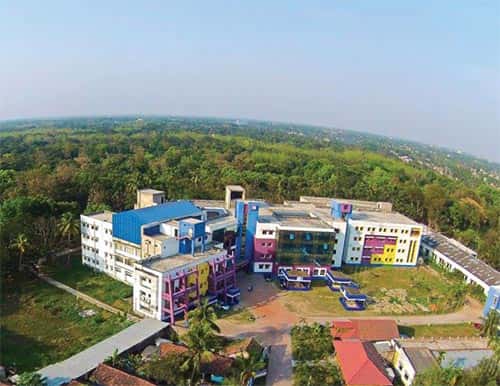
OfficialSupreme Knowledge Foundation is a other institution in Hooghly, established in 2009. Supreme Knowledge Foundation (SKF) was established in 2008 as a private deemed-to-be university in Hooghly, West Bengal, with a mission to provide quality higher education in engineering, management, and applied sciences. Located approximately 45 kilometers north of Kolkata, the institution emerged during India's higher education expansion phase and has grown to serve over 3,500 students across multiple disciplines. The founding vision centered on creating an accessible pathway to professional education for students from Eastern India, particularly those who might not secure admission to premier IITs and NITs but sought equivalent quality at reasonable costs. SKF received its deemed university status in 2012, marking a significant milestone in its credibility and autonomy. The university operates under a moderate fee structure compared to top-tier private institutions, making it an attractive option for middle-class and upper-middle-class families across West Bengal, Bihar, and Odisha. Academically, SKF emphasizes a curriculum-industry alignment approach, with regular feedback from recruiters shaping program content. The engineering programs (Electronics & Communication, Mechanical, Civil, Computer Science) form the backbone with approximately 1,200 UG students annually. The management programs (MBA) and applied science programs (M.Tech, B.Sc) constitute the remaining strength. However, SKF operates in a hypercompetitive region dominated by IIT Kharagpur, Jadavpur University, and numerous other established institutions, which constrains its brand recognition and attracts primarily regional students rather than all-India talent. The campus infrastructure is functional but modest—the 28-acre suburban campus features academic blocks, hostels, and recreational facilities built incrementally. The library holds approximately 45,000 volumes with limited digital resources compared to top institutions. The research environment remains developmental; while faculty publications exist, the quantum and impact remain below tier-1 standards. Teaching-centric rather than research-centric, SKF emphasizes placement preparation and industry exposure. Placement outcomes have been consistent at 70-75% for engineering programs, with median packages around 4.5-5.5 LPA, reflecting realistic expectations for a tier-2 private institution in Eastern India. Notably, the institution struggles with faculty retention—salary structures lag behind metro-based universities, leading to frequent transitions of experienced faculty. Student diversity is limited; approximately 85% hail from West Bengal, Bihar, and Odisha, reducing cross-cultural campus exposure. The absence of a strong alumni network compared to established institutions limits mentorship and career acceleration for students. For prospective students, SKF represents a pragmatic choice: it offers a legitimate engineering/management degree, decent placement support, and reasonable fees, but should not be viewed as equivalent to IITs, NITs, or top private universities. It suits students seeking a solid foundation with placement-focused education in a semi-urban setting at moderate costs, particularly those unable to secure NIT or top private university admission but possessing strong academics. Students expecting cutting-edge research, world-class infrastructure, or extensive industry connections should look elsewhere. The institution's strength lies in its personalized attention (smaller batch sizes than mass-market private colleges), functional placement cell, and regional recruiter relationships.