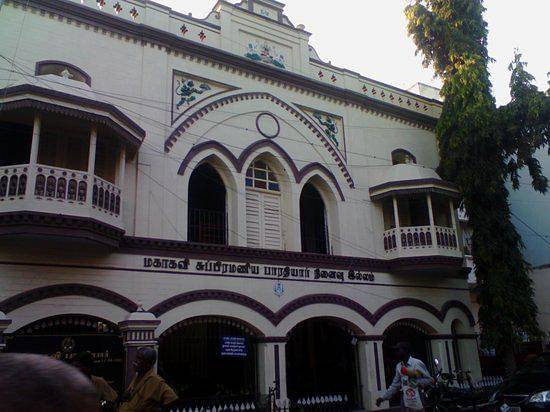
Subramania Bharati College of Science & Technology
About
OfficialSubramania Bharati College of Science & Technology is a other institution in New Delhi, established in 1992. Subramania Bharati College of Science & Technology (SBCST), established in 2001, is a private engineering and science institution located in Rohini, North-West Delhi. Named after the celebrated Tamil poet and nationalist Subramania Bharati, the college was founded with the vision of creating a technology-driven learning ecosystem that emphasizes both theoretical knowledge and practical application. Over two decades of operation, SBCST has evolved into a moderately-recognized institution in Delhi's private college landscape, though it remains significantly less prestigious than top-tier institutions like DTU or NSIT. The college operates under the affiliation of Delhi University for certain science programs and has obtained necessary approvals from AICTE for engineering disciplines. The institution offers undergraduate and postgraduate programs spanning engineering, applied sciences, and technology disciplines. Engineering programs include Computer Science & Engineering, Electronics & Communication Engineering, Electrical Engineering, Mechanical Engineering, and Civil Engineering. The science division offers B.Sc. programs in Physics, Chemistry, Mathematics, and integrated programs combining these with electronics or computer science. Postgraduate offerings include M.Tech. programs in Computer Science, Electronics, and related fields, along with M.Sc. programs. The college has gradually expanded its academic portfolio but remains primarily focused on engineering and sciences rather than liberal arts or social sciences. From a research perspective, SBCST maintains modest research activity through its faculty. The college has established a few research centers focused on embedded systems, renewable energy, and data science, though research output (publications and patents) remains limited compared to premier institutions. Faculty members are primarily oriented toward teaching, with a growing emphasis on applied research projects. The college encourages student-industry collaboration through its technology centers, though the scale and impact of research initiatives are considerably smaller than in IITs or Delhi University's top colleges. Academically, the curriculum is structured to balance theory and practice. Students benefit from well-equipped laboratories for electronics, computer science, and engineering disciplines. The college has invested in modern computing facilities, including high-performance computing labs and maker spaces. However, library resources, particularly rare books and extensive digital databases, are more limited than in established government institutions. Faculty qualifications are mixed—while senior faculty members hold PhDs and industry experience, newer faculty may have limited research credentials. Student-faculty ratios in larger batches (especially first-year engineering) can exceed 1:50, limiting personalized mentoring. Placement performance has been a significant strength relative to other private Delhi colleges. Over the past 5 years, SBCST has achieved placement rates ranging from 78-85%, with median salaries in the 5-7 LPA range for engineering graduates. Top recruiters include mid-tier IT companies, financial services firms, and some Fortune 500 companies. However, SBCST does not attract the same caliber of employers that visit IITs or DTU, and fewer students secure roles in prestigious consulting firms or MAANG (Microsoft, Amazon, Apple, Netflix, Google) companies compared to tier-1 institutions. Engineering graduates from core branches (mechanical, electrical, civil) typically face lower placement rates (60-70%) and lower packages compared to CSE graduates. Campus infrastructure is modern but not lavish. The Rohini campus features a mix of academic buildings, laboratory complexes, a modest library, cafeteria, and sports facilities. Hostel accommodations are available for limited on-campus residents, with most students commuting or residing in private PGs in nearby areas. The campus is well-connected to North-West Delhi via metro (Line 1 and Line 6), making commuting relatively convenient. Internet connectivity across campus is reliable for academic purposes, though bandwidth during peak hours can be strained. Student life at SBCST is moderately active. The college organizes an annual technical festival (TechnoFest) and cultural event, alongside departmental seminars and guest lectures. Multiple clubs exist for coding, robotics, photography, and sports, though participation varies. The student body comprises Delhi residents (approximately 60%), students from other Delhi NCR areas, and a smaller percentage from across India. The relatively commuter-heavy nature of the student population means campus engagement outside class hours is lower than residential colleges. Regarding reputation and recognition, SBCST holds accreditation from the UGC and NAAC (with a B+ grade awarded in the last cycle). NBA accreditation exists for selected engineering programs. However, the college does not feature in national rankings (NIRF, QS, THE) and is not considered part of the elite tier of Indian private engineering colleges. Employers and further education institutions generally perceive SBCST as a competent mid-tier institution suitable for entry-level technical roles, though not as a gateway to top-tier careers compared to IITs, BITS, or VIT. Who should apply? SBCST is most suitable for students seeking engineering or science education who score reasonably well in entrance exams but do not qualify for top government colleges (like DTU, NSIT, or IITs) or premium private colleges. The institution offers genuine technical learning, decent placement prospects, and a structured environment, making it a reasonable option for those prioritizing career-oriented education over brand prestige. Students with specific interests in emerging areas like renewable energy or data science may find niche opportunities. However, students aspiring for MAANG roles, research-focused careers, or those valuing brand recognition over actual learning should consider tier-1 alternatives. The college suits Delhi-based students who can leverage commuting or those willing to compromise on prestige for solid academics and moderate placements.