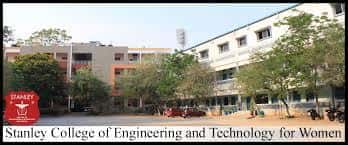
Stanley College of Engineering and Technology for Women
About
OfficialStanley College of Engineering and Technology for Women is a other institution in Hyderabad. Stanley College of Engineering and Technology for Women (SCETW) was established in 2007 as a private women's engineering college located in Ibrahimpatnam, approximately 35km south of Hyderabad on the Vizag-Chennai National Highway. The institution emerged from the Stanley Technical Education Society's vision to provide quality technical education exclusively to women students. Over its 17-year history, SCETW has developed into a recognized player in women's technical education in South India, with a particular focus on bridging the gender gap in engineering disciplines. The college offers undergraduate engineering programs across 7 major disciplines: Computer Science and Engineering (CSE), Electronics and Communication Engineering (ECE), Electrical and Electronics Engineering (EEE), Mechanical Engineering (ME), Civil Engineering (CE), Chemical Engineering (CHE), and Information Technology (IT). All undergraduate programs are 4-year full-time courses with intakes ranging from 60-90 students per branch. The college has secured approval from All India Council for Technical Education (AICTE) for all its programs and maintains a curriculum aligned with APJ Abdul Kalam Technological University standards initially, later transitioning to Osmania University-affiliated regulations. Academically, SCETW positions itself as a college focused on conceptual clarity rather than rote learning. The curriculum emphasizes both theoretical knowledge and practical skill development. The college has partnerships with industry leaders for internship placements, mentorship programs, and curriculum feedback loops. The faculty-to-student ratio is approximately 1:13, which allows for relatively better accessibility for clarifications compared to larger institutions. However, it's important to note that SCETW is not among the top-tier women's engineering colleges in India (which would be institutes like NIT Warangal (Women's hostel) or established deemed universities); it operates at the 'good regional college' level rather than elite status. Research and innovation have been growing areas, though SCETW isn't primarily a research-focused institution. The college has established research labs in IoT, cloud computing, renewable energy, and advanced manufacturing. Faculty members have published papers in journals and conferences, and the college encourages students to undertake minor and major projects. However, the research output is modest compared to NITs or top private universities. The institution has partnerships with companies like Cognizant, IBM, Microsoft, and TCS for collaborative research initiatives and student training. Placement performance has been a consistent strength. In recent years, the college has maintained placement rates between 78-85% for graduating batches, which is respectable but not extraordinary. The median salary has hovered around 3.5-4.2 LPA, with highest salaries reaching 12-14 LPA in computer science branches during good years. The main recruiting sectors are information technology and IT services (approximately 60% of placements), followed by core engineering roles in manufacturing and infrastructure (20%), finance and banking (10%), and consulting (5%). Companies like Infosys, Wipro, HCL, Accenture, Cognizant, and TCS are regular recruiters. However, salary growth potential post-placement can be limited without active upskilling, and the college's alumni network, while growing, isn't as strong as tier-1 institutions. Campus facilities at SCETW include a library with approximately 45,000 books and digital access to IEEE Xplore, ASCE, and ASME databases; computer labs with 300+ systems for various programming and design courses; a dedicated research block with laboratories for specialized domains; a sports complex with volleyball and badminton courts; a 400m athletic track; and a swimming pool. The campus has WiFi coverage across academic blocks and hostel areas. Medical facilities include a health center with a resident nurse and visiting doctor services. The main auditorium has capacity for 500 persons and is used for seminars, conferences, and cultural events. Campus life at SCETW is moderately vibrant. The college sponsors over 25 student clubs and societies including technical clubs (coding, robotics, IoT), cultural clubs (music, dance, art), sports teams, and social impact initiatives. The annual technical fest 'Stanley Fest' is held in February and attracts participation from neighboring colleges. The college also conducts events like Women in Engineering symposiums, entrepreneurship conclaves, and alumni networking sessions. However, being a women-only college in a semi-urban location away from Hyderabad's central areas, the social scene is quieter than coed urban campuses. Some students find the restricted dating culture and limited off-campus opportunities a con, while others appreciate the focused, less distraction-prone environment. Hostel facilities are available with approximately 1,100 women students residing on campus (about 60% of student strength). Hostels are organized as blocks with 2-3 students per room on average. Amenities include attached bathrooms, 24/7 water and electricity, WiFi in rooms, common study areas, laundry services, and CCTV surveillance. Monthly hostel fees range from 8,000-12,000 INR depending on room type and block location. The mess operates on a contract model providing breakfast, lunch, and dinner with hybrid menu options. Mess quality is decent but occasionally inconsistent; meal variety improves during special occasions. Monthly mess charges are approximately 2,500-3,200 INR. Overall hostel experience is average—functional and safe but lacking the comfort and amenities of premium institutions. Student sentiment about SCETW is mixed. Strengths include: faculty dedication, especially in core subjects; hands-on learning through projects and internships; safe, all-women environment; reasonable fee structure compared to premium private colleges (approximately 3.8-4.5 LPA for 4-year program); and geographic location with decent connectivity to IT hubs (Hyderabad is 30-40 minutes away via shared cabs). Weaknesses include: campus location far from city center limiting off-campus entertainment and part-time job opportunities; limited alumni network compared to older or more prestigious institutions; placement diversity limited to IT services and core roles without strong consulting or BFSI pipelines; outdated infrastructure in some older buildings; and slow decision-making on academic innovations. The college is most suitable for: women students passionate about engineering without the competitive advantage for top-tier colleges (BITS, NIT entrance); first-generation learners seeking safe, supportive learning environments; students from Andhra Pradesh and Telangana with decent boards/JEE scores; girls with mid-range JEE Main scores (150-220 range); and those prioritizing placements in IT services over boutique roles. It is less suitable for students seeking research-heavy environments, entrepreneurship focus, or aspirations for consulting/high-end finance roles immediately after graduation. The college acts as a solid stepping stone for IT services careers, particularly suitable for girls from conservative backgrounds seeking gender-supportive education and reasonable placement outcomes.