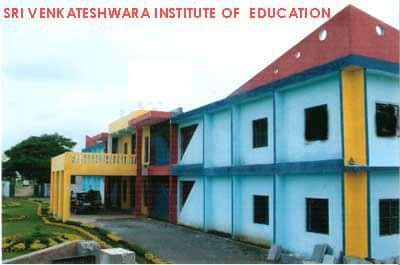
Sri Venkateshwara Institute of Education
About
OfficialSri Venkateshwara Institute of Education is a other institution in Bhopal, established in 2008. Sri Venkateshwara Institute of Education (SVIE), located in the Arera Hills area of Bhopal, Madhya Pradesh, was established in 2006 as a multi-disciplinary institution aimed at providing quality technical and professional education. Founded by the Sri Venkateshwara Educational Trust, the institution has gradually built a reputation for engineering education in Central India, though it operates outside the IIT, NIT, and IIIT system. The college offers undergraduate and postgraduate programs primarily in engineering disciplines, alongside commerce and arts streams. The institution is affiliated with Rajiv Gandhi Proudyogiki Vishwavidyalaya (RGPV), a state technical university, which determines curriculum standards, examination patterns, and accreditation frameworks. This affiliation means degrees are state-recognized but lack the national prestige associated with centrally-funded institutions. The engineering programs span Civil, Mechanical, Electrical, Electronics & Communication, Computer Science, and Information Technology branches at the undergraduate level. At the postgraduate level, the college offers MTech programs in selected disciplines and MBA in management. The campus is situated in a growing commercial and residential area of Bhopal, providing reasonable accessibility to the city center while maintaining semi-suburban character with relatively quieter surroundings compared to downtown areas. The institute has invested in laboratory infrastructure, library resources, and computing facilities to support its technical programs. The faculty composition includes both PhD-qualified educators and industry professionals, though research output remains modest compared to central universities. The placement record shows reasonable absorption into IT companies, manufacturing firms, and some consulting organizations, with most placements concentrated in entry-level engineering roles. The college culture emphasizes extracurricular involvement through various technical clubs, cultural societies, and annual technical festivals, though student feedback suggests event quality is average. The hostel facilities accommodate around 40% of the student population, with separate blocks for male and female students. The mess operates on a mixed diet model with meal plans adjustable to student preferences. The campus has witnessed steady infrastructure development including recent renovation of computing labs and library expansion. However, honest assessment reveals that SVIE lacks the research intensity, faculty research output, and national-level recognition of tier-1 institutions. Placement packages tend to concentrate in the 4-8 LPA range for engineering graduates, with limited exposure to top-tier consulting firms like McKinsey, BCG, or Bain & Company. The college performs well for students seeking decent engineering education within Madhya Pradesh or Central India at moderate fees, but should not be compared with IITs, NITs, or premier private universities in metropolitan areas. Students choosing SVIE typically aim for: (1) engineering education at relatively affordable fees in their home state, (2) roles in IT or core engineering with medium-sized companies, (3) postgraduate education at SVIE or external institutions, or (4) entrepreneurial ventures post-graduation. The institution is most suitable for academically average-to-good students from Madhya Pradesh, Chhattisgarh, Uttar Pradesh, and neighboring states who prioritize accessibility and cost-effectiveness over top-tier placement packages. International exposure and foreign collaborations remain limited. Research output is primarily limited to student projects and faculty-guided technical work rather than publishable research contributing to academic journals. The campus library holds approximately 25,000 volumes covering core engineering, management, and general education texts. SVIE graduates report mixed outcomes: many secure stable employment in mid-tier IT companies, while others pursue further education. The value proposition is strongest for cost-conscious families prioritizing engineering credentials without the financial burden of premium private universities.