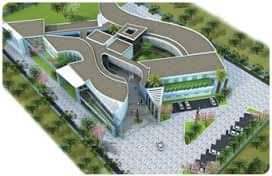
Sri Renugambal College of Architecture
About
OfficialSri Renugambal College of Architecture is a other institution in Thiruvannamalai. Sri Renugambal College of Architecture (SRCA) is a private autonomous architecture college established in 2007 in Kilmangalam village, approximately 25 km from the historic temple town of Thiruvannamalai in Tamil Nadu. The college was founded with the mission to nurture socially responsible architects and designers who can contribute meaningfully to India's built environment. It operates under the vision of bridging academic excellence with practical design competency, focusing on sustainable architecture and vernacular design principles relevant to Indian contexts. The college offers a comprehensive 5-year integrated Bachelor of Architecture (B.Arch) program and postgraduate M.Arch programs in specializations including Architectural Conservation, Sustainable Design, Urban Design, and Interior Architecture. With an annual intake of approximately 180 undergraduate students across two batches, the college maintains a student-to-faculty ratio that allows for personalized mentoring and studio-based learning. Academic Programs and Strengths: The B.Arch curriculum is structured according to the Council of Architecture (CoA) guidelines and emphasizes design studios as the primary pedagogical tool. Students engage in intensive design projects from first year onwards, covering areas like residential design, commercial complexes, institutional buildings, and urban design. The program integrates technology courses including AutoCAD, BIM, 3D rendering, and digital fabrication. A unique strength is the college's focus on climate-responsive architecture, with studios explicitly addressing thermal comfort, natural ventilation, and daylighting in tropical Indian climates. Research and Innovation: The college has established a modest but growing research infrastructure with a focus on sustainable architecture, heritage conservation, and vernacular building techniques. Faculty members are engaged in projects related to low-cost housing, water harvesting in buildings, and material efficiency. The college has partnerships with NGOs working on rural housing and community development, providing students with real-world project exposure. A dedicated research center for Architectural Heritage focuses on documentation and conservation of historic temples and structures in Tamil Nadu. Faculty and Qualifications: Approximately 65% of faculty hold doctoral degrees, with most having international exposure through conferences or short-term academic exchanges. Several faculty members have practiced architecture professionally before joining academia, bringing practical experience to studios. However, the college struggles to attract top-tier research faculty due to its rural location and limited research funding. Campus Infrastructure: The campus spans 12.5 acres with dedicated studio spaces, workshop facilities, and a growing computer lab with CAD workstations. The architecture library houses approximately 8,000 books with subscriptions to architectural journals and databases. A physical model-making workshop with equipment for laser cutting and 3D printing was established in 2022. The campus lacks some facilities found in better-funded institutions—the library is modest, and digital resources are limited compared to urban peers. Placement and Career Outcomes: Placement rates hover around 72-78% within 6 months of graduation, which is moderate for an architecture college. Graduates are placed in architecture firms primarily in Bangalore, Chennai, Pune, and Mumbai, with some pursuing independent practice. Average salary packages range from ₹3.5-5 lakhs annually for entry-level architects, which is below the industry median. The college has established relationships with design consultancies and construction firms but lacks representation from top-tier national firms. Several graduates pursue higher studies at CEPT, IIT Kharagpur, or international universities. Campus Life and Culture: Being located in a rural setting, the campus offers a quiet, focused environment ideal for design work but limited for social entertainment. Student life revolves heavily around studio culture—architecture students spend long hours in design studios, creating a tight-knit community. Annual festivals include 'Archistoria' (architecture festival) and 'Spacia' (design exhibition). Sports facilities are basic with basketball, volleyball courts, and a small gymnasium. Cultural clubs exist but are less vibrant than in urban colleges due to limited student population and location constraints. Hostel Facilities: The college provides separate hostel facilities for male and female students with 120-150 capacity. Hostel rooms are basic (2-3 sharing) with attached bathrooms. Monthly hostel fees are ₹8,000-12,000 with mess facilities providing vegetarian and non-vegetarian options at ₹3,500/month. Hostel internet connectivity has improved but remains inconsistent during peak usage hours. Ragging is actively discouraged with strict college policies. Who Should Apply: This college is ideal for students who are genuinely passionate about architecture, can thrive in a studio-intensive environment, and are comfortable with a rural campus setting. It suits students seeking undergraduate architecture education with moderate fees (compared to premier private colleges), where personal attention from faculty is possible. It is NOT ideal for students seeking urban lifestyle, top-tier placements in multinational firms, or extensive research infrastructure. Students from lower-middle-class backgrounds benefit from affordable fee structures. The college attracts many from Tier-2 towns and rural Tamil Nadu. Challenges and Honest Assessment: The rural location significantly impacts student lifestyle and entertainment options. While conducive to focused academics, it creates challenges for social development and networking. The college's limited endowment restricts facility upgrades—the computer labs are dated, digital library resources are sparse, and workshop equipment needs modernization. Faculty retention is challenging; several experienced architects leave for better opportunities in metropolitan cities. Industry connect is developing but not yet at the level of established urban colleges. Salary expectations upon graduation are considerably lower than IIT architecture programs or top private colleges in metros. Alumni networks are emerging but still thin for career advancement.