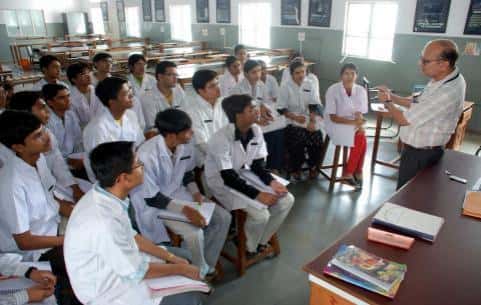
Sri Krishna Medical College
About
OfficialSri Krishna Medical College is a other institution in Muzaffarpur, established in 1972. Sri Krishna Medical College (SKMC), established in 1984, is one of Bihar's oldest and most established medical institutions, located in Muzaffarpur district in North Bihar. Founded with the mission to provide quality medical education and training to aspiring healthcare professionals, SKMC has evolved into a significant regional medical college with a strong reputation for clinical excellence and research orientation. The college operates under the affiliation of Kameshwar Singh Darbhanga Sanskrit University (KSDSУ) and is recognized by the Medical Council of India (now National Medical Commission). SKMC offers comprehensive undergraduate and postgraduate medical education spanning multiple clinical and non-clinical disciplines. The college runs an integrated 5.5-year MBBS program with an annual intake of 150 students, making it one of the larger medical colleges in Bihar by capacity. Beyond MBBS, SKMC offers MD/MS programs across 28 specialties including General Medicine, Surgery, Pediatrics, Obstetrics & Gynecology, Psychiatry, Radiology, Pathology, Microbiology, Anatomy, and Physiology. The institution has been accredited by the National Assessment and Accreditation Council (NAAC) with a Grade 'B+' rating, reflecting its commitment to quality maintenance and institutional development. The college operates 750+ bed teaching hospital attached to the medical college, providing extensive clinical exposure to students across various departments. This hospital serves both the teaching mission and the wider community of Muzaffarpur district and surrounding regions, handling approximately 450,000+ outpatient and 35,000+ inpatient cases annually. SKMC's research strengths lie particularly in tropical medicine, communicable disease epidemiology, public health interventions, and clinical research relevant to rural Indian populations. Faculty members have published extensively in peer-reviewed journals, with particular emphasis on research addressing rural health challenges. The college has established research collaborations with ICMR (Indian Council of Medical Research) and conducted several funded research projects in areas including malaria surveillance, tuberculosis control, and maternal health outcomes. The campus infrastructure includes modern lecture halls equipped with audio-visual facilities, well-equipped laboratories for anatomy, physiology, biochemistry, and pathology, digital library with access to major medical journals and databases, and clinical skills laboratory with simulation equipment for procedural training. The college maintains a comprehensive library with over 35,000 volumes and access to online databases including UpToDate, PubMed, and Indian medical journals. Teaching methodology emphasizes problem-based learning, case discussions, and practical clinical exposure, with regular seminars, workshops, and guest lectures by visiting faculty from national institutions. Placement and career outcomes for SKMC graduates show strong performance in post-graduation entrance exams (NEET-PG) with approximately 35-40% of graduating students securing admission to premier institutes like AIIMS Delhi, PGI Chandigarh, and Delhi University. The college has established alumni network with graduates in leading medical institutions, research organizations, and practicing clinicians across India and abroad. Notable achievements include recognition for community outreach programs, vaccination drives, and health awareness campaigns conducted across rural Muzaffarpur. The campus culture emphasizes holistic development with active student clubs, cultural programs, sports activities, and an annual college festival (Asclepiad) that showcases both academic and cultural excellence. SKMC particularly attracts students seeking medical education in a semi-rural setting with strong clinical exposure, those interested in rural and community health, and candidates aiming for subsequent specialization in competitive Indian medical institutions. The college is ideal for students who value hands-on clinical training, research opportunities in epidemiology and public health, and those willing to contribute to healthcare in underserved regions. What makes SKMC unique is its hybrid positioning—offering metropolitan-standard medical education in a semi-urban setting with genuine clinical volume and rural health exposure that exceeds many urban medical colleges. The relatively affordable living costs in Muzaffarpur combined with comprehensive medical training makes it an economically sensible choice for aspirants from middle-income backgrounds. However, prospective students should note that Muzaffarpur's infrastructure development is significantly lower than metros, entertainment options are limited, and the city's public health conditions (waterborne disease prevalence) necessitate careful health management. The college's location in Bihar, while offering rich clinical experience in managing tropical and preventable diseases, may pose challenges for students accustomed to urban amenities. SKMC graduates report strong clinical competency and preparedness for competitive exams, particularly in subjects related to epidemiology and community medicine where the college's focus on rural health provides substantial advantage.