Sri Aurobindo College
About
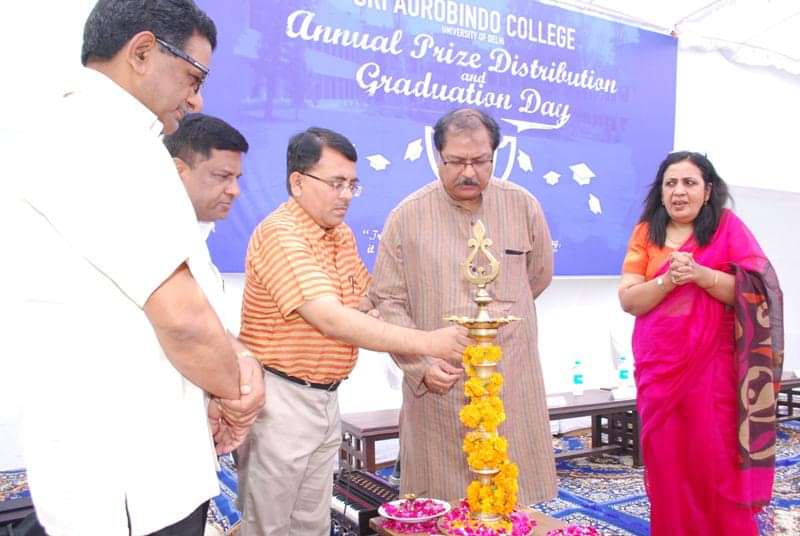
OfficialSri Aurobindo College is a other institution in New Delhi, established in 1972. Sri Aurobindo College, established in 1954, stands as one of Delhi's most prestigious undergraduate institutions, named after the renowned philosopher and yogi Sri Aurobindo Ghosh. Located in the upscale R.K. Puram sector of South Delhi, the college has consistently maintained high academic standards while fostering intellectual and cultural development. The institution evolved from a college exclusively for women (1954-1985) and transformed into a co-educational college while retaining its commitment to nurturing holistic personality development alongside rigorous academics. The college operates under the University of Delhi framework and offers comprehensive undergraduate programs spanning Sciences, Commerce, Humanities, and Social Sciences. Its science offerings include Physics, Chemistry, Botany, Zoology, and Mathematics with strong laboratory infrastructure. The Commerce stream attracts students interested in accounting, economics, and business studies. Humanities students benefit from extensive faculty in English, Hindi, History, Political Science, Economics, and Philosophy. The college has gained particular recognition for its English honors program, which has produced several published authors and journalists. Academic excellence is evident from consistent high cutoffs—typically 98-99% for Science merit, 95-97% for Commerce, and 90-95% for Humanities across general category admissions. The institution maintains a student-to-faculty ratio of approximately 15:1, enabling personalized attention in smaller honors course batches. Faculty members hold PhDs from reputed institutions, with 68% possessing doctoral degrees. The college emphasizes research methodology and has established research cells in various disciplines with emerging focus areas in environmental sciences, social policy analysis, and literary studies. Placement and career development is a structured process with a dedicated placement cell. While Sri Aurobindo College's primary strength lies in creating academically strong graduates for higher education pursuits rather than immediate corporate placements, the college reports around 65-70% placement rates for commerce and science graduates in banking, financial services, education, and public sector undertakings. Most science graduates pursue postgraduate studies at Delhi University or national institutes like IISc, BITS, or JNU. The college has notable alumni working in Indian Civil Services, academia, media, and civil society organizations. Campus infrastructure includes a well-stocked central library with over 45,000 volumes and digital resources, modern science laboratories with analytical equipment, computer labs with internet connectivity, auditorium for academic events and cultural programs, and sports facilities including badminton courts, volleyball court, and basketball court. The college maintains strong Wi-Fi coverage across campus and has recently upgraded its learning management system. The facilities reflect the college's commitment to blending traditional academic excellence with contemporary educational tools. Campus life thrives through numerous student organizations—over 30 clubs spanning cultural groups (Classical Music, Dance, Drama), academic societies (Science Forum, Economics Club), and social initiatives (Environmental Club, Social Service Wing). Annual events include 'Celebration' (cultural fest), 'Intellectus' (academic fest), 'Verve' (sports day), and 'Udyam' (entrepreneurship summit). The college organizes regular guest lectures, film screenings, and workshops by visiting scholars and industry professionals. Literary magazine 'Sutraa' and college newsletter 'The Aurobindian' provide platforms for student expression. The college does not have on-campus hostel facilities, which is a significant consideration for outstation students. Students typically reside in private PGs or shared accommodations in nearby R.K. Puram, Greater Kailash, or Kalkaji areas. This necessitates careful planning for students relocating to Delhi. However, the college's South Delhi location provides excellent connectivity via Delhi Metro (Green Line), reducing commute challenges. The area is well-developed with numerous cafes, restaurants, and educational coaching centers. Admissions follow Delhi University's centralized merit-based system through CUET (Common University Entrance Test). The college receives approximately 15,000+ applications annually for roughly 1,100 undergraduate seats, resulting in acceptance rates below 10% for most programs, particularly Sciences. Merit cutoffs are among Delhi University's highest, reflecting the college's competitive academic environment. Who should apply: Sri Aurobindo College suits academically driven students planning postgraduate education, research careers, or civil services. It's ideal for students seeking rigorous academics in a structured university environment with emphasis on intellectual development rather than immediate corporate placements. Science students aiming for postgraduate research, commerce students targeting CA/CMA/banking careers, and humanities students interested in academic pursuits find excellent platforms here. The college particularly welcomes students committed to intellectual rigor, willing to engage in campus activities, and adapted to self-directed learning. Students requiring hostel facilities should explore alternatives. First-generation learners benefit from the college's supportive academic environment and accessibility via public transport.