Sri Aurobindo Centre for Arts & Communication
About
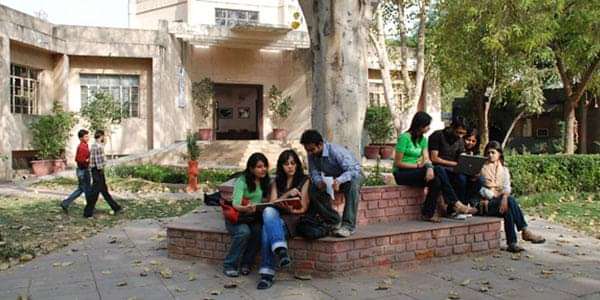
OfficialSri Aurobindo Centre for Arts & Communication is a other institution in Delhi, established in 2002. Sri Aurobindo Centre for Arts & Communication (SACC) is a specialized institution founded in 2004 with a distinct focus on undergraduate and postgraduate programs in humanities, social sciences, and communication studies. Located in the Mehrauli area of South Delhi, the institution operates under an autonomous framework with affiliation to Delhi University. Unlike mainstream research-intensive universities, SACC has carved a niche by emphasizing experiential learning, small batch sizes, and strong faculty-student interaction ratios. The campus spans 8.5 acres in a suburban setting with relatively green surroundings compared to central Delhi's congested areas. Academic Structure & Programs: SACC offers undergraduate and postgraduate programs primarily in English Literature, Hindi Literature, History, Political Science, Sociology, Mass Communication, Journalism, and Film Studies. The institution does not offer engineering, medical, or hard sciences programs. Each undergraduate program has a cohort size of 40-60 students per specialization, allowing for personalized attention. Postgraduate programs are even smaller with 15-25 students per intake. The curriculum emphasizes a blend of traditional humanities education and contemporary skill development, particularly in digital media, documentary filmmaking, journalistic ethics, and cultural studies. The institution has partnerships with several media organizations for internship placements. Teaching Philosophy: SACC positions itself around the Sri Aurobindo philosophical framework emphasizing integral education. Faculty members are encouraged to integrate philosophical and humanistic perspectives into their teaching. While this distinguishes the institution intellectually, prospective students should note that this requires intellectual engagement with metaphysical and cultural philosophy that may not appeal to all students. Research & Scholarship: The institution is NOT a high-research university. There is minimal doctoral program infrastructure. Faculty research is primarily focused on humanities scholarship, cultural studies, and media studies rather than grant-funded scientific research. The institution has weak research publication metrics compared to major central universities. PhD programs are extremely limited (fewer than 5 doctoral students across all disciplines). Research funding is modest and primarily from institutional sources rather than national agencies like CSIR or DST. Placement & Career Outcomes: Placement rates have historically been 65-75% for undergraduate students, concentrated in media organizations, NGOs, cultural institutions, and public sector broadcasting. Average salary packages range from 3.5 LPA to 5.5 LPA for mass communication graduates. English and Hindi literature graduates often pursue academic careers, civil services, or publishing with average salaries of 3.2 LPA to 4.8 LPA. The institution lacks strong corporate recruiter relationships, and students primarily target media, publishing, and non-profit sectors. Notable placement difficulty: Many humanities graduates face underemployment or take 6-12 months to secure employment. The institution's placement cell is functional but not as robust as centralized universities. Campus Infrastructure: The campus is relatively compact with basic but adequate facilities. The library holds approximately 25,000 volumes and subscribes to key humanities databases. There is no swimming pool or major sports complex, though badminton courts and a small gymnasium exist. Internet connectivity is campus-wide but sometimes unreliable during peak hours. The media lab has basic video editing equipment but is dated compared to industry standards. Hostel facilities are modest with shared accommodations, and occupancy is around 40-50% as most students are from Delhi. The cafeteria offers limited options but maintains reasonable meal quality. There is no innovation lab or startup incubation. Student Demographics: Approximately 60% of students hail from Delhi and NCR, 25% from other northern states, and 15% from southern and eastern India. The gender ratio is approximately 55% female, 45% male. Most students come from middle-class, educated families interested in humanities. Few students are from underprivileged backgrounds. International student enrollment is minimal (fewer than 10 per year). Faculty Profile: Approximately 65% of faculty hold PhDs, primarily from Delhi University, JNU, and a few from Central universities. Faculty average experience is 12-15 years, but there is limited faculty mobility to international universities. Teaching load is 16-18 hours per week, allowing some research time. Faculty engagement in student mentoring is generally strong due to small batch sizes. Who Should Apply: SACC is ideal for students genuinely passionate about humanities, literature, journalism, media studies, and cultural analysis. It suits intellectually curious students who value deep discussions, small classes, and philosophical inquiry. Students seeking high-salary corporate placements or engineering/medical career paths should avoid this institution. It's particularly suitable for aspirants of civil services (UPSC), academic careers, media careers, and cultural policy work. Students expecting world-class research infrastructure, international collaborations, or cutting-edge facilities will be disappointed. Key Advantages: Small class sizes, strong faculty-student interaction, unique philosophical framework, dedicated humanities focus, reasonable fee structure, and located in Delhi with media industry proximity. Key Disadvantages: Weak placement cell, limited corporate recruiter connections, minimal research infrastructure, outdated media equipment, smaller alumni network, limited scholarship availability, and limited career breadth for graduates. The institution's niche positioning is both its strength and its limitation—it serves a specific student demographic exceptionally well but provides poor fit for others.