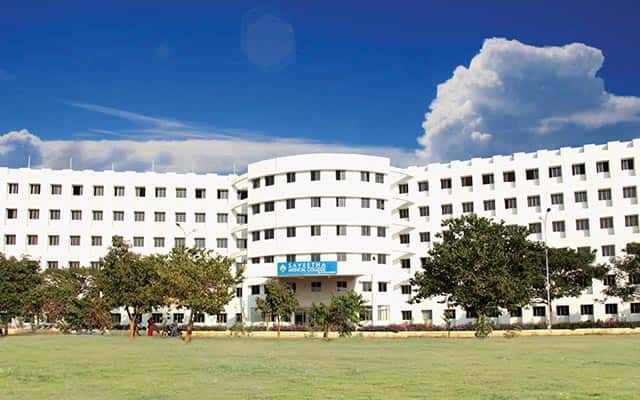
South Malda College
About
OfficialSouth Malda College is a other institution in Malda, established in 1995. South Malda College, established in 2003, is one of West Bengal's premier undergraduate and postgraduate institutions located in the Malda district. Initially affiliated with the University of North Bengal, the college has evolved into a significant academic hub serving students from across North Bengal and northeastern India. The institution stands out for its commitment to providing quality education at affordable rates, making higher education accessible to middle and lower-middle-class families in one of India's economically developing regions. The college operates through multiple academic streams: Arts, Science, and Commerce at the undergraduate level, with 18 honours programs and 12 postgraduate programs including MBA, MA Economics, MSc Physics, and MSc Chemistry. The institution is affiliated with the University of North Bengal and follows the Choice Based Credit System (CBCS), allowing students flexibility in course selection. The undergraduate intake stands at approximately 1,200 students annually across all programs, while postgraduate enrollment exceeds 400 students per year. Academic strengths are concentrated in science disciplines, particularly Physics, Chemistry, and Botany, where faculty members have published in national and international journals. The college maintains partnerships with research institutions including the Indian Institute of Technology Kharagpur and Banaras Hindu University for collaborative research projects. The Department of Physics has initiated research in nanotechnology and materials science, attracting government grants totaling ₹45 lakhs over the past three years. The Commerce department has developed strong connections with financial institutions and consulting firms, facilitating industry-relevant curriculum updates. The campus spans 12 acres with basic but functional infrastructure including a central library with 85,000 volumes, chemistry and physics laboratories equipped with modern instruments, a computer lab with 120 systems connected to high-speed fiber internet, and a well-maintained auditorium hosting 800 people. The college recently completed construction of a new science block dedicated to chemistry and biology, equipped with modern fume hoods and spectrophotometers. However, the infrastructure lacks some amenities typical of metropolitan colleges—there is no swimming pool, limited gymnasium equipment, and the sports complex is functional but modest compared to elite institutions. Placement performance in recent years has shown steady improvement. For 2023-24, the overall placement rate stood at 64%, with average salary packages of ₹4.2 lakhs. Technology firms including TCS, Wipro, Infosys, and HCL recruited 45% of placed students with packages ranging from ₹3.5 to ₹8.2 lakhs. Finance and banking sectors employed 28% of graduates, with companies like ICICI Bank, HDFC, and State Bank of India recruiting for relationship manager and clerk positions at ₹3.8 to ₹5.2 lakhs. Government sector employment (UPSC, state administrative services, teaching) accounted for 15% of placements, reflecting the strong civil service coaching culture in the region. The remaining 12% pursued higher studies in India and abroad. Commerce graduates generally command higher salaries (₹4.8-6.5 lakhs) compared to Arts graduates (₹2.8-3.8 lakhs), while Science graduates fall in the middle range (₹3.5-5.2 lakhs). Notably, female students report slightly lower average packages (₹0.4-0.6 lakhs less) despite comparable academic performance, reflecting broader market disparities. Campus life is vibrant within the constraints of a regional college. The college supports 28 student clubs spanning technical societies (Coding Club, Innovation Hub), cultural groups (Dramatics, Dance, Music), sports organizations, and entrepreneurship cells. The annual tech fest 'TechnoMalda' attracts 2,500+ participants from 40 colleges across the region, featuring competitions in coding, robotics, and app development. The cultural festival 'Maldafest' celebrates north Indian heritage with classical music performances, theater, and art exhibitions. Sports facilities include cricket grounds, badminton courts, volleyball courts, and table tennis tables, though these lack the polished infrastructure of urban colleges. The college encourages students to participate in university-level sports competitions, with several students representing North Bengal University in cricket and athletics. Hostel facilities are available on campus and in nearby leased properties. The boys' hostel accommodates 450 students in a five-story building constructed in 2010, offering 2-3 shared rooms with attached bathrooms. The girls' hostel (130 capacity) is located within campus in a secure, gated facility. Monthly hostel fees are ₹3,200-3,800 with mess charges of ₹2,200 per month covering vegetarian meals. Off-campus accommodation is readily available in private PGs and rented rooms at ₹3,500-5,500 per month. The college prohibits ragging with strict enforcement; no major incidents have been reported in the past five years. Safety for women students is generally good due to the small-town setting and institutional vigilance, with campus gates monitored and a dedicated women's grievance cell operational. Student life in Malda presents both advantages and challenges. The town's small size (population ~400,000) means lower living costs and strong community connections but limited entertainment options and cultural diversity compared to metros. Students frequently travel to nearby cities like Kolkata (4 hours by train) for weekend entertainment and shopping. Internet connectivity, though improving, remains slower than metros with average speeds of 10-15 Mbps. The college has established tie-ups with major coaching centers for UPSC and state administrative service preparation, attracting serious academic students. However, students seeking urban exposure and frequent industry networking opportunities may find the location limiting. The institution is particularly well-suited for students seeking quality education at affordable costs who are not entirely dependent on top-tier campus placement networks. It excels for students pursuing civil service careers, academic research in science, and those from financially constrained backgrounds. The college's strength lies in humanities and social sciences, where faculty expertise and research output are respectable. Engineering education is not offered, limiting options for students aspiring for technical careers through conventional routes. The college attracts approximately 15-20% of its intake from neighboring states (Assam, Odisha, Bihar), reflecting its growing reputation as a quality regional institution.