Siwan Engineering College & Technical Institute
About
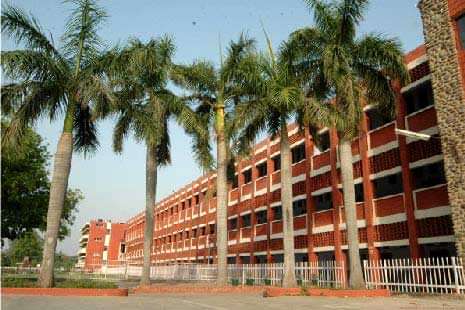
OfficialSiwan Engineering College & Technical Institute is a other institution in Siwan, established in 2004. Siwan Engineering College & Technical Institute (SECTI) was established in 2008 as a private engineering institution in Bihar's Siwan district. The college was founded with the vision of providing quality technical education in one of India's economically developing regions, addressing the acute shortage of engineering colleges in rural and semi-urban Bihar. Over its 16-year operational history, SECTI has evolved from a modest startup into a moderately recognized engineering college serving approximately 2,800 students across undergraduate and diploma programs. The institutional mandate focuses on bridging the gap between theoretical engineering knowledge and practical industry application. SECTI operates under the aegis of the All India Council for Technical Education (AICTE) and is affiliated with Aryabhatta Knowledge University (AKU), Patna, which is Bihar's state technical university. The college is situated in a semi-rural setting approximately 150 km north of Patna, the state capital, and serves primarily students from Bihar, Jharkhand, and neighboring states. Academic programs span Civil, Mechanical, Electrical, Electronics & Communication, Computer Science, and Information Technology engineering disciplines at the undergraduate level, plus diploma programs in similar disciplines. Each undergraduate batch intake ranges from 60-120 students per branch depending on market demand. The college also offers a few postgraduate programs in select branches (Master's in Technology), though these are less developed than the undergraduate offerings. Research strengths are modest but emerging. The college has established research cells in renewable energy, structural engineering, and IoT applications, though these primarily serve student projects and occasional collaborative work with smaller organizations rather than generating significant peer-reviewed publications. SECTI has signed MOUs with approximately 15-20 regional engineering firms and small-to-medium enterprises (SMEs) for student internship placements and collaborative projects. Major research areas include sustainable construction materials, microcontroller-based automation, and agricultural technology innovation—all aligned with Bihar's development needs. Campus infrastructure consists of a 28-acre semi-developed plot with basic but functional facilities. The college has separate academic blocks for each engineering discipline, a centralized library with approximately 35,000 books and limited digital resources, computer labs with around 400 systems, and a few specialized laboratories for civil testing, electrical machines, and electronics. The campus has on-campus hostel facilities with capacity for roughly 40% of the student population; the remaining majority commute from nearby towns or reside in off-campus rental accommodations. The campus setting is peaceful but somewhat isolated, with limited commercial activity within immediate vicinity. Placement performance represents a significant area of concern for prospective students. In the 2023-24 academic year, approximately 58-62% of graduating students secured placements, which is notably below national engineering college averages. Median salary packages range between 350,000-420,000 INR annually, with highest packages reaching 800,000 INR for exceptional performers. The majority of placements come from tier-2 and tier-3 IT companies, software service providers, and banking sector roles—predominantly from call centers, customer support, and backend development functions. Core engineering roles (manufacturing, heavy equipment, infrastructure) remain limited. Top recruiters include HCL Technologies, Infosys (for non-core roles), Cognizant, ICICI Bank, HDFC Bank, Axis Bank, and various regional PSU subsidiaries. Notable alumni include Rahul Mishra (2012 batch, Senior Software Engineer at HCL Technologies), Priya Singh (2010 batch, Operations Manager at ICICI Bank), Ajay Kumar (2011 batch, owns a mid-sized IT consulting startup in Patna), and Deepak Rao (2009 batch, Senior Project Manager at a power utility in Jharkhand). However, the college lacks internationally recognized alumni or those in elite positions at FAANG companies or top-tier multinational corporations. What makes SECTI unique is its strong localized focus and affordability. Tuition fees are significantly lower than comparable private engineering colleges in metropolitan areas—approximately 160,000-180,000 INR per year—making engineering education accessible to middle-income families in Bihar and eastern India. The college actively promotes skill-based learning through industry-aligned projects, maintains practical emphasis in curricula, and organizes regular workshops with industry professionals. The faculty-to-student ratio is reasonable (approximately 1:15), allowing for mentoring relationships. However, the college faces significant challenges. Infrastructure is dated and requires modernization—laboratories lack state-of-the-art equipment, library digital resources are sparse, and campus wifi coverage is intermittent. Faculty recruitment has historically been difficult due to the college's location in semi-rural Bihar; many faculty members are fresh graduates with limited research experience or postdoctoral credentials. The college has no comprehensive research output or publications in indexed journals. Ragging incidents, though officially denied, have occasionally surfaced in student complaints. The academic environment can feel provincial compared to tier-1 and tier-2 engineering colleges. Internship and placement opportunities are concentrated in non-core sectors, creating limited options for students aspiring to manufacturing, aerospace, or advanced technology roles. Siwan district itself has minimal IT sector presence or startup ecosystem. Most placements require students to relocate to Bangalore, Pune, Delhi, or NCR regions. The city offers limited entertainment, cultural, and educational supplementary opportunities beyond campus resources, making social life dependent largely on hostel communities. SECTI is recommended for: (1) Students from Bihar and eastern India seeking affordable engineering degrees without entrance exam cutoff pressure; (2) First-generation learners whose families prioritize accessible technical education over elite institutional branding; (3) Those interested in core engineering with willingness to pursue higher studies or competitive examinations after graduation; (4) Students comfortable with modest infrastructure and willing to self-study advanced topics; (5) Individuals seeking hands-on practical learning over research-intensive environments. The college is NOT recommended for students targeting international higher education, aspiring to work at global tech giants immediately post-graduation, or those requiring cutting-edge laboratories and research facilities.