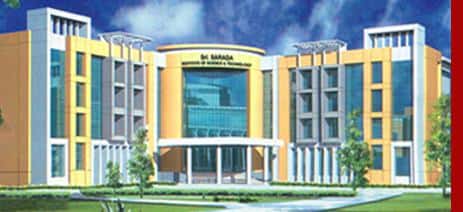
Sarada Institute of Technology and Science
About
OfficialSarada Institute of Technology and Science is a other institution in Hyderabad, established in 2006. Sarada Institute of Technology and Science (SITS), established in 2008, is a private engineering and technology institution located in the Saidabad locality of Hyderabad, Andhra Pradesh. Originally founded as an engineering college, SITS has evolved into a multi-disciplinary institute offering undergraduate and postgraduate programs across engineering, sciences, and management disciplines. The institute is approved by the All India Council for Technical Education (AICTE) and affiliated with Jawaharlal Nehru Technological University (JNTU), Hyderabad. With a relatively compact but well-maintained campus of 12.5 acres, SITS serves approximately 3,200 students across 20+ academic programs. The institute's primary strength lies in its focus on practical engineering education combined with industry-relevant skill development. Unlike tier-1 institutions like IITs and NITs, SITS operates in the mid-tier private engineering college segment, competing with institutions like Gokaraju Rangaraju Institute of Engineering and Technology (GRIET), Institute of Aeronautical Engineering, and Benaka Institute of Technology. Founded during the growth phase of Hyderabad's IT sector, SITS was designed to produce engineers for the rapidly expanding tech industry in the city. The founders recognized the demand for engineering talent in Hyderabad's emerging IT hubs like HITEC City and sought to create an institution that bridged academic rigor with industry requirements. The institute has gradually built its reputation through consistent placement outcomes and industry engagement. SITS offers programs in core engineering disciplines (Civil, Mechanical, Electrical, Electronics and Communication), emerging fields (Computer Science with various specializations like AI/ML, Cybersecurity, Data Science), and newer domains (Information Technology, Software Engineering). The undergraduate engineering programs are 4-year full-time degrees with intake capacities ranging from 60 to 120 students per discipline. Postgraduate programs include MTech in specialized areas with 2-year durations and intake of 24-36 students. The institute also offers MCA (Master of Computer Applications) with 2-year duration for non-engineering graduates seeking IT careers. The MBA program caters to management aspirants with a 2-year curriculum. Academic infrastructure at SITS includes well-equipped laboratories for each engineering discipline, computer centers with modern workstations, a library with digital resources, and dedicated spaces for maker activities. The computer science laboratories are regularly upgraded to match industry tools and technologies (MATLAB, Java, Python, cloud platforms). Electronics laboratories include embedded systems, digital design, and microprocessor workbenches. The institute operates 24/7 internet connectivity across the campus with fiber optic backbone. Faculty at SITS comprises 185 members, of whom approximately 35-40% hold doctoral qualifications (PhD) from Indian and select international universities. Many faculty members engage in industry collaborations and research projects with companies like TCS, Infosys, and Hyderabad-based startups. The institute encourages applied research through industry partnership programs where students work on real-world projects. Research centers at SITS focus on IoT applications, cloud computing, cybersecurity, and sustainable engineering solutions. The placement record is SITS' strongest selling point. Over the past 3-4 years, the institute has consistently achieved 85-92% overall placement rate for engineering graduates, with slightly higher rates in computer science disciplines (92-96%). The median salary for engineering graduates stands at approximately 5.2-5.8 lakhs per annum, with top-tier computer science graduates receiving 8-12 lakhs. The highest packages for exceptional students reach 15-18 lakhs (primarily in AI/ML and cybersecurity specializations). Top recruiters include TCS, Infosys, Wipro, HCL Technologies, Tech Mahindra, Amazon, Microsoft, Google, Goldman Sachs, Capgemini, Oracle, and various Hyderabad-based startups and product companies. Core engineering roles (civil, mechanical, electrical) see lower average packages (3.5-4.2 lakhs) with slightly lower placement rates (75-82%), reflecting the broader market trend for these disciplines. Management consulting, finance sector roles, and startups have recently increased participation in SITS placements, expanding beyond the traditional IT focus. The campus life at SITS is moderately developed. The institute operates both boys' and girls' hostels with separate facilities. On-campus hostel accommodation is available for approximately 40-45% of the student body, with total monthly costs around 8,000-12,000 INR including mess charges. Hostel facilities include furnished rooms (mostly double or triple occupancy), separate study halls, internet connectivity, recreational spaces, and basic laundry services. The mess operates a diverse menu with separate dietary options and kitchen facilities generally receive mixed reviews—adequate but not exceptional. Sports facilities include a basketball court, volleyball court, indoor badminton, table tennis, and a small gymnasium. Annual cultural and technical festivals (Techfest in September, Cultural Fest in March) provide platforms for student engagement, though these events are smaller in scale compared to tier-1 institutions. The institute has 25+ student clubs and societies covering technical areas (robotics, coding, AI), cultural activities (music, dance, drama), sports, and social initiatives. Club involvement is moderate among students, with active participation more concentrated in technical clubs aligned with placement opportunities. Internet infrastructure covers the entire campus with average speeds of 10-15 Mbps, sufficient for academic activities but occasionally congested during peak hours. Ragging is actively discouraged through institutional policies and awareness programs, though occasional minor incidents have been reported and handled swiftly. Safety for women students is generally reported as good, with CCTV coverage in common areas, escort services late at night, and women's grievance cell, though some students cite occasional safety concerns during off-peak hours in the evening. The overall student satisfaction rating is moderate (3.4/5). Academics receive favorable ratings (3.7/5) due to faculty engagement and practical focus, but infrastructure and amenities are rated lower (3.2/5) due to campus space constraints. Placement outcomes significantly boost institutional reputation (3.8/5), while campus life experiences are viewed as average (3.2/5). The institute is best suited for students seeking quality engineering education with strong placement outcomes in the IT/technology sector, particularly those aspiring for computer science or IT careers. Students from lower-middle-class or middle-class backgrounds seeking affordable private engineering education in a metro city with decent placement prospects represent the primary demographic. The institution is less suitable for students prioritizing research-intensive environments, extensive sports facilities, or extensive campus cultural activities. SITS' positioning as a pragmatic, industry-focused engineering college resonates with students whose primary motivation is securing technical employment in the growing Hyderabad tech ecosystem. Notable alumni include successful tech entrepreneurs, senior engineers at multinational tech corporations, and mid-level managers across IT firms, though the institute lacks prominent household names in the way IITs do. The faculty culture emphasizes practical application, industry engagement, and student mentorship for placements rather than pure research or academic prestige. Campus culture is competitive but not toxic, with significant focus on placement preparation and technical skill-building. The institution serves a critical role in Hyderabad's engineering education ecosystem by providing affordable, industry-aligned education to a large number of engineering aspirants who don't secure admissions at tier-1 institutions but seek better outcomes than smaller private engineering colleges.