Symbiosis Institute of Media & Communication
About
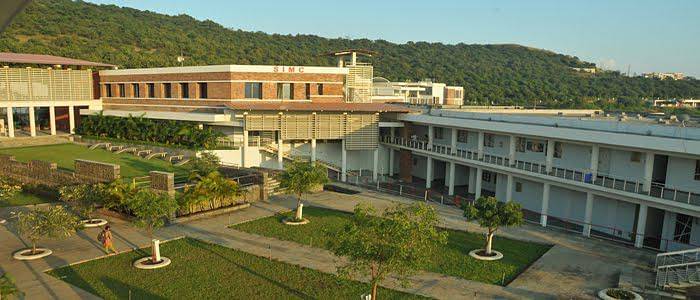
OfficialSymbiosis Institute of Media & Communication is a other institution in Pune, established in 1991. Symbiosis Institute of Media & Communication (SIMC) was established in 1994 as a specialist institution within the Symbiosis International University ecosystem, one of India's oldest and most respected private university networks. Originally founded to address the growing demand for professionally trained media and communication professionals in India's emerging media industry, SIMC has evolved into a premier destination for journalism, advertising, public relations, digital media, and communication studies. The institute is housed in Lavale, a suburban township approximately 35 km from Pune city center, situated within the sprawling Symbiosis campus which provides significant infrastructure and resource-sharing advantages. SIMC operates under the NAAC accreditation framework and maintains strong institutional affiliations with UNESCO and international broadcasting organizations. The institute's founding philosophy centered on bridging the gap between media industry demands and academic rigor—addressing a critical need in the 1990s when few Indian institutions offered specialized media education beyond university journalism departments. Over three decades, SIMC has positioned itself as India's most selective media college, with acceptance rates typically below 5%, attracting applications from across India and internationally. The institute's academic structure emphasizes experiential learning through its own broadcast studio, FM radio station (92.3 Radio Mirchi partnership), digital media lab, and partnerships with major media houses like NDTV, Times of India, and Aaj Tak. The curriculum balances theoretical foundations in communication studies, media history, and critical theory with intensive practical training in radio production, television journalism, advertising copywriting, social media strategy, and digital content creation. SIMC operates multiple undergraduate and postgraduate programs with distinct intake profiles: the flagship 3-year Bachelor of Journalism & Mass Communication (BJMC) attracting approximately 300 applicants per seat, the 2-year Master of Mass Communication (MMC) programs in specializations like broadcast journalism, new media, and strategic communication, and a doctoral program in media studies. The institute has built a reputation for producing journalists who have gone on to lead major media organizations, advertising professionals who have shaped Indian advertising culture, and communication strategists working across corporate and nonprofit sectors. Research at SIMC focuses on Indian media ecosystems, digital transformation of journalism, social media's impact on public discourse, media literacy, and representation studies—with faculty actively publishing in national and international journals. The institute maintains industry partnerships with over 50 media, advertising, and communication organizations, ensuring curriculum relevance and placement pipeline strength. Campus life centers around media production activities: students produce regular radio shows, operate a student-run news portal (Symbolism), manage social media channels for campus organizations, and participate in national media competitions. The institute hosts annual media festival 'Confluence' attracting media professionals and students nationally. However, prospective students should note several important considerations: the Lavale location, while providing a peaceful academic environment, is 35 km from Pune city center with limited direct public transportation, making off-campus living challenging and expensive; hostel accommodation is limited with long waiting lists for new students; the intense focus on media industry internships and placements means non-placement career paths (academia, NGO work, freelancing) receive less institutional support; and given the specialized nature of media education, career outcomes heavily depend on individual performance, portfolio quality, and networking rather than institutional recruitment drives. The student population tends toward urban, English-speaking, culturally engaged backgrounds with significant interest in current affairs and media consumption. SIMC is specifically recommended for students with genuine interest in journalism or communication careers, strong English language skills, demonstrated media awareness (reading news, consuming diverse media), and ability to work independently on creative projects. It is less suitable for students seeking guaranteed corporate placements, those with limited English proficiency, or those undecided between media and other career paths. The institute's true value emerges for students who leverage its limited but targeted industry connections, actively build portfolio work during studies, and view the degree as foundation rather than complete preparation for media careers.