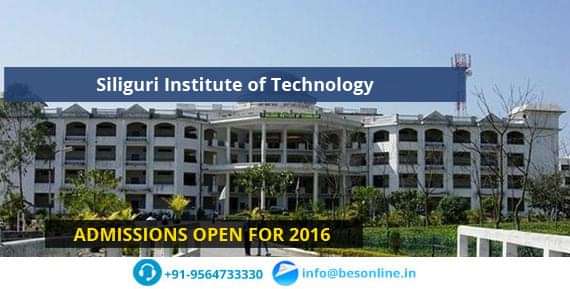
Siliguri Institute of Technology
About
OfficialSiliguri Institute of Technology is a other institution in Darjeeling, established in 1999. Siliguri Institute of Technology (SIT), established in 2008, is a private engineering college located in the scenic foothills of the Eastern Himalayas in Darjeeling district, West Bengal. Situated approximately 14 km from Siliguri city on the NH-31A, the institute operates under the governance of the Siliguri Educational Trust and has grown into one of the region's significant technical institutions. The college is affiliated with Maulana Abul Kalam Azad University of Technology (MAKAUT), West Bengal, and maintains AICTE approval for its engineering programs. SIT was founded with the vision of providing quality technical education to students from the Northeast region and has since expanded its operations to serve students across India. The institute operates a diverse portfolio of engineering disciplines including Civil, Mechanical, Electrical, Electronics & Communication, Information Technology, and Computer Science & Engineering at the undergraduate level, along with specialized postgraduate programs in relevant areas. The college infrastructure spans 45 acres of green campus with modern academic buildings designed with energy-efficient architecture typical of hilly terrain construction. The academic programs are structured to balance theoretical knowledge with practical application through well-equipped laboratories, project-based learning, and industry interaction. SIT has established partnerships with technology companies including TCS, Infosys, HCL Technologies, and various manufacturing and core engineering firms for student internships and placements. The institute maintains an active placement cell that coordinates campus recruitment drives, with consistent year-on-year improvement in placement statistics. In 2023-24, the college achieved an overall placement rate of approximately 78-82%, with median salaries ranging from 3.5-4.5 LPA for engineering graduates, though placement outcomes vary significantly across branches. Computer Science and Information Technology branches typically report higher placement percentages (85-90%) and salaries (4.5-6.5 LPA), while Civil Engineering shows relatively lower metrics (65-70%, 3.2-3.8 LPA). The college has established research centers focused on sustainable infrastructure, renewable energy systems, embedded systems, and IoT applications. Faculty members actively contribute to academic journals and conferences, though research output remains modest compared to tier-1 institutions. SIT emphasizes experiential learning through 2-3 mandatory internships during the 4-year program, industry guest lectures, case study competitions, and final-year capstone projects that often involve real-world problem statements from partner companies. The campus hosts an annual technical festival called 'TechnoVision' which attracts participation from colleges across Northeast India, cultural festivals including 'Udgam', and sports meets that foster community engagement. Student clubs cover domains including robotics, drone technology, web development, IoT, entrepreneurship, cultural performance, and environmental sustainability. The hostel infrastructure comprises separate facilities for male and female students with approximately 1200 hostel beds available on campus. Hostel facilities include attached bathrooms, Wi-Fi connectivity, recreational spaces, and mess services providing vegetarian and non-vegetarian options. Living expenses for students on campus are relatively economical due to Siliguri's lower cost structure compared to metropolitan areas. The city of Siliguri, often called the 'Gateway to Northeast India', is a Tier-2 city situated at the convergence of three states (West Bengal, Sikkim, and Assam) and serves as a crucial transport hub. Being close to scenic tourist destinations and possessing a vibrant student culture, Siliguri offers a unique experience for students from metropolitan areas. However, the college location is approximately 14-16 km from the main city center, requiring 25-30 minutes by road, which may limit spontaneous access to city amenities for hostel students. The surrounding areas lack the density of food, entertainment, and shopping options available in major metros, though essential services and cafes exist within walking distance. Internet connectivity is generally good through multiple ISPs, though occasional disruptions during monsoon are common in hilly terrain. The college has invested in improving campus infrastructure over recent years, including a new academic block completed in 2022, upgraded laboratories, a modest but functional library with digital resources, a seminar hall with 300+ capacity, and a student activity center. However, compared to tier-1 engineering colleges and established private universities, the overall infrastructure remains mid-tier with periodic maintenance challenges. The faculty profile consists of approximately 185 faculty members, of which about 35-40% hold PhD qualifications. Many faculty members have previous industry experience, particularly in software companies, bringing practical orientation to teaching. However, research productivity and publication count per faculty member remain below benchmarks set by premier institutions. The college maintains reasonable placement ties with IT companies primarily serving the software services sector, but recruitment for specialized core engineering and manufacturing roles is limited. Notably, placement opportunities concentrate in IT services, business process outsourcing (BPO), and business analytics roles, with lesser opportunities in advanced manufacturing, aerospace, research, or specialty chemicals sectors. Student feedback consistently highlights the scenic campus environment, supportive faculty for basic concepts, reasonable fees compared to metro private colleges, and strong peer networks among classmates. Criticisms center on limited industry diversity in campus recruitment, lack of world-class research infrastructure, modest alumni network in top companies, distance from city for off-campus activities, and occasional perception of 'regional tier-2' college status affecting job search visibility. The student community is relatively homogeneous, with approximately 55-60% students from West Bengal and other Northeast states, 30-35% from Eastern/Central India, and 5-10% from other regions, creating a regional character rather than all-India presence typical of premier institutions. SIT is best suited for students seeking affordable, quality engineering education in a serene campus environment who are comfortable with regional placement dynamics and willing to leverage strong peer networks and personal initiative for career advancement. It appeals particularly to students from Tier-2/3 cities across Eastern India seeking better infrastructure than local colleges without the competitive intensity of metro private engineering colleges. Students aspiring for roles in premium consulting, investment banking, or specialized core engineering sectors should consider the college's current placement limitations. Conversely, students interested in IT services, software development, business analytics, or entrepreneurial ventures will find adequate support and peer community at SIT. The college is suitable for academically sound students who value teaching quality, faculty accessibility, and campus life over brand prestige alone.