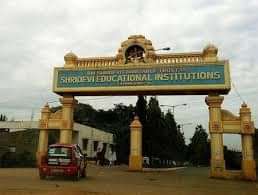
Shree Devi Institute of Technology
About
OfficialShree Devi Institute of Technology is a private institution in Mangalore, established in 2006. Shree Devi Institute of Technology (SDIT), established in 2005, is a private engineering college located in Nelamangala, approximately 35 km from Mangalore city center in Karnataka. The institution was founded with a vision to provide quality technical education aligned with industry requirements and emerging technologies. Over nearly two decades, SDIT has evolved into one of Karnataka's mid-tier engineering colleges, primarily attracting students from Karnataka and neighboring states through the KCET entrance exam. The college operates under the educational philosophy of combining classical engineering fundamentals with contemporary skill development. It is affiliated with Visvesvaraya Technological University (VTU), the regulatory body for technical education in Karnataka, and offers undergraduate engineering programs across 8 branches: Computer Science & Engineering (CSE), Electronics & Communication Engineering (ECE), Mechanical Engineering (ME), Civil Engineering (CE), Electrical & Electronics Engineering (EEE), Information Technology (IT), Artificial Intelligence & Data Science (AI&DS), and Mechanical Engineering with specialization in Robotics (ME-Robotics). The college also offers postgraduate programs in specialized disciplines and diploma courses for vocational training. Academic strengths lie in computer science and information technology domains, where faculty have published papers in peer-reviewed journals and collaborated with industry partners including TCS, Infosys, and Capgemini. The college maintains a dedicated research cell with emphasis on IoT, machine learning, and renewable energy. However, core engineering research infrastructure (metallurgy labs, advanced thermal testing facilities) remains limited compared to top-tier institutions. The college has received NAAC B+ accreditation (reaccredited in 2020 with validity until 2027) and NBA accreditation for CSE, ECE, and ME branches, validating curriculum standards though not guaranteeing exceptional academic rigor. Placement outcomes reflect the college's positioning in the tier-2 engineering segment. In 2023-24, 78% of final-year students secured placements with median salary of ₹4.2 lakhs annually and highest package reaching ₹13.5 lakhs. Top recruiting companies include Infosys, Cognizant, Capgemini, KPMG, HCL, Wipro, and Amazon, predominantly offering IT services and business analyst roles. Core engineering placements remain limited; students aspiring for manufacturing or heavy engineering roles face constraint in campus recruitment. The college actively conducts skill development workshops, mock interviews, and aptitude training through its placement cell, which has systematically improved placement rates from 65% (2019) to current levels. Campus life at SDIT is moderately active. The college has approximately 35 registered clubs spanning technical (Robotics Club, AI/ML Club), cultural (Music, Dance, Drama), and sports categories. The annual cultural fest "Euphoria" draws participation from nearby colleges. Sports facilities include a cricket ground, basketball court, volleyball court, and gymnasium, though quality of equipment is basic. Hostel accommodation is available for both male and female students in separate facilities on-campus with approximately 1,200 hostel seats, accommodating 40% of the student population. Hostel rooms are typically double or triple-occupancy with basic furnishing. Mess food quality is reported as average, with limited dietary variety and occasional complaints about hygiene standards. WiFi coverage spans most of the campus with 10 Mbps average speed during peak hours, which can be restrictive for online learning or research. Infrastructure at SDIT is functional but aging in places. The library holds 45,000+ books with limited digital access to international journals (access restricted to IEEE Xplore and some ACM publications). Computing labs are well-equipped with modern workstations for most departments, though labs for civil and mechanical engineering require equipment upgrades. The college has invested in an innovation lab for student entrepreneurship projects and maintains a dedicated incubation cell, though outcomes in terms of startups remain modest. A 500-seat auditorium serves conferences and cultural events. Medical facilities on-campus are basic; serious health emergencies require 35 km travel to city hospitals. Who should apply: SDIT is suitable for students scoring 55-70% in KCET with genuine interest in IT/CS placements and career in core sectors like software services, IT consulting, or business analytics. The college works best for students from middle-class backgrounds seeking value-for-money engineering education with decent placement assurance. Students aspiring for IIT-equivalent academics, cutting-edge research facilities, or abundant internship opportunities with Fortune 500 companies should look at tier-1 colleges like NIT Surathkal or IITs. Similarly, students in Mechanical or Civil Engineering prioritizing core sector placements (automotive, infrastructure) may find limited campus recruitment compared to larger institutions. The college suits students comfortable with suburban campus life (35 km from city), willing to develop soft skills independently, and capable of supplementing college academics with online courses (Udacity, Coursera) to enhance employability in competitive tech roles. Rural or semi-rural background students often thrive at SDIT as the supportive environment and mentoring cell provide structured guidance through 4 years. However, those expecting cosmopolitan campus amenities or elite social networks should recalibrate expectations.