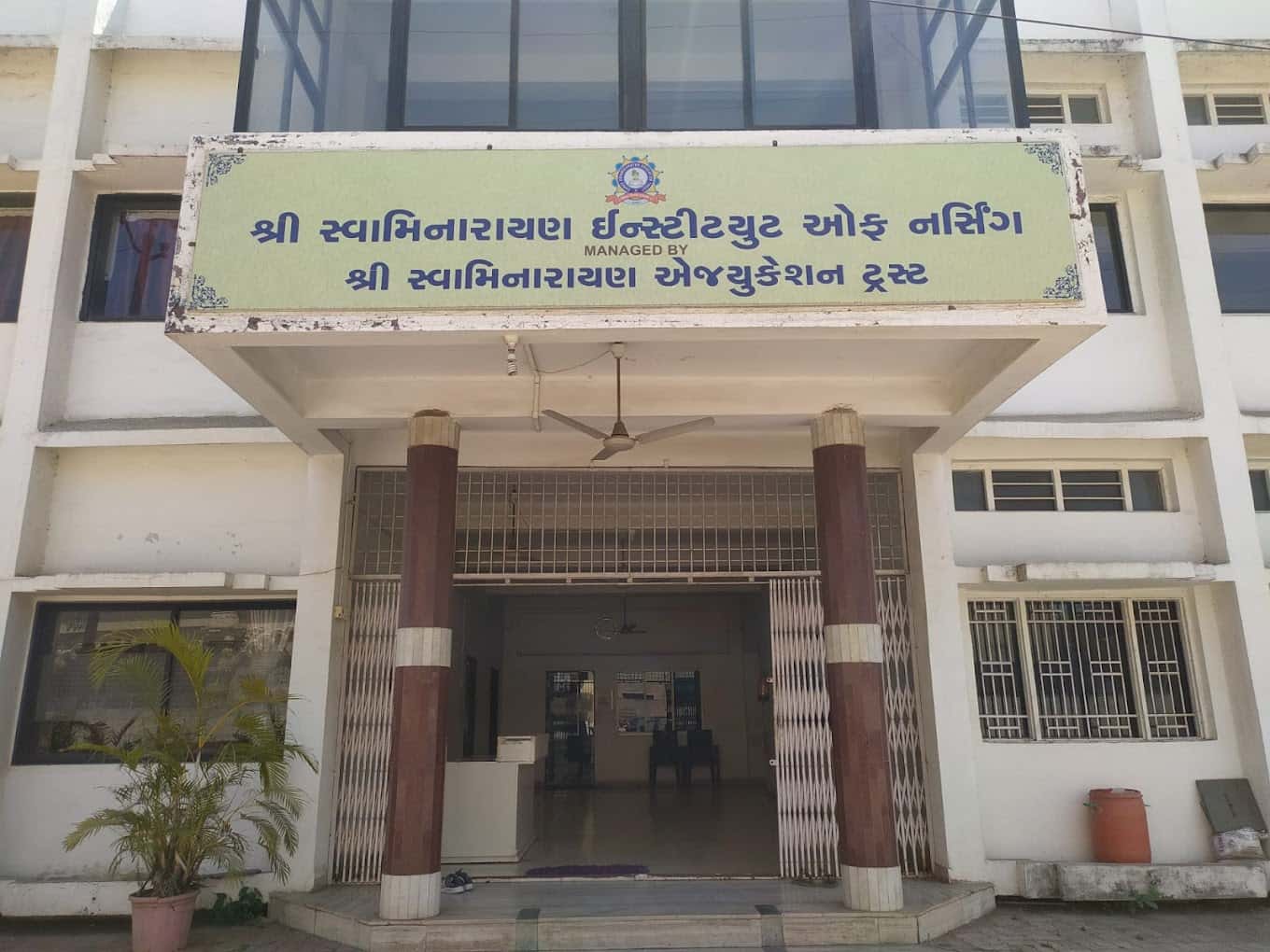
Shree Swaminarayan Institute of Nursing
About
OfficialShree Swaminarayan Institute of Nursing is a other institution in Surat, established in 2021. Shree Swaminarayan Institute of Nursing (SSIN) was established in 2005 under the aegis of the Shree Swaminarayan Health & Medical Sciences Trust, reflecting a commitment to healthcare education and community welfare rooted in Swaminarayan values. Located in Kathlal, a developing suburban area of Surat, Gujarat, the institution operates under the regulatory framework of the Indian Nursing Council (INC) and Gujarat Nursing Council (GNC), maintaining compliance with all statutory requirements for nursing education in India. The institute was established to address the critical shortage of professionally trained nursing workforce in Gujarat and India, with a particular emphasis on holistic patient care, ethical nursing practice, and community health engagement. SSIN has evolved from its founding vision to become a recognized nursing education center in the Surat region, offering programs across undergraduate and postgraduate levels. The institute's academic philosophy centers on bridging theory and practice through rigorous clinical training, hands-on skill development, and exposure to diverse healthcare settings including tertiary care hospitals, primary health centers, and community health programs. The curriculum adheres to INC guidelines while incorporating contemporary healthcare practices, evidence-based nursing interventions, and emerging specializations in critical care, mental health, and community health nursing. Academic programs include Bachelor of Science in Nursing (B.Sc. Nursing), Bachelor of Science in Nursing (Post-Basic), Master of Science in Nursing with specializations in Medical-Surgical Nursing and Community Health Nursing, and Diploma in Nursing. All programs emphasize clinical competency development through structured clinical rotations in affiliated hospitals including government medical colleges, private tertiary care centers, and specialized healthcare facilities across Surat and neighboring districts. The institute maintains partnerships with Surat Municipal Corporation (SMC) health centers and Surat Metropolitan Hospital for community health and preventive medicine placements. Faculty members are qualified nurses with experience in clinical practice, nursing education, and research, with several holding postgraduate qualifications from recognized universities. The institute has established a small research culture focusing on community health problems, occupational health, and nursing care practices relevant to the Gujarati population. Notable research areas include maternal and child health, elderly care, workplace health and safety, and mental health awareness in urban slum communities. SSIN collaborates with nursing associations and participates in continuing education programs that keep faculty and students aligned with national and international standards. Campus facilities include lecture halls with audiovisual equipment, simulation laboratories equipped with mannequins for skill practice, a library with nursing journals and textbooks, computer labs for online learning and research, a health center for student welfare, and a cafeteria. Hostel facilities are available for female and male students separately, with cost-effective accommodation that caters to students from outside Surat. The campus setting in suburban Kathlal provides a quieter environment conducive to academic focus, though located approximately 35-40 km from Surat city center, requiring students to rely on college transport or personal commute arrangements. Student life emphasizes professional development through nursing conferences, seminars on specialty areas, and engagement with professional nursing organizations. The institute conducts awareness campaigns on public health issues, participates in national nursing day celebrations, and facilitates student involvement in community health projects. While the institute lacks the extensive sports and cultural infrastructure of larger universities, it maintains a focused environment aligned with healthcare education objectives. Placements are primarily healthcare-sector oriented, with graduates securing positions in hospitals, diagnostic centers, nursing homes, and health departments across Gujarat and India. Career progression pathways include positions in hospital administration, occupational health, public health programs, higher nursing education, and specialized nursing roles. Alumni are employed across government health systems, private hospital chains, and NGO health programs, with several pursuing further specialization through diploma or degree courses. The institute is particularly suited for students aspiring toward nursing as a patient-care profession, those seeking structured clinical training in a supportive environment, and individuals committed to healthcare and community service. Admission is through entrance examinations or merit-based selection depending on the program level, with preference given to candidates from medically underserved areas and those demonstrating commitment to nursing values. The institute maintains reasonable fee structures aligned with quality nursing education standards, making it accessible to middle-income families. Students should note that the suburban location necessitates planning for commute logistics, and the institute's size means a more intimate learning environment compared to larger nursing colleges but with potentially fewer extracurricular diversifications. The college is best suited for serious nursing aspirants focused on clinical skill development, community health engagement, and building careers in healthcare delivery rather than those seeking vibrant cosmopolitan campus experiences.