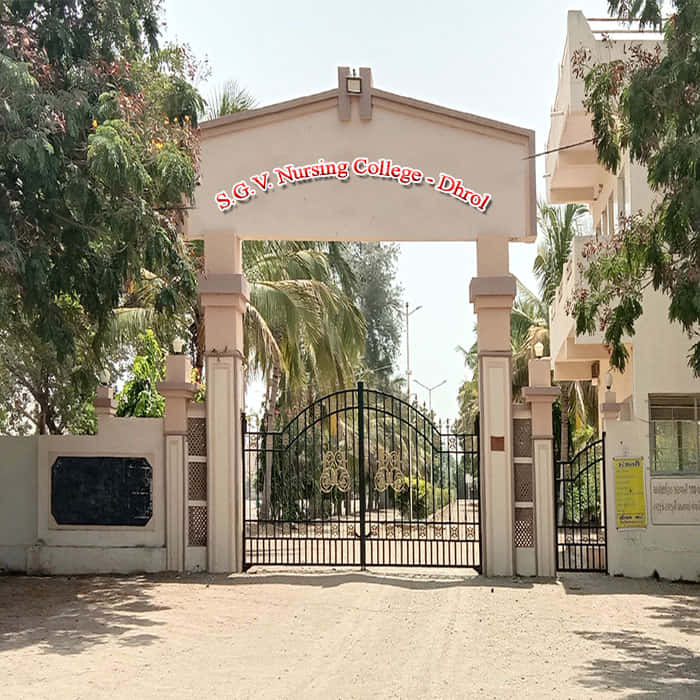
SGV NURSING COLLEGE DHROL
About
OfficialSGV NURSING COLLEGE DHROL is a other institution in Jamnagar. SGV Nursing College Dhrol, established in 2008, is a private nursing institution located in the Jamnagar district of Gujarat. Situated in a semi-rural setting approximately 25 km from Jamnagar city center, the college has emerged as a regional player in nursing education with a focus on clinical skill development and community health. The college is affiliated with Gujarat Nursing Council and recognized by the Indian Nursing Council, offering undergraduate and postgraduate programs in nursing across various specializations. The institution was founded by the SGV Educational Trust to address the critical shortage of skilled nursing professionals in Gujarat and Western India more broadly. With a modest but growing student body of approximately 450 students across all programs, SGV Nursing College maintains a relatively intimate learning environment compared to urban nursing colleges. The college offers a Bachelor of Science in Nursing (4-year program), Master of Science in Nursing with specializations in Medical-Surgical Nursing, Pediatric Nursing, and Community Health Nursing (2-year programs), and a Post-Basic B.Sc. Nursing program for diploma holders. The institution emphasizes clinical exposure through affiliated hospitals including Shri Madhav Hospital, Jamnagar; Sheth G.S. Medical College; and several primary health centers in surrounding rural areas, providing students with diverse clinical settings ranging from tertiary care to community-based health projects. Academic strengths lie in community health nursing and rural health initiatives, reflecting the region's healthcare needs. The college has established research partnerships with the Department of Health and Family Welfare, Gujarat, and conducts several community outreach programs in maternal and child health, infectious disease prevention, and health awareness in surrounding villages. Campus infrastructure includes a well-equipped nursing simulation laboratory with manikins, clinical skills lab, library with digital access to nursing journals and e-books, computer lab with internet connectivity, and separate hostel facilities for women students. Faculty comprises nurses with Master's degrees and clinical experience, though research publication output remains modest. Placement outcomes have improved steadily, with graduates securing positions in government health centers, private hospitals, and healthcare NGOs across Gujarat, Maharashtra, and other western states. Some graduates have pursued higher education abroad or joined defense nursing services. The college maintains an acceptance rate of approximately 65-75% for BSc nursing admissions, reflecting moderate selectivity. Notable strengths include strong community health orientation, reasonable fees compared to urban counterparts, and supportive faculty-student relationships. Limitations include limited on-campus research infrastructure, smaller industry-academic partnerships compared to metropolitan nursing colleges, relatively less international exposure, and somewhat isolated suburban location requiring daily commute for day-scholar students. The institution is best suited for students seeking quality nursing education in a less competitive, more community-focused environment with reasonable fees, particularly those interested in rural health and community nursing practice. Ideal candidates are academically sound, socially motivated, and comfortable with semi-rural settings; not recommended for those prioritizing metro city exposure, maximum international placements, or cutting-edge research opportunities. The college culture emphasizes clinical competency, compassionate patient care, and social responsibility in nursing practice. Overall institutional growth has been steady with improving infrastructure and faculty qualifications year-on-year, though it remains a regional college without national prominence.