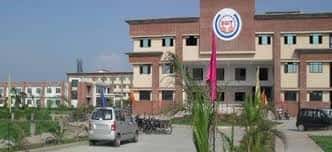
Sanskar Educational Group
About
OfficialSanskar Educational Group is a other institution in Ghaziabad, established in 2005. Sanskar Educational Group, established in 2008, has positioned itself as a mid-tier private engineering and management institution in Ghaziabad, Uttar Pradesh. The institution was founded by Dr. Rajesh Kumar Sharma with the vision of providing quality technical and professional education accessible to middle-class and upper-middle-class students from North India. Over 16 years of operation, Sanskar has developed a reputation as a competent engineering college with moderate placement outcomes and adequate academic infrastructure, though it lacks the prestige of top-tier IITs or NITs. The institution operates across three campuses in Ghaziabad: the main engineering campus in Kavi Nagar (18 acres), a management studies campus in Indirapuram (6 acres), and a satellite center in Crossing Republic (4 acres). The engineering programs are AICTE-approved with specializations in Computer Science & Engineering, Electronics & Communication Engineering, Mechanical Engineering, Civil Engineering, and Information Technology. Management programs include MBA in Finance, HR, Marketing, and Systems. The college also offers B.Tech-MBA integrated programs and law degrees through affiliated institutions. Academically, Sanskar maintains NAAC accreditation with a 'B' grade (valid 2022-2027), indicating satisfactory institutional performance but not excellence. The engineering programs have NBA provisional accreditation for Computer Science and Mechanical Engineering. Faculty strength stands at 320 across all campuses, with approximately 45% holding doctoral qualifications. The college emphasizes industry interface through MoUs with companies like TCS, Cognizant, Infosys, and HCL, though these are primarily recruitment-focused rather than collaborative research partnerships. Placement performance for 2023-24 shows 78% placement rate across engineering programs, with median package of ₹5.2 lakhs for engineering and ₹6.8 lakhs for MBA. This is respectable for a Tier-2 private college but significantly below IIT/NIT standards. Top recruiters include TCS, Cognizant, Infosys, HCL, Capgemini, Wipro, Amazon (AWS), and various manufacturing firms. Core engineering and infrastructure sectors recruit 25-30% of graduating batch, with IT/ITES accounting for 45-50%. Campus infrastructure is functional but aging in places. The main campus has 8 computer labs with 450+ systems, a 50,000-book library with digital access to IEEE Xplore and ACM Digital Library, three dedicated engineering workshops, electrical and electronics labs, and a 200-seat auditorium. Hostels accommodate approximately 1,200 students across 6 blocks with 3-4 occupancy per room (standard for private colleges in NCR). Internet connectivity is 25 Mbps minimum guaranteed on campus. The campus has a health center with an MBBS doctor and paramedic staff, but serious medical cases require referral to nearby Fortis or Vimhans hospitals. Student life at Sanskar is moderately active. The college hosts 12-15 technical clubs (Robotics, AI-ML, Web Development, Electronics), 8 cultural societies, and participates in regional engineering competitions (IEEEXtreme, IICDC). Annual technical fest 'Technova' attracts 30-40 colleges with 2,000+ participants, though organization is adequate but not exceptional. Sports facilities include a 25-yard swimming pool, cricket ground, basketball and volleyball courts, and gymnasium with basic equipment. Historically, Sanskar has produced placement-ready graduates but few entrepreneurial success stories or research leaders. Notable alumni include Anuj Khanna (Senior Manager, Amazon India, 2014 batch), Priya Malhotra (Finance Manager, Bajaj Auto, 2013 batch), and Arjun Singh (Co-founder, EduTech startup FlexLearn, 2015 batch). Research output is minimal—approximately 2-3 publications per faculty member annually in regional/national journals, with negligible impact in international venues. Key concerns for prospective students: (1) Mid-tier reputation limits access to premium tech internships and consulting roles; (2) Placement cycle is heavy on mass recruitment with limited high-paying positions; (3) Faculty turnover is 8-10% annually, affecting continuity; (4) Off-campus accommodation in Ghaziabad is limited; (5) Ragging incidents were reported in 2015-16, though college has implemented strict anti-ragging policies since then; (6) Curriculum revision happens every 4-5 years, risking obsolescence in fast-changing fields like AI-ML. Who should apply: Students scoring 70-80 percentile in JEE-Main seeking engineering education in NCR region; those unable to secure NIT/IIIT spots but wanting college life in a structured residential environment; management aspirants with limited work experience; students from Uttar Pradesh, Delhi, and neighboring states seeking proximity to home. Not recommended for: JEE-Advanced qualifiers, research-oriented students, those seeking startup ecosystem support, or students prioritizing brand value over practical learning.