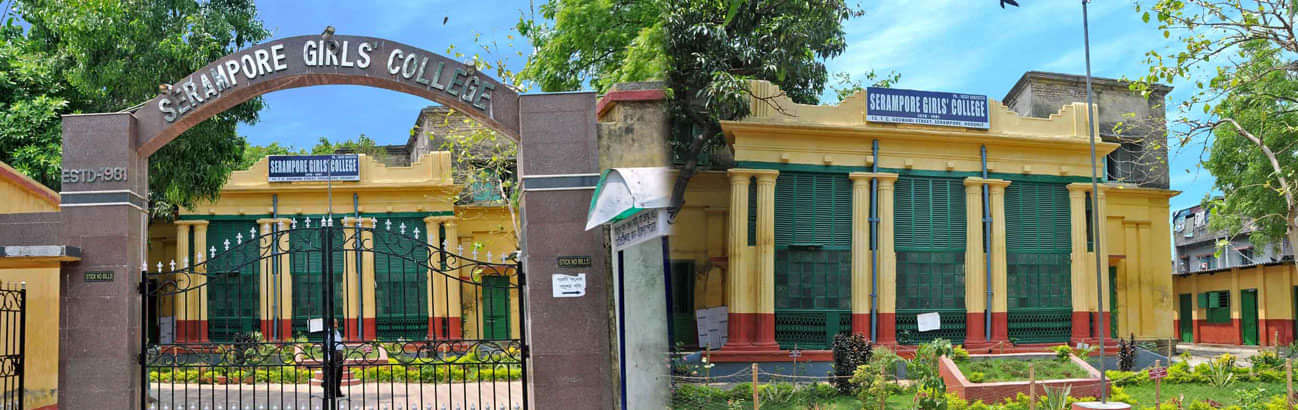
Serampore Girls' College
About
OfficialSerampore Girls' College is a other institution in Hooghly, established in 1981. Serampore Girls' College, established in 1873, is one of the oldest women's colleges in India and holds significant historical importance in the annals of higher education for women in Bengal. Located in the charming heritage town of Serampore in Hooghly district, West Bengal, the college was founded during the British Raj and has evolved into a premier institution dedicated to the holistic development of young women. The college's legacy is deeply rooted in providing quality education, fostering intellectual curiosity, and empowering women through academics and character development. The college operates as a women-only institution with a deliberately curated curriculum that balances traditional academic rigour with contemporary skill development. The institution follows the National Education Policy 2020 framework and is affiliated with the University of Calcutta, granting it considerable autonomy in curricular design. The campus, sprawling across 12.5 acres, retains much of its colonial-era architecture while incorporating modern educational facilities, creating a unique blend of heritage and progress. Academically, Serampore Girls' College offers 18 undergraduate honors programs spanning Arts, Sciences, and Commerce streams. The Science stream includes Physics, Chemistry, Botany, Zoology, and Mathematics—programs with strong reputations and consistent placements. The Arts stream offers diverse options including English, Bengali, History, Political Science, Economics, and Philosophy. Commerce offerings include Accounting, Management, and Economics. The college has recently introduced skill-based courses in digital marketing, data analytics, and entrepreneurship to enhance employability. Postgraduate programs in select disciplines (MA in English, Bengali, History; MSc in Chemistry, Botany, Zoology) serve students pursuing advanced research and academic careers. Research at Serampore Girls' College has begun gaining momentum despite resource constraints. The institution has established research centers in environmental science and women's studies, with faculty actively engaged in conducting studies on gender equity, environmental sustainability, and social development. While not a major research powerhouse compared to central universities, the college encourages faculty research through modest funding and encourages students to participate in micro-research projects. Several faculty members hold PhD qualifications, particularly in Sciences, though the overall PhD percentage stands at approximately 35%. Placement outcomes reveal a realistic picture: approximately 65% of final-year students secure placements, with median salaries ranging from 2.8 to 3.5 lakhs annually for undergraduate graduates. Top recruiters include teaching institutions, NGOs, government offices, and mid-tier IT companies. The placement cell is functional but operates with limited resources. Teaching, civil service preparation, and social sector roles remain popular post-graduation paths for students. Some graduates pursue further studies at prestigious institutions like Delhi University, Jawaharlal Nehru University, and IIMs, though competitive exam success rates vary. Campus life is marked by a strong emphasis on co-curricular activities. The college hosts an annual inter-college fest called "Seraphim" (typically in December) featuring cultural performances, debates, and academic competitions. Sports facilities are modest but functional, with a basketball court, volleyball court, and badminton facilities. The college maintains approximately 15 active student clubs covering technical domains, cultural activities, entrepreneurship, and social welfare. The residential hostel accommodates about 220 students and operates a reasonably well-maintained mess serving vegetarian and non-vegetarian food. Internet connectivity is available across campus but bandwidth limitations occasionally frustrate students, particularly during examination periods. The college maintains a rigorous admission process grounded in merit-based selection. Admission to honors programs is determined by performance in the Higher Secondary Examination (Class 12), with cut-off scores varying annually between 60-75% depending on program demand and overall performance metrics. The college prioritizes merit while maintaining a commitment to reserved category representation as mandated by government norms. Notable alumni include Dr. Anita Roy, a distinguished academician and women's rights advocate; Subhasini Mitra, a senior journalist with major media houses; and Arundhati Banerjee, an accomplished novelist and literary critic. Several graduates have pursued distinguished careers in the civil services, academia, and social entrepreneurship, though the college's alumni network, while growing, remains geographically concentrated in eastern India. Serampore Girls' College is best suited for students seeking a women-centric educational environment with emphasis on classical academics, personality development, and social consciousness. The college particularly appeals to students from West Bengal and neighboring states who value institutional legacy, holistic education, and a supportive peer environment. However, prospective students should realistically assess that placement outcomes are respectable but not exceptional, research opportunities are developing rather than established, and infrastructure—while adequate—lags behind tier-1 institutions. The college is ideal for those aspiring toward teaching, civil services, research, or social sector careers, and less ideal for those pursuing specialized technical or management tracks where larger institutions offer superior resources. The institution's strength lies in fostering well-rounded, socially conscious women leaders rather than producing corporate job market winners.