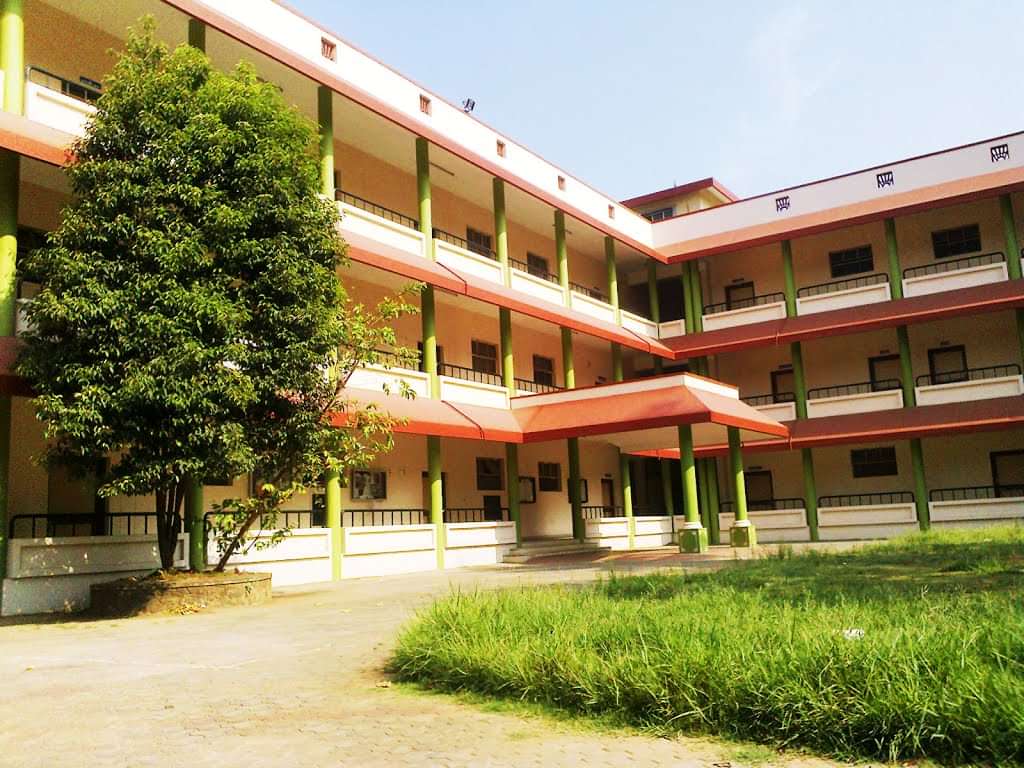
School of Technology & Applied Sciences
About
OfficialSchool of Technology & Applied Sciences is a other institution in Pathanamthitta, established in 1990. School of Technology & Applied Sciences (STAS) is a private engineering and technology institution located in Pathanamthitta, Kerala, established in 2008. Founded with the vision of providing quality technical education in a serene, focused academic environment away from urban distractions, STAS has evolved into one of Kerala's notable private engineering colleges. The institution operates under the governance of a trust focused on educational excellence and character development alongside technical competence. The college offers a diverse portfolio of engineering programs spanning Electronics & Communication Engineering, Computer Science & Engineering, Mechanical Engineering, Civil Engineering, Electrical Engineering, Information Technology, and allied disciplines at both undergraduate and postgraduate levels. With a total student strength of approximately 2,800 students and 185 faculty members, the institution maintains a student-faculty ratio conducive to meaningful interaction and mentorship. The campus spans 28 acres in a semi-rural setting, providing students with a balanced environment combining academic rigor with peaceful surroundings—a stark contrast to the metropolitan chaos many engineering students fear. Academic programs are designed with industry relevance, incorporating internships, live projects, and case study-based learning from the second year onwards. The curriculum follows AICTE guidelines with regular updates to align with emerging technologies in AI, IoT, cybersecurity, and cloud computing. Most engineering programs span 4 years in full-time mode, with admission through JEE Main rank-based counseling and merit-based pathways. Research facilities include a dedicated innovation lab, robotics center, and collaboration with industry partners for sponsored research projects. Faculty members actively publish in peer-reviewed journals, with approximately 40% holding PhDs from reputable institutions. The college has partnerships with companies like Infosys, Accenture, TCS, and several startups for internship and research collaboration opportunities. Placement outcomes have shown consistent improvement, with 2023-24 data indicating an overall placement rate of 78-82% across programs. Average salaries range from 4.2-5.8 LPA depending on branch specialization, with top recruiters spanning IT, financial services, manufacturing, and core engineering sectors. However, students report significant variation in placement outcomes across branches—CS/IT performs substantially better (90%+ placement, 6-8 LPA average) compared to mechanical and civil engineering (65-72% placement, 3.5-4.5 LPA average). Campus infrastructure includes modern computer labs with licensed software, a well-stocked central library with 45,000+ volumes and digital resources, research laboratories, separate hostel facilities for male and female students, a multi-cuisine cafeteria, and a sports complex. WiFi connectivity covers most of the campus though coverage is inconsistent in some hostels. The college has a dedicated placement cell with experienced coordinators who conduct mock interviews, aptitude training, and company engagement activities. Student life encompasses over 35 clubs covering technical innovation, cultural activities, sports, and social entrepreneurship. Annual events include TechFest (March), KalaMela (cultural festival in November), and sports day. Hostel accommodation is available on campus with a current capacity of approximately 1,200 beds across multiple blocks. Hostel quality varies—newer blocks are well-maintained with basic amenities; older blocks require renovation. Mess food is vegetarian-friendly with non-vegetarian options on specific days, though food quality and variety have been subject to recurring complaints from students. The institution maintains a relatively safe campus environment with active proctoring and security measures. Ragging incidents are rare due to strict institutional policies and active senior mentorship programs. Safety for women students is generally good with dedicated female hostels, curfew enforcement, and emergency response protocols, though some students report occasional off-campus safety concerns in the surrounding area. Pathanamthitta is a Tier-3 city in central Kerala with moderate urban development. The college location is approximately 15 km from the city center, requiring 20-30 minutes to reach markets and entertainment areas. Living costs are moderate compared to metro cities, making it affordable for middle-class families. However, the rural setting means limited entertainment and food options near campus, forcing students to rely heavily on college facilities or travel to the city center. Admissions are open to students meeting JEE Main cutoff ranks (typically 2-4 rank range for CSE, 8-12 for IT, 15-25 for ECE, and 30-45 for mechanical/civil within Kerala state quota). The college also admits through NEET-based lateral entry for diploma holders and merit-based admissions for students from state boards. Acceptance rate is moderate at approximately 15-20%, with significant variation based on program and category. The college is NAAC accredited (Grade B+ as of 2020) and pursuing NBA accreditation for core engineering programs. Affiliation is with Kerala University of Fisheries and Ocean Studies (KUFOS) and APJ Abdul Kalam Technological University (AKTU). Suitable for students seeking quality technical education in a focused environment with moderate placements, who prefer smaller class sizes over massive batch strength of tier-1 colleges, and who can adapt to a semi-rural setting. Not ideal for students prioritizing extensive campus life, cutting-edge research facilities comparable to IITs, or guaranteed high-package placements. The college serves as a good stepping stone for further studies (higher education abroad or premium M.Tech programs) and decent career entry for students willing to put in focused effort.