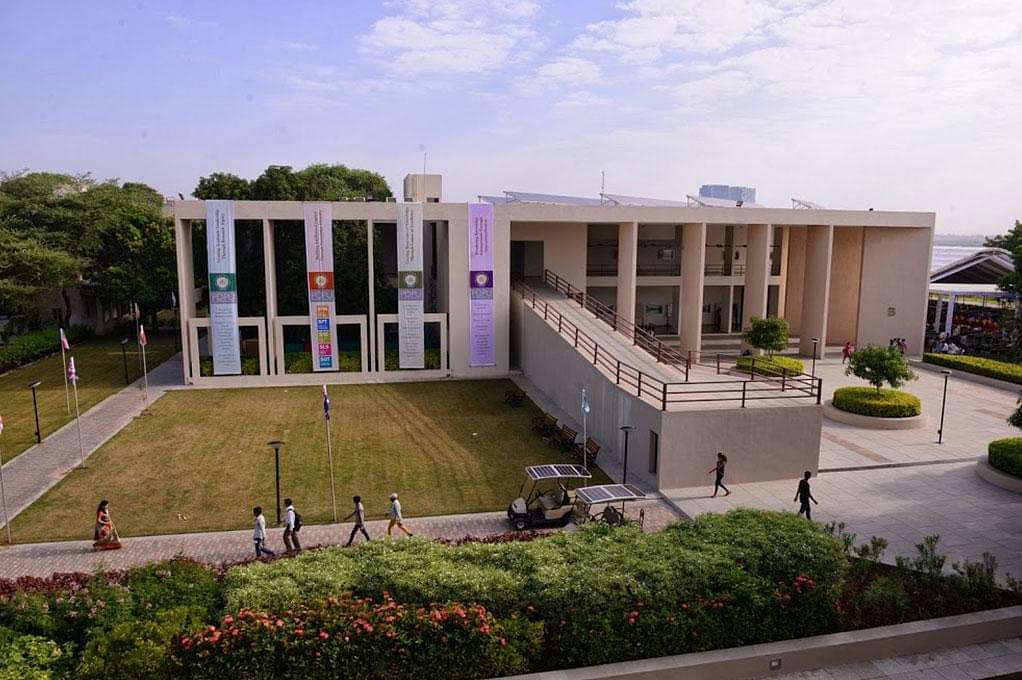
School of Liberal Studies - PDPU
About
OfficialSchool of Liberal Studies - PDPU is a other institution in Gandhinagar, established in 2009. The School of Liberal Studies (SLS) at Pandit Deendayal Petroleum University (PDPU) was established in 2007 as a distinctive institution offering interdisciplinary undergraduate and postgraduate education in the liberal arts tradition. Located in Gandhinagar, Gujarat, approximately 30 km from Ahmedabad, the school operates within PDPU's sprawling 450-acre campus in Raisan, one of India's most ambitious private university campuses. Founded by the Reliance Group, PDPU initially focused on petroleum engineering but expanded significantly to include diverse academic disciplines. SLS represents a deliberate institutional pivot toward creating globally-minded, critically-thinking graduates capable of navigating complex socio-economic challenges through humanities, social sciences, and interdisciplinary approaches. The school offers a carefully curated blend of Indian and Western pedagogical traditions, emphasizing seminar-based learning, independent research projects, and mentorship-driven academics rather than conventional lecture-based education. Unlike most Indian universities that compartmentalize disciplines, SLS encourages students to major in one field while minoring in another, fostering genuine interdisciplinary intellectual engagement. The curriculum is structured around four pillars: disciplinary depth, intellectual breadth, experiential learning, and global engagement. Students typically study liberal arts for the first year before specializing, following the American college model adapted for Indian students. Academic rigor is considerable—faculty maintain low student-to-faculty ratios (approximately 18:1), and coursework is graded on absolute standards rather than curves, ensuring academic integrity but also making high marks competitive to achieve. The institution has made deliberate investments in humanities research infrastructure, establishing research centers focusing on governance, South Asian studies, cultural heritage, and social development. Faculty members, while not extensively published in top-tier international journals compared to IITs, demonstrate strong commitment to undergraduate mentorship and applied research addressing real-world development issues. PDPU's location in Gandhinagar offers both advantages and challenges: proximity to the state capital provides internship opportunities with government institutions and NGOs, while the relatively underdeveloped immediate surrounding area means limited urban amenities despite being classified as suburban. The campus itself is exceptionally well-equipped—arguably better infrastructure than many central universities—featuring modern library facilities, computer labs, auditoriums, and recreational spaces. However, the liberal arts focus means SLS lacks the brand recognition and industry connections of IITs or top management schools, creating placement challenges. Approximately 60-70% of graduates secure jobs within 6 months, with many pursuing further studies (MAs, MPhils, PhDs) in India and abroad. Median salaries for liberal arts graduates typically range from 4-7 lakh INR annually in sectors like education, media, NGOs, and government, significantly lower than engineering counterparts. The school intentionally attracts students seeking intellectual exploration rather than purely income maximization, making it philosophically distinct from India's vocational-education-focused higher-education ecosystem. Student diversity is considerable—approximately 40% from Gujarat, 35% from other Indian states, and 25% international students from SAARC and Southeast Asian countries. This diversity significantly enhances campus culture but also creates occasional integration challenges. The school has successfully produced notable alumni in academia, journalism, civil service, and international organizations, though alumni networks in India remain less developed than established institutions. Ragging has been minimal, and the administration maintains strict gender-sensitive policies. Women constitute approximately 55-60% of the student body, reflecting the school's appeal to families seeking safer, academically rigorous environments for daughters. Campus gender dynamics are notably progressive compared to many Indian universities. The institution is best suited for students interested in social sciences, humanities, and interdisciplinary studies; those seeking traditional engineering or business careers should look elsewhere. Applicants should value intellectual curiosity, analytical thinking, and global awareness over immediate earning potential. PDPU's fee structure, while reasonable for a private university, remains significantly higher than government institutions, making it accessible primarily to middle and upper-middle-class families. The school represents an emerging counter-narrative to India's engineering-obsessed higher education, though this positioning also limits mainstream employment prospects in some sectors.