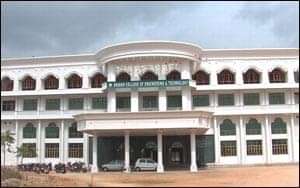
Shadan College of Engineering and Technology
About
OfficialShadan College of Engineering and Technology is a other institution in Hyderabad, established in 1995. Shadan College of Engineering and Technology (SCET) is a private engineering institution located in Shadnagar, Hyderabad, established in 2000. The college was founded by the Shadan Group with a vision to provide quality technical education blending academic rigor with practical industry exposure. Over two decades of operation, SCET has evolved into one of the notable private engineering colleges in the Hyderabad region, serving approximately 2,800 students across undergraduate and postgraduate programs. The institution operates under the governance of the All India Council for Technical Education (AICTE) and is affiliated with Jawaharlal Nehru Technological University, Hyderabad (JNTUH). SCET is located approximately 45 km south of Hyderabad city center in Shadnagar, a suburban industrial area that has seen significant development in recent years. The campus spans 45 acres and provides a relatively peaceful environment away from the urban chaos, though proximity to city is a 45-50 minute commute via public transport or personal vehicles. Academic Programs: SCET offers engineering programs at the undergraduate level (B.E./B.Tech) in 8 major disciplines: Computer Science and Engineering (CSE), Electronics and Communication Engineering (ECE), Electrical and Electronics Engineering (EEE), Mechanical Engineering (ME), Civil Engineering (CE), Information Technology (IT), Artificial Intelligence and Machine Learning (AI&ML), and Electronics and Instrumentation Engineering (EIE). Each undergraduate program has an intake capacity of 60-120 students per discipline. The college also offers Master's programs (M.Tech) in specialized areas including Computer Science, Power Systems, Structural Engineering, and Communications Engineering. Postgraduate intake varies from 18-24 students per program. The undergraduate curriculum follows the JNTUH model, covering theory-based learning in the first year, domain specialization from second year onwards, and extensive practical training through labs and projects. The institution emphasizes hands-on learning, with each engineering discipline maintaining dedicated labs including computer networks, digital electronics, microprocessors, VLSI, mechanical workshop, civil engineering materials lab, and electrical machines lab. Most labs are reasonably equipped but show signs of aging equipment in some departments, particularly in older labs established during the college's early years. Research and Development: While SCET is not a research-intensive institution like IITs or older NITs, the college has attempted to build research capabilities through faculty publications and student projects. The college maintains research centers focused on embedded systems, renewable energy, IoT applications, and structural engineering. However, research output (measured by peer-reviewed publications, patents, and grant funding) remains modest compared to tier-1 institutions. The college publishes approximately 40-50 papers annually in conferences and journals, with a handful of granted patents. The faculty research collaboration with industry is limited but growing, with partnerships established with a few IT companies for joint research projects. Academic Strengths and Challenges: The college's strongest programs are CSE and IT, which consistently attract higher EAMCET/entrance exam cutoffs and produce better placement outcomes. The faculty in CSE and IT departments includes some doctorate holders and industry professionals, bringing practical perspectives to classroom teaching. However, discipline disparity exists—core engineering departments (ME, CE, EEE) have relatively fewer PhD-qualified faculty (approximately 35-40%), and these departments report lower student engagement and placement performance. Faculty turnover in core disciplines is higher than in CSE/IT, affecting continuity in teaching quality. Placement Performance: SCET's placement record has improved steadily over the past 5-6 years. As of 2023-24, the overall placement percentage stands at approximately 78-82%, with CSE and IT achieving near 95% placements, while core engineering branches (CE, ME) achieve 60-70% placements. The median salary across all branches is approximately 4.2-4.5 LPA, with CSE/IT achieving 5.8-6.5 LPA on average. Top recruiters include Infosys, TCS, Wipro, HCL, Tech Mahindra, Accenture, and Amazon, primarily for software development roles. Manufacturing and core engineering roles are less common; most placements are in IT and software services sectors. The placement cell operates actively and coordinates campus recruitment drives, though the diversity of employers visiting campus is limited to IT companies, with minimal representation from finance, consulting, or manufacturing sectors. Infrastructure and Facilities: The main campus includes a library with approximately 40,000 volumes and subscriptions to major journals and databases (though access is restricted to on-campus usage). Wi-Fi coverage is available across the campus with average speeds of 20-30 Mbps, sufficient for academic purposes. Sports facilities include a basketball court, volleyball court, cricket ground, gymnasium, and badminton courts. An auditorium with 1,000 seating capacity hosts seminars and cultural programs. The health center operates with a resident doctor and nurse, providing basic medical care. A placement cell, innovation lab, and student activity center are functional. However, infrastructure aging is evident in some academic buildings (constructed 2000-2005), with classroom air-conditioning being inconsistent and furniture wear visible. The college has initiated campus renovation projects in phases, with some new blocks completed in 2020-2022, but comprehensive modernization remains in progress. Campus Life and Student Community: SCET hosts approximately 30-35 clubs and societies covering technical, cultural, sports, and entrepreneurship domains. Major annual events include Shadan Fiesta (cultural fest, typically in February), TechnoFest (technical fest, typically in November), and various sports tournaments. Participation in national competitions (like F1 in Schools, robotics competitions, coding contests) is limited but gradually increasing. The student community is diverse, drawing students from across Telangana and neighboring states, with representation from Muslim-majority communities given the institutional heritage. The campus culture emphasizes academic performance and placements, with relatively less emphasis on research or innovation. Ragging is reported to be minimal, with institutional policies and senior mentorship programs actively preventing it. Hostel Facilities: The college provides hostel accommodation for approximately 40% of the student population. Separate hostels exist for boys (3 blocks) and girls (2 blocks), with single and shared room options. Monthly hostel rent ranges from 3,500 INR (4-bed shared room) to 6,500 INR (single occupancy), excluding mess charges. Mess facilities provide vegetarian and non-vegetarian options, with quality varying seasonally. Monthly mess charges are approximately 3,500-4,000 INR. Hostel amenities include attached bathrooms, solar water heating (in newer blocks), TV rooms with cable connectivity, and Wi-Fi access. Older hostel blocks (established 2000-2008) have basic amenities and occasional water supply irregularities during summer. The girl student hostels are relatively newer (2012-2015) with better infrastructure. Hostel management operates on a semester basis with strict checkout timelines, limiting flexibility for students staying during semester breaks. Admissions and Cutoffs: Undergraduate admissions occur through EAMCET (Engineering Agricultural and Medical Common Entrance Test), a state-level entrance exam in Telangana. EAMCET cutoff ranks for CSE typically fall in 500-2,000 range across various categories (General/OBC/SC/ST), making admission moderately competitive within Telangana private college standards. For non-EAMCET admission slots, the college conducts its own entrance exam. Postgraduate admissions for M.Tech are conducted through GATE (Graduate Aptitude Test in Engineering) or qualifying entrance exam conducted by JNTUH. Typical GATE cutoff ranks for M.Tech programs range from 1,500-3,500 depending on discipline and category. The college does not have separate entrance exams like JEE-Main or JEE-Advanced cutoffs as it doesn't fall under deemed university or autonomous college status. Fee Structure and Financial Considerations: Total tuition fees for undergraduate B.Tech programs range from 95,000-105,000 INR per annum, making it moderately priced within private engineering colleges in Telangana. Total annual expenses including hostel, mess, and miscellaneous charges typically reach 175,000-210,000 INR for in-campus residing students, and 120,000-135,000 INR for day scholars. Compared to top-tier private universities (VIT, BITS, KIIT at 1.5-2.5 LPA for 4 years) or state-run NITs (6-8 LPA for 4 years), SCET offers a mid-range pricing. Scholarship opportunities are limited, with few need-based or merit-based scholarships available through institutional funds or government schemes. Notable Aspects and Unique Position: SCET's key differentiators include: (1) Reasonable fee structure compared to larger private universities, (2) Proximity to Hyderabad's IT industry, enabling internship opportunities, (3) Active placement cell with focus on immediate employment, (4) Growing emphasis on emerging technologies (AI/ML, IoT programs added recently), (5) Diverse student community with inclusive campus culture. The college's limitations include: (1) Limited research opportunities and publications, (2) Low faculty PhD qualification rates in core engineering, (3) Placement sector concentration in IT services (60-70% of placements), (4) Modest infrastructure compared to top-tier private colleges, (5) Limited international collaborations and student exchange programs, (6) Competitive disadvantage against IITs/NITs/top private universities in campus recruitment by premium companies. Who Should Apply: SCET is ideal for students seeking quality engineering education at moderate costs with a focus on immediate employability in IT services. The college suits candidates who: (1) Have cleared EAMCET with ranks in 500-5,000 range (General category) and seek admission in Telangana-based colleges, (2) Are interested in software engineering, web development, and IT services careers, (3) Prefer a balanced campus environment combining academics and extracurriculars without overwhelming research pressure, (4) Seek urban proximity (Hyderabad is 45 km away) without central city chaos, (5) Are cost-conscious regarding engineering education. Students with interests in core engineering disciplines (civil, mechanical, electrical) should carefully evaluate placement records in those branches before applying. Candidates aspiring for research careers, international opportunities, or pursuing specialized engineering domains beyond IT should consider IITs, top NITs, or premium private universities instead.