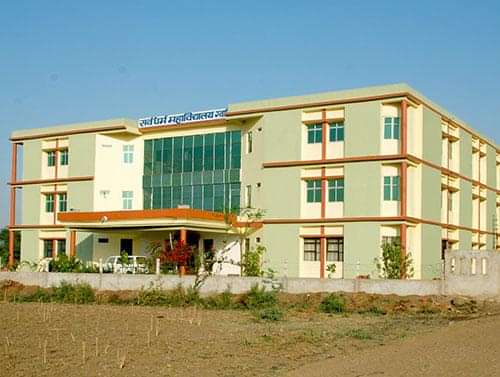
Sarwa Dharma (SDS) Mahavidhyalaya
About
OfficialSarwa Dharma (SDS) Mahavidhyalaya is a other institution in Gwalior, established in 2003. Sarwa Dharma (SDS) Mahavidhyalaya, established in 1952, is a private undergraduate and postgraduate institution located in Lashkar, Gwalior, Madhya Pradesh. Founded with the mission to provide inclusive, quality higher education rooted in Indian values while maintaining global academic standards, the college has evolved into a multi-disciplinary institution serving over 3,200 students across engineering, sciences, commerce, and humanities. The institution's name reflects its secular commitment to welcoming students across all religions and communities, embodying the pluralistic ethos of Indian higher education. Gwalior's strategic location—approximately 350km south of Delhi and 280km north of Indore—positions the college as an emerging educational hub in central India. The college operates from a sprawling 18-acre campus with a mix of heritage buildings and modern infrastructure, though ongoing developmental work indicates periodic construction disruptions. Academically, SDS Mahavidhyalaya offers 12+ undergraduate programs and 8+ postgraduate programs spanning engineering disciplines (Civil, Mechanical, Electrical, Electronics, Computer Science), sciences (Physics, Chemistry, Biology, Mathematics), commerce, and humanities. The engineering programs maintain AICTE approval, though the institution is not among the premier-tier centrally-funded colleges. Research output remains modest, with limited publications in high-impact journals; most faculty focus on teaching rather than active research programs. The college maintains ties with regional industries and conducts occasional guest lectures and industry visits, but systematic industry partnerships comparable to IITs or top NITs are absent. Placements average 65-72% across programs, with the highest concentration in IT and software companies recruiting at salary ranges of 4-6 LPA for engineering graduates. Core engineering and manufacturing sector placements are limited, reflecting the region's demographics and the college's proximity to IT hubs like Gwalior and Indore. The administration has invested in a placement cell and conducts mock interviews and aptitude training, yet persistent gaps in industry readiness remain among non-top-tier graduates. Campus life is moderate; the college hosts annual technical and cultural fests, maintains active student clubs, but cultural activities pale compared to tier-1 institutions. Hostel facilities exist for both male and female students, though quality varies significantly between older and newer blocks. The city of Gwalior itself, while historically rich and culturally significant, lacks the cosmopolitan infrastructure of metro cities, translating to limited entertainment options for students. Safety for women students is reported as generally good, though several incidents of eve-teasing have been documented in the broader city. Notable alumni include mid-level engineers in IT companies, some entrepreneurs, and a few pursuing PhDs at Indian and foreign universities, but the institution has not produced high-profile academics or industry leaders comparable to top-tier colleges. The faculty cadre comprises largely doctorates from Indian universities (BITS Pilani, Delhi University, IIT graduates), with limited representation from international institutions. Research infrastructure remains underdeveloped—while basic labs exist, cutting-edge research facilities like specialized computing clusters or advanced scientific instruments are sparse. The college is well-suited for motivated first-generation learners and students from Madhya Pradesh seeking affordable, accessible higher education with decent placement prospects in IT sectors. However, students aspiring for core engineering careers, advanced research opportunities, or placement in tier-1 global companies should carefully weigh the limitations of curriculum depth, faculty research engagement, and recruiter profile against alternatives like NITs, top private universities, or engineering colleges in metropolitan areas. The college's value proposition rests primarily on affordability, inclusive admissions culture, and reasonable placement outcomes in IT—not academic rigor or research excellence.