Sapatgram College
About
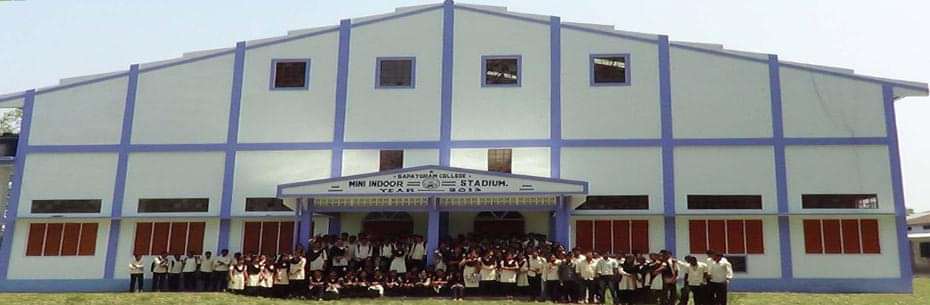
OfficialSapatgram College is a other institution in Dhubri, established in 1972. Sapatgram College is a government-affiliated institution located in Dhubri, Assam, established in 1964. Situated on the banks of the Brahmaputra River, the college serves as a major educational hub for the Dhubri district and surrounding regions. Over six decades, it has evolved from a junior college to a comprehensive undergraduate and postgraduate institution, earning recognition as a College of Excellence by the Government of Assam. The college primarily caters to first-generation learners and students from economically weaker sections, making quality higher education accessible to rural and semi-urban populations. Sapatgram College is primarily an arts and sciences institution with a focus on humanities, social sciences, and basic sciences. The college does not offer engineering programs but has strong departments in English, Assamese, History, Political Science, Economics, Mathematics, Physics, Chemistry, Biology, and Botany. Postgraduate programs are available in select disciplines including English, Assamese, and History, attracting scholars from within and outside the state. The college's academic strength lies in its traditional liberal arts approach, emphasizing critical thinking, cultural awareness, and social responsibility. Many faculty members have PhDs from reputed universities and engage in scholarly research, particularly in literature, history, and social studies. The college maintains partnerships with academic institutions in New Delhi and Kolkata for research collaboration and faculty development. Research initiatives focus on regional history, vernacular literature, environmental conservation along the Brahmaputra, and community development projects. The campus is known for its serene environment conducive to learning, with lush green spaces and proximity to the river providing a unique setting. However, infrastructure limitations are notable—the campus lacks modern laboratory facilities, adequate computer labs, and contemporary digital learning infrastructure compared to tier-1 colleges. The library has approximately 35,000 volumes but limited digital resources. Internet connectivity on campus is inconsistent, and the institution struggles with power supply issues during monsoon seasons due to geographical challenges. Campus life at Sapatgram reflects Assamese cultural traditions with annual celebrations of Bihu, Durga Puja, and other regional festivals. Student clubs focus on cultural activities, literary societies, and environmental awareness rather than technical clubs. Sports facilities include a cricket ground and badminton court, but modern gymnasium equipment is absent. The college actively encourages debate, elocution, and cultural performances, with many students winning recognition at state and national-level competitions. Hostel facilities accommodate approximately 400 students, with separate hostels for men and women. The environment is family-like with older students mentoring younger ones, though amenities are basic. Placement outcomes are modest compared to metro-based colleges. Most graduates pursue teaching, civil service preparation, or higher education abroad. Graduate employment typically occurs in government education institutions, NGOs, and administrative positions. Approximately 15-20% of graduates secure jobs within six months of graduation, with remaining students pursuing further studies or competitive examinations. The college is particularly known for producing civil service aspirants and academic scholars. Notable alumni include several IAS/IPS officers, university professors, and journalists who have made contributions to Assamese society. The institution is ideal for students seeking quality liberal arts education in a culturally enriching environment, those interested in Assamese language and literature studies, and students from economically disadvantaged backgrounds. However, it is not suitable for students seeking placement-driven education, technical programs, or high corporate salaries. The college represents the reality of rural Indian higher education—dedicated faculty, limited resources, strong academic traditions, and a mission to serve marginalized communities. Students who thrive here are typically self-motivated, interested in academics for intellectual growth rather than career acceleration, and adaptable to basic infrastructure. The college provides an authentic Indian learning experience far from the corporate coaching culture prevalent in urban institutions.