Salfia Unani Medical College
About
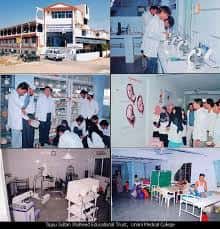
OfficialSalfia Unani Medical College is a other institution in Darbhanga, established in 1981. Salfia Unani Medical College, established in 2008, is one of Bihar's pioneering institutions dedicated to Unani medicine education and practice. Located in Darbhanga, a historically significant city in North Bihar, the college operates under the regulatory framework of the National Board of Examinations (NBE) and the Central Council for Indian Medicine (CCIM). The institution was founded with the vision of revitalizing Unani medicine, one of India's classical systems of medicine, and bridging the gap between traditional knowledge and modern medical practice. The college is situated approximately 8 km from Darbhanga town center, in a relatively quiet suburban area that provides a conducive environment for medical studies while maintaining proximity to urban amenities. The campus spans 8.5 acres with a blend of modern educational infrastructure and traditional Unani medical facilities. The institution maintains a student body of approximately 450 undergraduates and postgraduate students across various medical programs. Academically, Salfia Unani Medical College offers comprehensive MBBS (Bachelor of Unani Medicine and Surgery) programs with a focus on classical Unani medical principles integrated with contemporary pharmacology, pathology, and clinical practices. The college emphasizes evidence-based learning while preserving the foundational theories of Unani medicine developed by historical physicians like Ibn Sina. The faculty comprises 85 experienced practitioners and educators, many with additional qualifications in modern medical sciences and research methodologies. The college operates 12 specialized departments including Kulliyat-e-Unani (Theory and Principles of Unani Medicine), Moalejat (Internal Medicine), Jarahaat-e-Unani (Unani Surgery), Obstetrics and Gynaecology, Pediatrics, ENT, Dermatology, and Pharmacology. Each department is equipped with practical training facilities and outpatient departments (OPDs) that serve the local community, providing approximately 80-100 patients daily across various departments. The research infrastructure includes a well-stocked library with over 5,000 volumes of Unani medical texts, modern medical journals, and digital databases. Several faculty members are actively engaged in research projects investigating the efficacy of classical Unani formulations using modern scientific methodologies. The college has published research papers in peer-reviewed journals examining herbal medicines, mineral compounds, and their therapeutic applications. Placements for MBBS graduates primarily focus on clinical practice, government positions, and specialized postgraduate studies. The college maintains a network with Unani practitioners across Bihar and neighboring states, facilitating employment opportunities in government hospitals, private clinics, and pharmaceutical companies. Several graduates have established successful private practices in urban centers like Delhi, Mumbai, and Bangalore. The placement cell actively coordinates with the Ministry of AYUSH, various state health departments, and Unani medical councils to create career pathways. However, placement opportunities are limited compared to allopathic medical colleges due to the smaller Unani medical job market. Notable alumni include Dr. Md. Jamal Uddin, who established a chain of Unani hospitals across Bihar; Dr. Nasreen Akhtar, who pioneered women's health programs in Unani medicine; and Dr. Ashfaq Ahmed, known for his research on classical Unani pharmacology. Campus life is moderately vibrant with student organizations focused on medical research, health awareness, and cultural activities. The college hosts an annual Health Awareness Week where students conduct community health camps and educational seminars. The institution has a placement cell, health center, and dedicated sports facilities. However, the campus infrastructure, while functional, is not as modern or extensive as premier AIIMS or NIT institutions. The hostel facilities are basic but adequate, with separate accommodations for male and female students. The mess serves vegetarian and non-vegetarian meals at reasonable rates. Internet connectivity is available across campus but speeds vary. The college library operates with extended hours during examination periods. What makes Salfia Unani Medical College unique is its focus on preserving and advancing classical Indian medicine within a rigorous academic framework. The institution bridges ancient Unani medical principles with modern pharmacological research, creating a distinctive educational experience unavailable at conventional allopathic medical colleges. The college is particularly suitable for students deeply interested in traditional medicine systems, herbal pharmacology, community health, and evidence-based research in Ayurvedic and Unani domains. It appeals to individuals seeking alternative medical careers outside the conventional MBBS-MD pathway and those committed to revitalizing India's classical medicine traditions. The college is ideal for students who demonstrate genuine passion for Unani medicine rather than those seeking it as a fallback option, as the job market and earning potential are considerably smaller than allopathic medicine. Darbhanga's location provides exposure to rural health challenges and opportunities for community engagement, though the city itself offers limited entertainment and cosmopolitan amenities compared to larger metros. Students should prepare for a focused, traditional learning environment prioritizing medical education over campus luxuries.