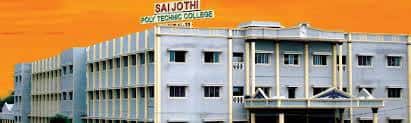
Sai Jothi Polytechnic College
About
OfficialSai Jothi Polytechnic College is a other institution in Madurai, established in 1970. Sai Jothi Polytechnic College, established in 2004, is a private engineering diploma institution located in Madurai, Tamil Nadu. The college operates under the governance of the Tamil Nadu Directorate of Technical Education and offers accredited 3-year diploma programs in multiple engineering disciplines. Founded by the Sai Jothi Educational Trust, the institution emerged from a vision to provide quality technical education accessible to middle and working-class families in the Madurai region and surrounding districts. The college has evolved from its modest beginnings to become one of the region's notable polytechnic colleges with a reputation for practical hands-on learning and industry-aligned curriculum. The institution operates a co-educational campus with a student population of approximately 2,800 across all programs and batches. The campus spans 8.5 acres in a semi-urban setting near Melur, approximately 20 km from Madurai city center, providing a balance between academic focus and accessibility to urban amenities. The college is affiliated with the Tamil Nadu State Board of Technical Education and Skill Development (TNSTSD) and offers diploma programs in Civil Engineering, Mechanical Engineering, Electrical and Electronics Engineering, Electronics and Communication Engineering, Computer Science and Engineering, and Chemical Engineering. The academic structure follows the state polytechnic curriculum framework with a blend of theory and practical training. Each program emphasizes skill development through well-equipped laboratories, workshops, and hands-on projects that align with industry requirements. The institution has developed partnerships with various industrial organizations for student internships and curriculum relevance. Sai Jothi Polytechnic operates dedicated workshops for automotive, mechanical fabrication, electrical wiring, and electronics troubleshooting. The college maintains a placement and career guidance cell that actively coordinates with recruiters from manufacturing, IT, and core engineering sectors. Placement statistics for 2023-24 indicate a placement rate of approximately 68-72%, with median salaries in the 3.5-4.2 LPA range for diploma graduates. Top recruiters include companies from automotive (Bosch, TVS, Ashok Leyland), IT services (Tata Consultancy Services, Cognizant, Infosys), electrical equipment (Siemens, Schneider Electric), and manufacturing sectors. The college operates a structured career development program including aptitude training, technical skill enhancement, and soft skills development. Campus life centers around technical clubs, sports activities, and periodic technical symposiums. The institution conducts an annual technical fest that brings together students from multiple polytechnic colleges in the region. The college maintains separate hostel facilities for male and female students with basic to moderate amenities. The gender ratio is approximately 65% male and 35% female students, with female students concentrated in Computer Science, Electronics and Communication, and Chemical Engineering programs. The college library houses approximately 12,000 books covering technical and general subjects with internet-enabled study areas. Wi-Fi connectivity is available across the campus with moderate bandwidth, though speed and reliability can be inconsistent during peak hours. The faculty comprises a mix of permanent and contractual staff with varying qualifications—approximately 35-40% hold master's degrees, while a smaller percentage have pursued doctoral studies. The faculty development program encourages participation in workshops and training conducted by TNSTSD. Notable aspects of the college include its focus on vocational skill alignment, active industry engagement through guest lectures and workshops, and organized internship programs that ensure practical exposure. The college has produced graduates who work in various engineering sectors across India and a few abroad, though alumnus tracking and engagement systems are developing. Madurai's location as a major educational and industrial hub provides internship and employment opportunities for students. The institution is honest about its constraints—being a polytechnic college (not a degree college), graduates enter the job market with diploma qualifications, which positions them for technical and supervisory roles rather than engineering officer positions. The college is particularly suited for students who prefer hands-on technical training over theoretical engineering education, are from middle-income families seeking quality education at affordable costs, prefer skill-based learning with direct pathway to employment, and are interested in core engineering and manufacturing sectors. Students unsuitable for this college would include those seeking four-year engineering degrees, those from affluent backgrounds expecting premium infrastructure, and those without aptitude for technical and practical work. The college culture emphasizes technical competence, practical problem-solving, and industry readiness over pure academic credentials. Ragging has not been a significant issue, and the institution maintains reasonable discipline and safety standards. However, infrastructure development lags compared to private engineering colleges, and placement packages are modest by tier-1 engineering college standards.