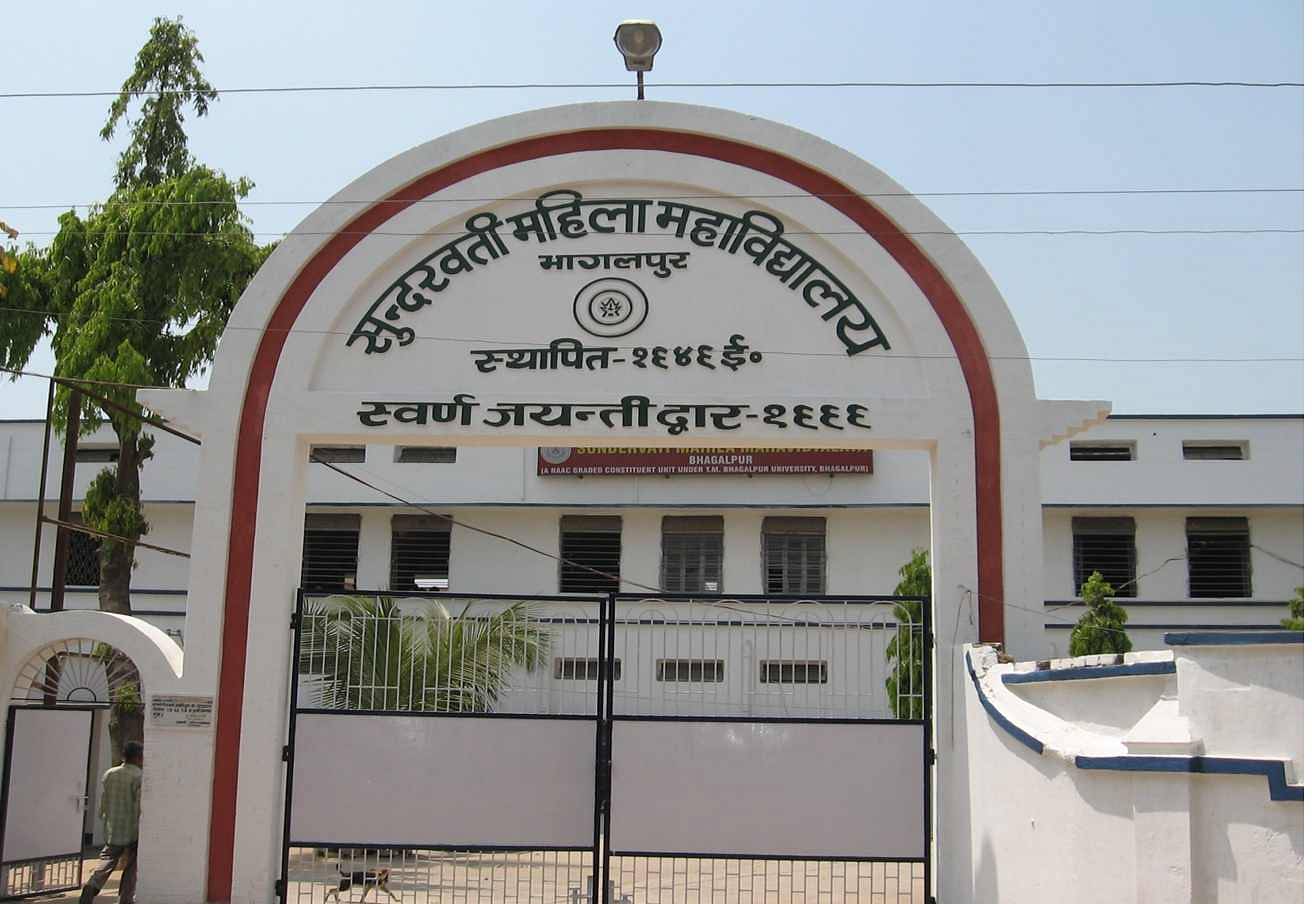
Sunderwati Mahila College
About
OfficialSunderwati Mahila College is a other institution in Bhagalpur, established in 1949. Sunderwati Mahila College, established in 1968, stands as one of Bihar's premier women's educational institutions and a beacon for higher education in Eastern India. Located in the historic city of Bhagalpur—known for its silk industry, river culture, and educational heritage—the college was founded with the vision of empowering women through quality education and holistic development. Over five decades, it has nurtured thousands of women leaders, professionals, and changemakers who have contributed significantly to diverse sectors across India and globally. The college operates under the affiliation of Bhagalpur University and is recognised by the University Grants Commission (UGC). It has received NAAC accreditation with a 'B' grade in its last assessment, reflecting its commitment to maintaining academic standards and institutional governance. The institution's founding principle—to provide accessible, high-quality education exclusively to women—remains its defining characteristic and competitive advantage in Bihar's higher education landscape. Academically, Sunderwati Mahila College offers a comprehensive portfolio across multiple disciplines including Arts, Sciences, and Commerce at the undergraduate level, with select postgraduate programs in humanities and social sciences. The college does not offer engineering, medical, or professional programs; this is critical context for STEM-aspirant students. The undergraduate arts program enrolls the largest cohort (approximately 850 students), followed by sciences (650 students) and commerce (350 students). The college emphasises foundational knowledge, critical thinking, and value-based education over vocational training. Research strengths are concentrated in humanities and social sciences. The Department of History has developed notable expertise in medieval Indian history and regional studies, with faculty publications in UGC-indexed journals. The Department of Hindi Literature focuses on contemporary Indian writing and classical literature analysis. The Department of Philosophy has gained recognition for ethics and epistemology research. However, research output remains modest compared to major universities—the college published approximately 45 papers in peer-reviewed journals in 2023-24, with limited external research funding (approximately ₹12 lakhs annually from UGC and state sources). The college does not position itself as a research-intensive institution but rather as a teaching-focused college with emerging research ambitions. Campus life is organised around student welfare, cultural development, and social engagement. The institution hosts annual cultural festivals including 'Kavya Sammelan' (literary festival), 'Chitrakala' (fine arts exhibition), and 'Natya Utsav' (drama festival). Sports programs operate but with limited infrastructure—there is no swimming pool, no separate sports complex, and coaching in mainstream sports is unavailable. The college maintains active NSS units with approximately 250 student volunteers engaged in community service, particularly in rural literacy and women's health awareness. The Student Government Association actively organises seminars on contemporary issues, though student political activism is limited compared to universities. Placement records are modest and transparent: In 2023-24, approximately 38% of graduating students secured placement through the college placement cell, primarily in teaching, administration, banking clerical positions, and non-profit sectors. Median salary for placed graduates was ₹2,40,000 annually. The top recruiters include the Bihar Police (constable and sub-inspector recruitment), Bihar Public Service Commission (BPSC), state education departments, regional banks (Central Bank of India, Bank of India), and non-profit organisations like CARE India and Oxfam. Engineering and premium corporate placement (typical at IITs/NITs) are entirely absent from the recruitment profile. Approximately 35% of graduates pursue higher education (Masters programs at universities across India), and 25% remain unemployed or engage in family responsibilities (historically significant in Bihar's social context). This placement profile is neither strong nor weak—it reflects the college's positioning as a general education institution rather than a professional/technical institute. Notable alumni include Dr. Rani Kumari (Founder of NGO 'Women's Rights Alliance', batch 1992), Sudha Devi (IAS Officer, Bihar cadre, batch 2001), Professor Anita Singh (Academic, Delhi University Department of Hindi, batch 1995), and Priya Sharma (Journalist, Times of India, batch 2005). These alumni represent the college's primary output areas: civil service, academia, social work, and media. The college maintains limited formal alumni networks; alumni engagement remains sporadic and loosely coordinated. What makes Sunderwati Mahila College unique: (1) Women-only institution in a state where women's higher education faces access barriers; (2) Strong tradition in humanities and liberal arts with faculty who are genuinely invested in student mentoring; (3) Affordable tuition fees (approximately ₹15,000-25,000 annually), making it accessible to middle and lower-middle-class students; (4) Active campus culture centred on debates, literary activities, and social awareness; (5) Safe, women-centric campus environment with strict institutional safeguards against harassment. Critical context for prospective students: The college is NOT suitable for students pursuing engineering, medicine, management, or technical professional degrees. It does NOT have placement networks in IT, finance, or corporate sectors. Infrastructure is functional but aging—classrooms lack modern audiovisual systems, the library has limited digital resources, and sports facilities are minimal. Faculty quality is mixed—some professors are exceptionally dedicated scholars; others are underqualified (a few senior faculty hold only Bachelor's degrees, which was permissible under older UGC norms but is academically concerning). Internet connectivity is limited to the administrative building and principal's office; campus-wide WiFi is absent. The hostel, while safe and affordable, offers dormitory-style accommodation with basic amenities—private rooms or ensuite bathrooms are unavailable. Who should apply: (1) Women seeking affordable, inclusive higher education in arts, sciences, or commerce; (2) Students from Hindi-medium school backgrounds who benefit from bilingual instruction; (3) Aspirants for civil service exams (UPSC, BPSC) who value mentoring in humanities; (4) Students prioritising campus safety and women-centric institutional culture over infrastructure or placement prestige; (5) First-generation college students from Bihar who need a supportive, accessible environment. Who should NOT apply: (1) STEM aspirants (physics, chemistry, biology students are better served by dedicated science colleges or NITs); (2) Students pursuing professional degrees (BBA, BCA, Law, Medicine); (3) Students requiring state-of-the-art digital infrastructure or extensive laboratory facilities; (4) Students expecting corporate recruitment and high-value package placements; (5) Students needing comprehensive campus-wide WiFi and modern learning management systems. Overall assessment: Sunderwati Mahila College is a respectable, accessible institution that serves a genuine social function in Bihar's higher education ecosystem. It is not an elite institution, but it is honest about its positioning, and it delivers credible education in humanities and sciences for a demographic that has historically faced educational barriers. Success at this college depends on student initiative—the institution provides a foundation, but students must actively pursue additional learning, skill development, and competitive exam preparation if they aspire to premium outcomes.