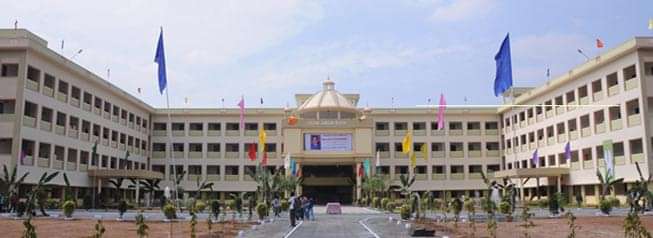
RVR and JC College of Engineering
About
OfficialRVR and JC College of Engineering is a other institution in Guntur. RVR and JC College of Engineering (RVRJCCE), established in 1997 by the RVR and JC Educational Society, is one of Andhra Pradesh's oldest private engineering institutions. Located in Chowdavaram, Guntur, approximately 8 km from the city center, the college serves as a significant feeder for engineering talent in the Coastal Andhra region. The institution was founded with the mission to blend quality engineering education with practical industry relevance, particularly serving tier-2 city aspirants who cannot access metropolitan engineering colleges due to affordability or merit constraints. The college operates on a 45-acre suburban campus offering undergraduate and postgraduate programs across 9 engineering disciplines and two management specializations. Its engineering programs follow the JNTU Hyderabad curriculum, ensuring standardized academic rigor while allowing operational autonomy. The institution has maintained NAAC accreditation (Grade B in 2022) and NBA accreditation for Civil, Mechanical, and Electrical Engineering programs, signaling compliance with national quality benchmarks, though these certifications indicate "satisfactory" rather than "excellent" performance. Academic strengths lie in core engineering disciplines—Civil, Mechanical, and Electrical Engineering have established departmental traditions with 25+ years of teaching heritage before college autonomy. These branches consistently achieve 85-90% placement rates with median packages in the 4.2-5.8 LPA range. Information Technology and Computer Science have seen rapid growth post-2010, now accounting for nearly 40% of total student intake, though placement quality here is more variable (70-80% placement, 3.8-5.2 LPA median) due to intense market competition. Electronics and Communication Engineering occupies a middle ground with moderate placement outcomes (75-82%, 4.0-5.5 LPA). Placement infrastructure is the college's most developed asset. The dedicated placement cell coordinates with 200+ recruiting companies annually, including Tech Mahindra, Cognizant, Wipro, and TCS as consistent top recruiters. However, placement percentages for IT/CSE branches hover around 75-80%, meaning 20-25% of students struggle to secure campus placements and must pursue off-campus recruitment or further education. Non-IT branches perform better at 85-90% placement but with lower average salaries. The highest package recorded stands at approximately 18 LPA (achieved by exceptionally talented students in core roles), while the median salary across all branches averages 4.8 LPA (2023-24), indicating middle-to-lower-middle tier placement outcomes compared to tier-1 private colleges. Research and innovation culture is underdeveloped relative to tier-1 institutions. The college has initiated research centers in IoT, Machine Learning, and Civil Infrastructure, but these operate with limited funding and faculty research output remains modest—approximately 40-50 papers published annually in peer-reviewed journals, most by a handful of faculty. PhD program enrollment is minimal (fewer than 30 PhD scholars across all departments), and faculty doctorate rate hovers around 35-40%, below national averages for autonomous colleges. This reflects the institution's teaching-focused rather than research-intensive orientation, which is acceptable for undergraduate-heavy colleges but limits advanced learning opportunities. Campus infrastructure is functional but aging. Library holdings comprise 45,000+ books and 80+ journal subscriptions; digital resources include IEEE Xplore, Springer, and NPTEL access. Computer labs equipped with modern hardware support 1500+ student workstations across departments. WiFi coverage extends to 90% of campus with 20 Mbps average speeds during peak hours (degrading to 8-12 Mbps in hostels). The campus features two auditoriums (main 600-capacity, seminar hall 150-capacity), a modest sports complex with cricket ground, basketball court, and badminton facilities, but lacks a swimming pool—a notable gap compared to peer institutions. Gym equipment is basic (free weights, 15 treadmills, limited cardio machines). Hostel infrastructure accommodates 1600+ students in separate men's and women's hostels; facilities include attached bathrooms, 24-hour water supply, and internet access, though room sizes are compact (9x12 feet standard) and maintenance issues have been occasionally reported. Campus life operates at modest intensity. The college hosts 8-10 technical clubs (robotics, coding, IoT, civil tech), 6 cultural societies, and 10+ sports teams, but participation remains in the 15-25% range per club due to heavy academic load and placement pressure (especially in 3rd and 4th years). Annual events include TechnoVIGNAN (technical fest, March), CultureFEST (cultural fest, February), and inter-departmental sports meet (January). Student government is student-led with faculty oversight, though decision-making autonomy is limited. Mental health support exists through a counseling cell but operates with only two full-time counselors for 2850 students—capacity constraints limit availability. Ragging has been largely eliminated post-2015 through strict anti-ragging cells and hostel supervision, though sporadic incidents of subtle ragging are occasionally reported. Faculty quality is mixed. Senior faculty (20+ years experience) in Civil, Mechanical, and Electrical Engineering bring strong domain expertise and industry connections; however, retention of junior PhD-holding faculty remains challenging due to better opportunities in metropolitan colleges and industry. Approximately 50% of faculty hold PhDs, 35% hold M.Tech degrees, and 15% have only bachelor's degrees, indicating variable teaching credentials. Faculty-student ratio stands at 1:15, better than many private colleges but still not conducive to mentoring intensity. Continuous professional development through GIAN programs and industry internships is encouraged but inconsistently executed. The college's unique positioning lies in its accessibility to middle-class students from tier-2 and tier-3 cities who cannot afford metros but seek structured engineering education with reasonable placement outcomes. Admission fees are 30-40% lower than comparable Bangalore/Hyderabad private colleges, making it financially viable for families with limited resources. This socioeconomic diversity enriches campus culture but also creates academic stratification—meritorious students achieve strong placements while below-average performers struggle significantly. Who should apply: Students securing 75-85 percentile in JEE Mains, seeking engineering education in a structured suburban environment with moderate to good placements. Well-suited for: (1) Civil and Mechanical Engineering aspirants prioritizing core branch excellence over IT hype, (2) First-generation college students requiring structured campus support, (3) Students from Andhra Pradesh and Telugu-speaking regions valuing regional proximity, (4) Budget-conscious families willing to trade top-tier brand for solid education quality. Not recommended for: aspirants targeting FAANG/elite startups (placement ceiling is lower), students requiring cutting-edge research opportunities, or those seeking premium cosmopolitan campus experiences. The college delivers competent engineering education with dependable placements but lacks the transformative trajectory of tier-1 institutions.