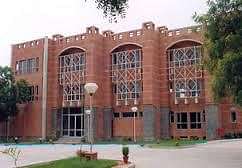
Rufaida School of Nursing
About
OfficialRufaida School of Nursing is a other institution in New Delhi, established in 1983. Rufaida School of Nursing, established in 1992, is one of India's premier women-only nursing institutions located in the heart of New Delhi's medical hub—directly opposite AIIMS. Named after Rufaida Al-Aslamia, an Islamic nurse recognized as the world's first trained female nurse, the institution carries a legacy of pioneering women in healthcare. The school operates under the auspices of a registered non-profit society dedicated to advancing nursing education and practice standards. The institution offers comprehensive nursing education across multiple levels, including Bachelor of Science in Nursing (B.Sc. Nursing), Master of Science in Nursing (M.Sc. Nursing) in various specializations, and Diploma in Nursing programs. All programs are recognized by the Indian Nursing Council (INC) and affiliated with relevant statutory bodies. The curriculum emphasizes both theoretical knowledge and clinical practice, with strong integration between classroom learning and hands-on hospital experience. Academic Programs: The school's B.Sc. Nursing program is a 4-year integrated course with an annual intake of 60 students. The curriculum follows INC guidelines and incorporates modern nursing theories, evidence-based practice, and research methodologies. Clinical postings are conducted at AIIMS, Sir Ganga Ram Hospital, Apollo Hospitals, and other premier institutions in Delhi. The M.Sc. Nursing program offers specializations in Medical-Surgical Nursing, Psychiatric Nursing, Community Health Nursing, and Obstetric & Gynecological Nursing with intake of 20-30 students per specialization. The 3-year Diploma in Nursing program serves as an entry pathway for secondary school graduates. Research and Innovation: The school maintains active research initiatives with faculty engaged in clinical research, evidence-based practice improvement, and community health studies. Notable research areas include community health interventions in urban slums, maternal and child health outcomes, infection control practices, and patient care quality improvement. The institution has collaborations with AIIMS for research projects and faculty participate in national and international nursing conferences regularly. Campus Infrastructure: Despite the compact 2.5-acre urban campus, the school houses well-equipped nursing laboratories including skills labs with mannequins for clinical practice, anatomy and physiology labs, microbiology labs, and pharmacology labs. The library maintains over 3,000 books and subscribes to nursing journals and databases. Computer labs provide access to online learning resources and research databases. The campus lacks traditional sports facilities due to space constraints in central Delhi, but students have access to nearby AIIMS facilities. WiFi coverage is available throughout campus. Placement Record: Rufaida maintains a placement rate of 94-96% within 3-4 months of graduation. Graduates are highly sought after by hospitals across Delhi NCR and metropolitan cities. Median salary for B.Sc. graduates ranges from 350,000-420,000 INR annually. M.Sc. graduates command salaries in the range of 420,000-550,000 INR. Top recruiting organizations include AIIMS Delhi, Apollo Hospitals, Max Healthcare, Fortis Hospitals, Sir Ganga Ram Hospital, Indraprastha Apollo, Delhi University hospitals, and international healthcare organizations in Gulf countries and UK. Many graduates pursue further specialization through PhD or move into healthcare management and policy roles. Notable Alumni: The school has produced several accomplished professionals including Dr. Priya Sharma (Batch 2008), now Senior Nursing Officer at AIIMS Delhi; Neha Kapoor (Batch 2010), Director of Nursing at Max Healthcare Saket; Dr. Ananya Mishra (Batch 2005), faculty at Jamia Millia Islamia nursing program; Ritu Singh (Batch 2012), healthcare consultant with World Health Organization; and numerous hospital administrators, academics, and clinical leaders across India and abroad. Campus Culture: The institution maintains a strict women-only policy, creating a supportive and focused learning environment. The relatively small cohort size fosters close mentoring relationships between faculty and students. A strong emphasis on professional ethics, evidence-based practice, and continuous learning characterizes the academic culture. Student welfare committees address grievances promptly. Regular seminars, workshops, and guest lectures from senior clinicians and researchers enrich the curriculum. Unique Strengths: (1) Proximity to AIIMS provides unparalleled clinical learning opportunities with access to diverse patient populations and advanced medical settings. (2) Women-only environment appeals to students seeking focused academics without social distractions. (3) Faculty with strong clinical and research backgrounds provide mentorship beyond textbooks. (4) Strong placement network specifically in premier Delhi hospitals. (5) INC recognition ensures degrees are portable across India and internationally. (6) Active alumni network provides networking and career guidance. (7) Urban location provides access to medical libraries, conferences, and professional development opportunities. Challenges and Considerations: (1) Limited campus space restricts sports and recreational facilities—a significant concern for students seeking holistic development. (2) High cost compared to government nursing colleges; may not suit budget-constrained families. (3) Competitive admission process with substantial merit-based selection. (4) Urban location means higher living expenses for out-station students. (5) Women-only policy, while beneficial to many, may not appeal to all candidates. (6) Smaller batch size (60 for UG) means intense peer competition. (7) Research funding is limited compared to large university systems. (8) Hostel accommodation is limited and expensive, forcing many students into PG rentals. Who Should Apply: (1) Women passionate about nursing with strong academic records in 12th standard. (2) Students seeking evidence-based, clinically rigorous nursing education. (3) Candidates preferring women-only educational environment for focused learning. (4) Students with genuine interest in patient care and community health rather than pursuing nursing solely for placement package. (5) Candidates comfortable with Delhi's urban environment and capable of managing higher living expenses. (6) Those aspiring toward advanced nursing roles—management, specialization, or clinical research. (7) International students seeking INC-recognized qualification for global nursing practice. Not recommended for: students with limited financial resources, those prioritizing campus sports and recreational amenities, or candidates viewing nursing as a backup option.