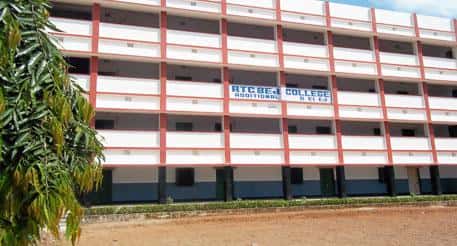
R.T.C. B.Ed College
About
OfficialR.T.C. B.Ed College is a other institution in Ranchi, established in 2008. R.T.C. B.Ed College, established in 1987, is one of Ranchi's oldest and most respected teacher education institutions, located on the suburban Namkum Road corridor. Founded with the mission to produce quality educators for India's schools, the college has evolved from a modest single-stream institution to a comprehensive teacher-training college with multiple specialized programs. The college is named after its founding principal, reflecting institutional continuity and stability over three decades. R.T.C. B.Ed operates under the affiliation of Ranchi University and maintains recognition by the National Council for Teacher Education (NCTE), making it a degree-awarding institution in the state of Jharkhand. The institution serves approximately 850 students across undergraduate and postgraduate programs in education, with a faculty strength of 68 experienced educators and researchers. The 8.5-acre suburban campus provides a peaceful learning environment away from urban congestion while remaining accessible to the city's main amenities via the Namkum Road corridor. The college's primary academic mission centers on teacher education across multiple disciplines: elementary education, secondary education, special education, and digital pedagogy. Unlike purely theoretical institutions, R.T.C. B.Ed emphasizes practical teaching methodology, conducting regular school internships, micro-teaching sessions, and community engagement programs where student-teachers gain real classroom experience. The college maintains partnerships with 25+ schools across Ranchi for practicum placements, exposing future educators to diverse teaching environments from government to private institutions. Research at R.T.C. B.Ed focuses on educational psychology, inclusive education, curriculum innovation, and pedagogical methods suited to Indian classroom contexts. Faculty members have published 45+ peer-reviewed papers in the last five years, with particular strength in special education research and rural education studies. The college hosts annual seminars on teacher development and educational policy, attracting educators from across Jharkhand state. The curriculum balances foundational education theory with emerging domains: digital literacy in classrooms, multilingual education, gender-responsive pedagogy, and value-based education. Placement outcomes for education graduates are notably strong—approximately 92% of B.Ed graduates secure teaching positions within 18 months, with most employed by schools in Jharkhand, Chhattisgarh, and neighboring states. Monthly salaries for school teachers typically range from 18,000 to 35,000 INR depending on school type and experience, with private school positions offering slightly higher starting salaries. The college maintains an active alumni network of 8,000+ teachers working across 200+ schools, providing mentorship and professional opportunities for current students. Notable alumni include Dr. Rajendra Prasad Singh (Principal, DAV Public School, Ranchi), Monika Sharma (Special Education Coordinator, ICSE schools network), and Abhay Kumar (Educational Technology Consultant, National Mission for Education). Campus life emphasizes both academic rigor and holistic development. The college operates seven active clubs: the Teachers' Collective (academic), National Service Scheme (community engagement), Cultural Society, Sports Council, Digital Learning Club, Environmental Education Circle, and Student Welfare Association. The annual fest 'Shikshak Mela' (held in March) celebrates teaching as a profession through demonstrations, workshops, and cultural performances. The college hosts 'Teacher Conclave' annually in September, bringing education stakeholders together for policy discussions and pedagogical innovation workshops. Sports facilities include a basketball court, volleyball court, athletics field, and a functional gymnasium. The college organizes inter-college sports competitions monthly and participates in state-level educational institution sports meets. Infrastructure includes a 12,000-volume library with 40 digital databases, 20 computer labs for educational technology training, 8 well-equipped demonstration classrooms with smart boards, a special education resource room with inclusive learning materials, a media center for educational video production, and a counseling center staffed with professional psychologists. The hostel accommodates 280 students with separate facilities for men and women, offering monthly rates of 4,500 to 6,500 INR including mess facilities. The mess provides vegetarian and non-vegetarian options prepared by contracted caterers, with meal quality rated 'good' by residents. WiFi coverage is complete across campus. The college operates a bus service connecting major residential areas of Ranchi and the railway station. Gender-responsive policies include women's safety committees, separate hostel security personnel, and complaint redressal mechanisms that function transparently. No significant ragging incidents have been reported in the past seven years; the institution maintains a 'ragging awareness program' mandatory for all new students. The college's value proposition is particularly strong for candidates seeking meaningful careers in education who have genuine passion for teaching rather than treating teaching as a fallback option. Students report high satisfaction (7.8/10) with the quality of pedagogical training and mentorship by senior faculty members. The institution attracts candidates from middle-class and upper-middle-class backgrounds who value educational impact. However, students should be aware that job satisfaction in teaching varies significantly based on school environment, student demographics, and administrative support—factors the college cannot fully control. The teaching profession in India, while intellectually rewarding, faces challenges including large class sizes (40-60 students in government schools), administrative burden, and variable resources. Prospective students should visit schools as observers before enrollment to ensure genuine alignment with teaching. The college is particularly well-suited for candidates interested in special education, rural education, or using education as a platform for social change, areas where R.T.C. B.Ed has developed specialized expertise.