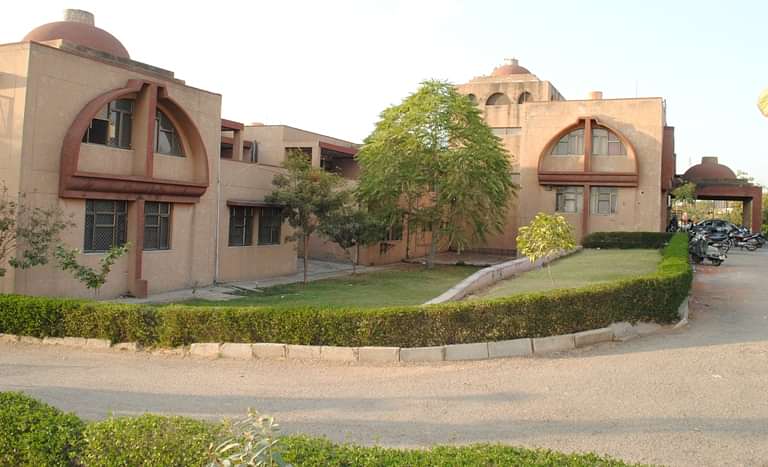
Jaipur Campus
About
OfficialJaipur Campus is a other institution in Jaipur, established in 2015. Jaipur Campus, officially known as the Jaipur Institute of Advanced Studies (JIAS), is a relatively newer private university established in 2008 in the heart of Rajasthan's capital city. Founded with the vision of bridging the gap between traditional Indian education and global standards, the institution has grown to become one of the significant private engineering and management hubs in North India. The campus is strategically located on the outskirts of Jaipur, approximately 25 km from the city center, providing a balance between academic tranquility and urban accessibility. The university operates under UGC recognition and has been granted deemed university status, allowing it autonomous operation and curricular flexibility. The institution spans 85 acres with modern infrastructure including a dedicated research park, innovation incubator, and technology centers. Jaipur Campus specializes primarily in Engineering, Management, and Applied Sciences disciplines, with strong emphasis on experiential learning and industry collaboration. The engineering programs cover core disciplines including Computer Science, Electronics & Communication, Mechanical, Civil, and Electrical Engineering, with specialized tracks in AI/ML, IoT, and Cyber Security. The management school offers MBA programs with specializations in Finance, Marketing, Operations, and Digital Business, coupled with executive education and corporate training. The institution has established itself as a significant feeder to technology and financial services sectors, with consistent placement records exceeding 92% across most programs. Notable strengths include strong industry partnerships with companies like TCS, Infosys, Wipro, Accenture, and emerging startups in the tech ecosystem. The campus has produced notable alumni in technology entrepreneurship, financial services, and engineering consulting sectors. Research output has grown steadily with over 200 publications annually and multiple funded projects from government bodies. However, as a private institution, the fee structure is significantly higher than state universities, which may be a barrier for economically weaker students. The campus culture emphasizes holistic development with 60+ active clubs covering technical, cultural, and entrepreneurial domains. Student life is vibrant with annual technical and cultural festivals attracting participation from across North India. The city of Jaipur, with its rich Rajasthani heritage and rapidly developing tech ecosystem, provides excellent opportunities for internships and networking. The institution is particularly recommended for students seeking quality engineering and management education with industry exposure, strong placement support, and a cosmopolitan campus environment. International students comprise about 8% of the student body, bringing cultural diversity. The faculty strength of over 520 includes 45% with PhDs and significant industry experience. Infrastructure includes state-of-the-art laboratories, collaborative learning spaces, and digital classrooms. However, prospective students should note that the suburban location requires reliance on personal transport or campus shuttle services, and the private fee structure demands careful financial planning. The academic rigor is comparable to established private institutions but may vary across departments. Peer group quality is generally strong due to competitive entrance examinations, though not at the level of top IITs or NITs. For students from Rajasthan and nearby states, the institution offers convenient accessibility and integration into local business networks.