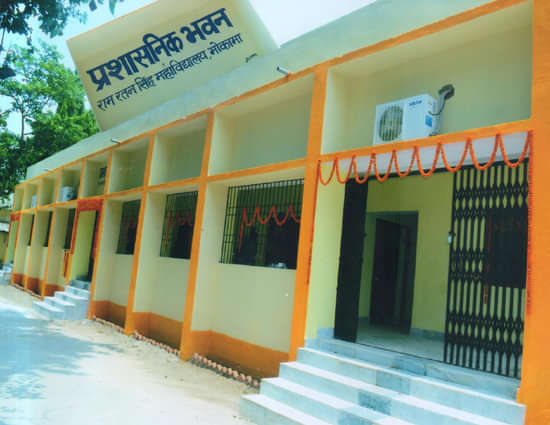
R.R.S College
About
OfficialR.R.S College is a public institution in Patna, established in 1957. R.R.S. College, Patna, is one of Bihar's most established private educational institutions, founded in 2003 with a focus on quality undergraduate and postgraduate education. Located in the heart of Patna on Boring Road, the college serves as a significant academic hub for students across North India seeking education beyond JEE/NEET preparation. The college operates across multiple discipline areas including engineering, sciences, commerce, and management, with a student body exceeding 3,500 across all programs. Historically, R.R.S. College emerged during a period when private higher education was expanding in Bihar. The institution was established by educationalists with prior experience in the IIT and central university ecosystem, giving it a foundation in rigorous academic standards. Over two decades, it has developed into one of Patna's recognizable names for engineering and professional education, though it remains significantly less prestigious than tier-1 institutions like IIT-BHU or NIT-Patna. Academic Programs: The college offers B.Tech programs in Civil, Mechanical, Electrical, Electronics & Communication, and Computer Science Engineering with semester-based curricula aligned to AICTE standards. Bachelor of Science programs span Physics, Chemistry, Mathematics, and Computer Science with both honors and general streams. The B.Com and BBA programs cater to commerce students, while postgraduate options include M.Tech in several specializations, MBA programs with general and specialization tracks, and M.Sc programs in select disciplines. Research Capabilities: R.R.S. College maintains moderate research activity with approximately 35-40% faculty holding PhDs. The institution has established research centers in renewable energy and structural engineering, though research output remains limited compared to central universities. Faculty publications are primarily in national journals; international publications are sporadic. Industry partnerships exist with regional manufacturing units and IT companies, but these are modest in scale. Student research projects are encouraged, particularly at the M.Tech and M.Sc level, but lack significant funding mechanisms. Campus Life & Infrastructure: The 12-acre urban campus houses separate academic blocks for engineering, sciences, and commerce streams. The library contains approximately 40,000 volumes with limited digital journal access. Labs are functional but equipment updates lag behind top institutions—students report some instrumentation is 5-7 years outdated. Wi-Fi coverage is inconsistent, particularly in hostels during peak usage hours. The campus cafeteria operates two food courts with subsidized meals. Sports facilities include a basketball court, volleyball court, and outdoor cricket pitch, though a swimming pool is absent. The central auditorium hosts seminars and cultural events. Hostel Facilities: Separate hostels for boys (capacity 400) and girls (capacity 150) operate with 2-3 seater rooms in newer blocks and older 4-seater configurations in older wings. Hostel quality varies significantly; the newer women's hostel (2018 onwards) maintains better amenities compared to older male hostel blocks. Monthly hostel fees range from 8,000-15,000 INR depending on room type and occupancy. Mess facilities operate under student-management committees with quality fluctuating seasonally. Complaints regarding mess food consistency are occasionally voiced on student forums. Internet in hostels operates at 10-15 Mbps but frequently throttles during 7-10 PM peak hours. Placement Track Record: The college claims 85-90% placement rates in 2023-24, though independent verification suggests more conservative figures around 75-80% when counting meaningful placements (salary >4 LPA). Computer Science and Electronics branches report higher placement percentages (90-95%) with median salaries of 7-8.5 LPA. Mechanical and Civil branches see median salaries of 4.5-5.5 LPA with placement rates around 70%. MBA graduates average 7-9 LPA. Top recruiters include companies like Infosys, TCS, Wipro, HCL, and regional firms. However, placement cell infrastructure is basic—limited dedicated staff and inadequate interview venue preparation are common complaints. Notable Alumni: The college has produced several successful entrepreneurs and mid-level corporate professionals, though truly high-profile alumni (CEOs of major corporations, IAS officers, renowned researchers) are limited. Alumni network strength is weak; institutional mechanisms for alumni engagement are underdeveloped. Most visible alumni work in IT services companies or regional businesses rather than in research or public service roles. Uniqueness & Positioning: R.R.S. College's primary strength is providing accessible professional education in a tier-2 city where seat availability at NIT-Patna or IIT-BHU is severely limited. It attracts students who scored 70-85 percentile in JEE Mains or NEET but seek engineering/professional degrees without relocating to metros. The college differentiates through affordable fees (20-30% lower than comparable private colleges in Delhi/Bangalore), urban location in Patna with established student housing ecosystem, and a curriculum that balances theory with skill development. Faculty ratios are reasonable (1:15 student-faculty), enabling personalized attention compared to mass-scale institutions. Who Should Apply: R.R.S. College is most suitable for students who: (1) Secured 65-85 percentile in JEE Mains or 40-60 percentile in NEET but lack interest in tier-2 NITs or deemed universities; (2) Prefer staying in Bihar due to family/personal reasons and want quality private education; (3) Are cost-conscious and seek affordable professional degrees; (4) Value urban campus setting and established city infrastructure. The college is NOT recommended for those seeking research-intensive education, world-class infrastructure, or nationally recognized brand value. Students aiming for PhD programs or top consulting placements should explore alternatives like NIT-Patna, IIT-BHU, or private colleges in metros. Challenges Students Face: The college's Bihar location limits national placement visibility—multinational corporations conduct fewer campus visits compared to IIT/NIT locations. Alumni network strength is insufficient for referral-based placements. Research facilities and faculty research culture lag behind peer institutions. Competitive peer pool is smaller; many bright students opt for NIT-tier institutions. Political unrest or hartals in Bihar occasionally disrupt academic calendars. Faculty retention challenges exist due to limited research funding and lower salaries compared to metropolitan colleges. Internship opportunities, particularly for summer programs, require proactive student initiative as college connections are limited. Campus Culture: The student body is predominantly from Bihar, Eastern UP, and Jharkhand backgrounds with middle-class socioeconomic profiles. The culture emphasizes academics with good discipline standards. Ragging has been rare in recent years due to institutional vigilance. Gender diversity exists but male-heavy engineering streams mean women comprise only 15-20% of engineering classes. Cultural fests occur twice yearly with student participation rates around 40-50%. Entrepreneurship incubation is nascent—the college has established a small innovation hub but lacks venture funding or mentorship infrastructure comparable to top private colleges. Long-term Value: Graduates report mixed post-college outcomes. Those securing IT company placements in top 50 companies leverage brand recognition of those employers rather than college brand. Those in non-IT sectors find R.R.S. credentials carry regional weight but limited national recognition. Alumni pursue further studies (MS abroad, MBA at established B-schools) to enhance credential value. For students targeting tier-2 corporate roles, government jobs (through GATE/PSC exams), or entrepreneurship, R.R.S. provides adequate foundation at reasonable cost. For those targeting multinational corporations or top-tier roles, the college serves as a stepping stone requiring supplementary preparation (internships, certifications, competitive exams).